Strength Science · 7 Min Read
Can A Smaller Guy Beat A Bodybuilder At Arm Wrestling? Here's What Scientists Say
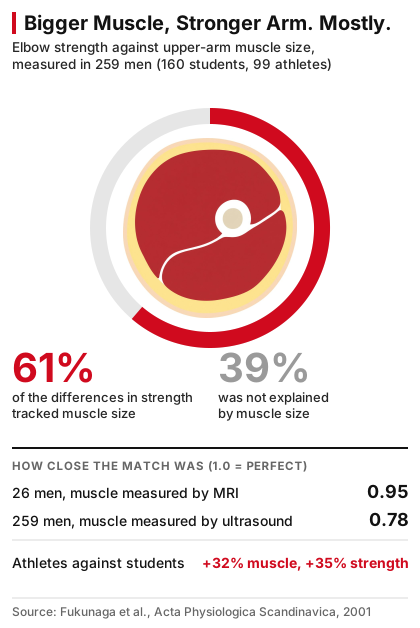
Bigger arms are usually stronger arms. But in a study of 259 men, muscle size accounted for only about 60% of the differences in arm strength. The rest comes from the nervous system, the hand and wrist, and years of practice. That's the gap a smaller arm wrestler wins in.

The Smaller Guy Keeps Winning
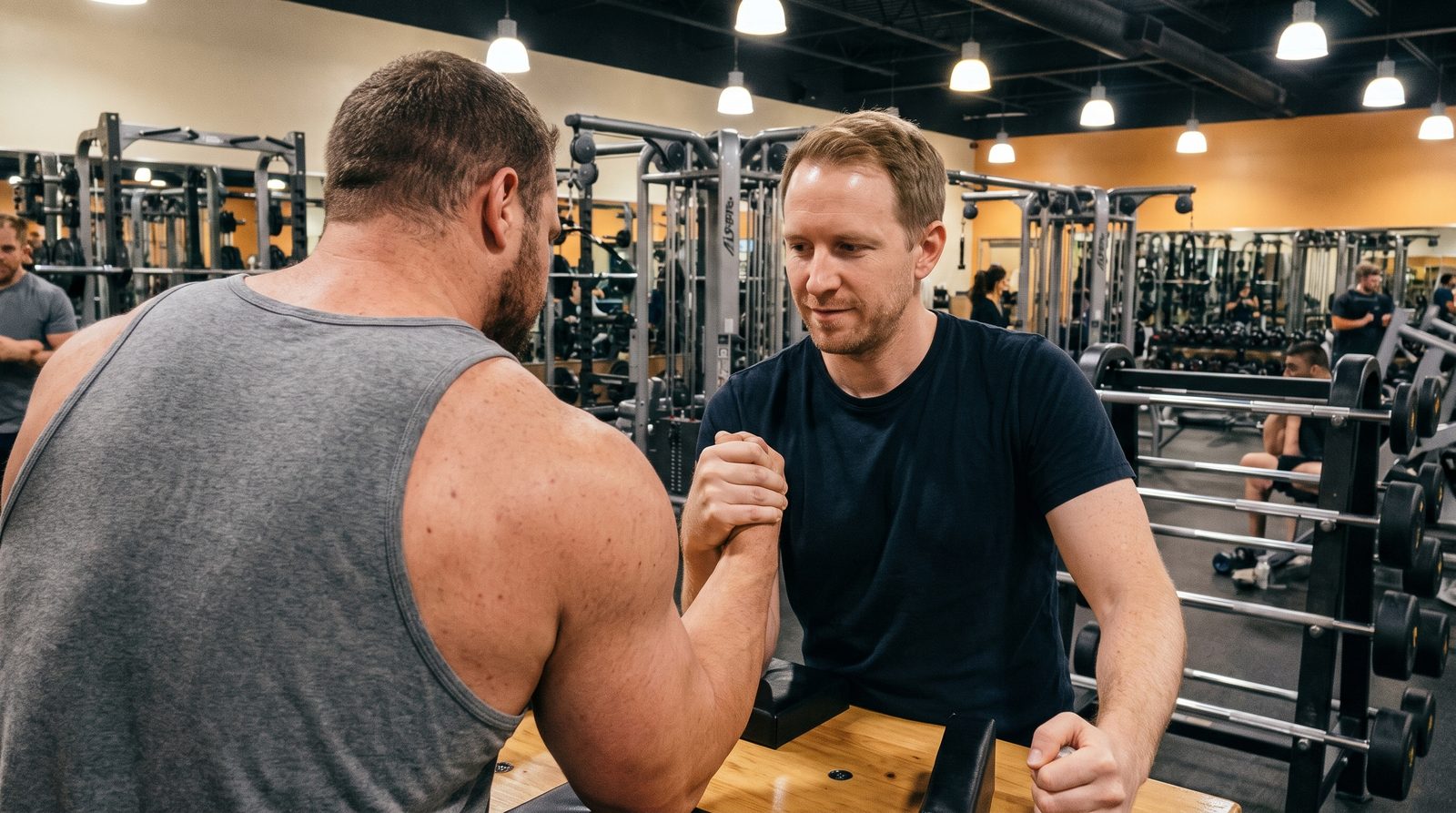
Every gym has seen it happen. The man with the biggest arms in the room sits down at a table. Someone half his size takes his hand. Three seconds later, the big man's knuckles are on the pad.
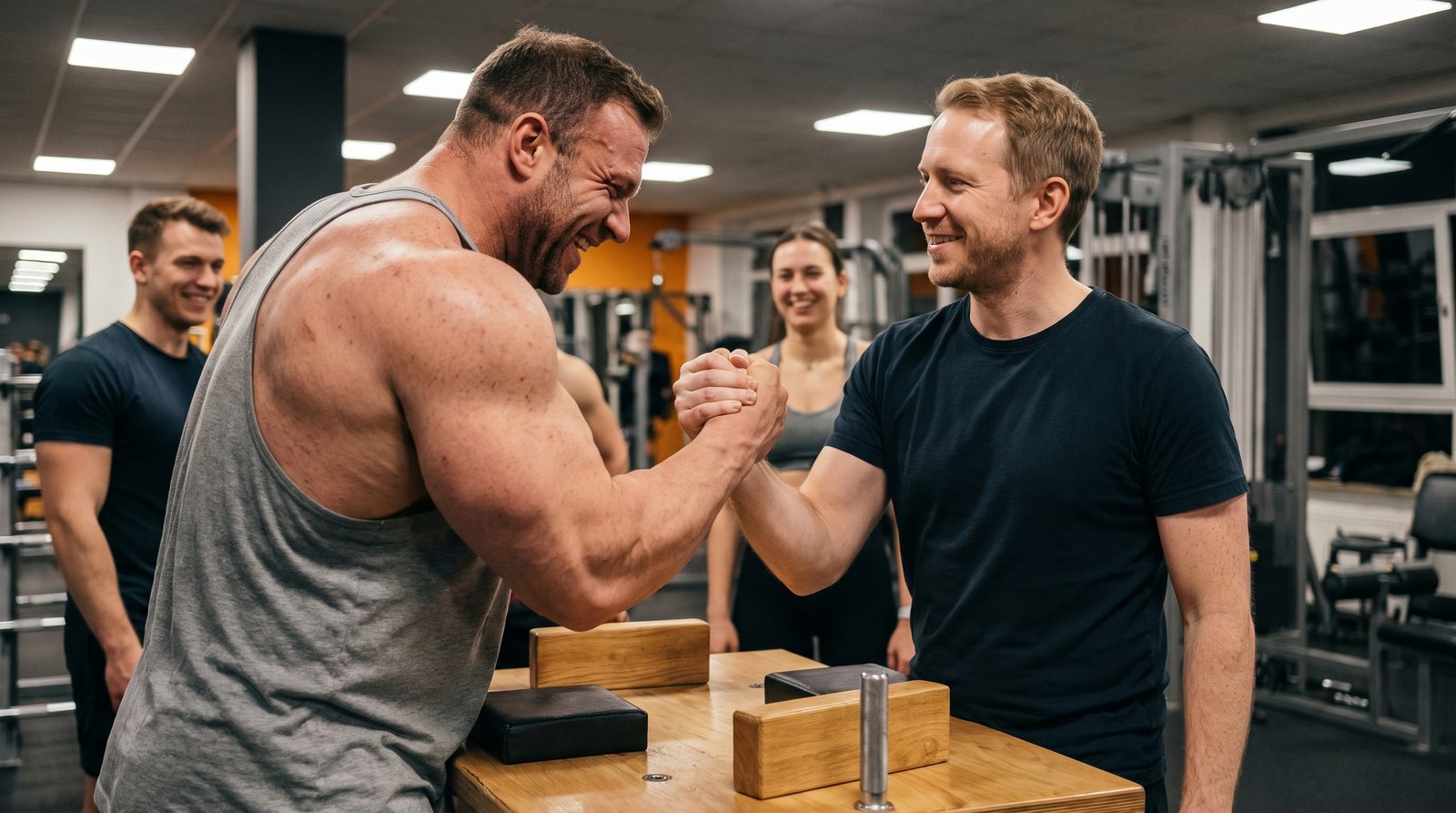
It happens at the top of the sport too. In 2015, arm wrestling champion Devon Larratt took on Hafþór Björnsson, the strongman who played The Mountain on Game of Thrones. Björnsson stood 6 feet 9 and weighed 419 pounds. Larratt was 6 feet 5 and 225 pounds. He beat him with his left arm and his right, and he smiled the whole way through.[1]
In 2020, arm wrestler Aleksandr Beziazykov, better known as Schoolboy, swept powerlifter Larry Wheels 5 to 0 with the left arm. Wheels didn't blame his size. He said the result came from Schoolboy's "hard training for many years."[2]
So how does the smaller arm win? Muscle and strength are tightly linked. They are just not the same thing.
Muscle Size Explains Most Of It, Not All Of It
Researchers at the University of Tokyo scanned the upper arms of 26 young men with MRI. Then they measured how hard each man could bend his elbow against a fixed strap. Bigger elbow muscles meant more force, almost one for one. The correlation was 0.95, where 1.0 would be a perfect match.[3]
Next they tested 259 men: 160 students and 99 athletes. The link held, but it loosened to 0.78. Put simply, muscle size accounted for about 61% of the differences in arm strength between those men. The athletes carried 32% more muscle in the front of the upper arm, and they were 35% stronger.[3]
That's a big effect. On average, a bigger arm is a stronger arm. Still, about 4 parts in 10 of the difference came from somewhere else. And that was the simplest strength test there is: one joint, held at one angle, pulling on a strap. A real arm wrestling match is far messier.
Your Nervous System Is The Driver
Think of your muscle as the engine and your nervous system as the driver. A bigger engine helps. A driver who doesn't know the road still loses the race.
Training studies let you watch the driver get better. In a classic 1979 study, 15 young men and women trained their elbow flexors for 8 weeks. For the first 3 to 5 weeks, most of their new strength came from the nervous system, not from new muscle.[4] Their untrained arm got stronger as well. The authors gave the nervous system the credit for that too.
Practice changes strength in a movement even more. In a 1986 study, 32 volunteers trained the leg extension for 12 weeks. The weight they could lift rose by about 200%. Yet their strength in a fixed test, pushing against a bar that didn't move, rose only 15 to 20%.[5] The researchers put most of the gain down to coordination. The lifters got better at bracing their bodies and timing their muscles. In other words, strength in a movement is partly a skill. Arm wrestlers spend years practicing that one.
Arm Wrestling Isn't A Biceps Contest
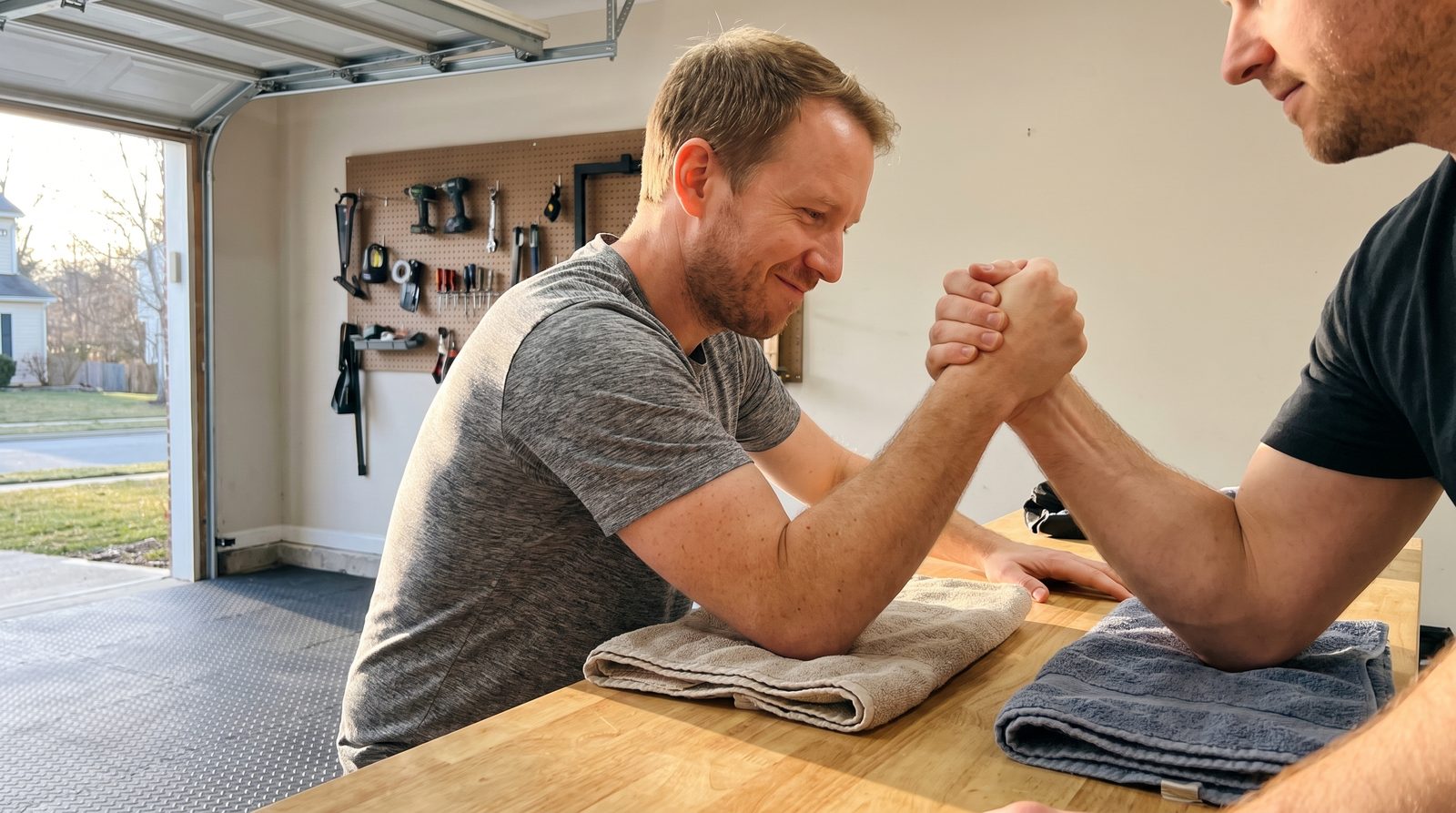
Most people treat arm wrestling like a biceps curl. It isn't one. The main moves are turning the upper arm inward, rolling the forearm over and curling the wrist. Bending the elbow is a side job.[6]
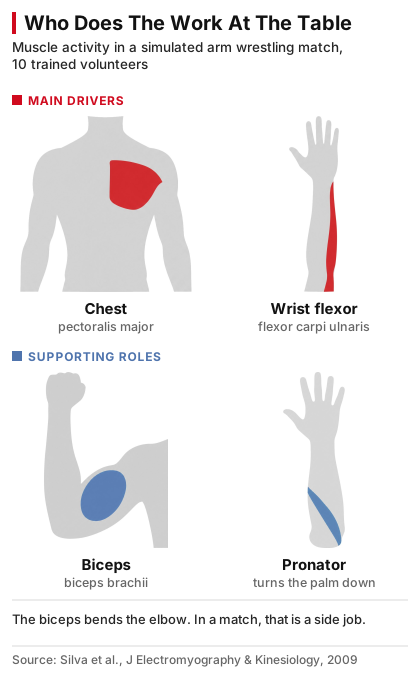
A Brazilian team tested this with 10 trained volunteers in a simulated match. They recorded the electrical activity of four muscles. At hard efforts, the chest and the pronator, the forearm muscle that turns your palm down, were the busiest. Overall, the team concluded that the chest and a wrist flexor on the little-finger side of the forearm did the main work. The biceps and the pronator played supporting roles.[7]
Real competition points the same way. A Turkish team measured 73 men at their national championship, across 8 weight classes. Then they compared the top three in each class with everyone else.[6]
On the right arm, the medal winners reacted to a starting sound in 123 milliseconds. Everyone else took 147. The winners also squeezed harder for their size: 0.92 kilos of grip per kilo of bodyweight, against 0.82. Forearm size barely differed, at 33.4 cm around against 32.5, and it didn't predict who won. Those numbers sorted 88% of the men into the right group. On the left arm, forearm size did count, along with grip.
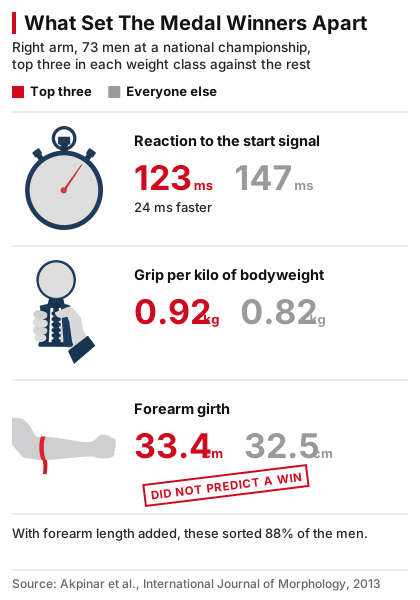
That's the smaller puller's edge in three numbers. A strong grip for his size, a fast start and years of technique. None of it shows up in a flexed biceps photo.
What It Looks Like In Practice
You don't need to compete to use any of this. If you want to win the next friendly match at your gym, train the parts that decide it.
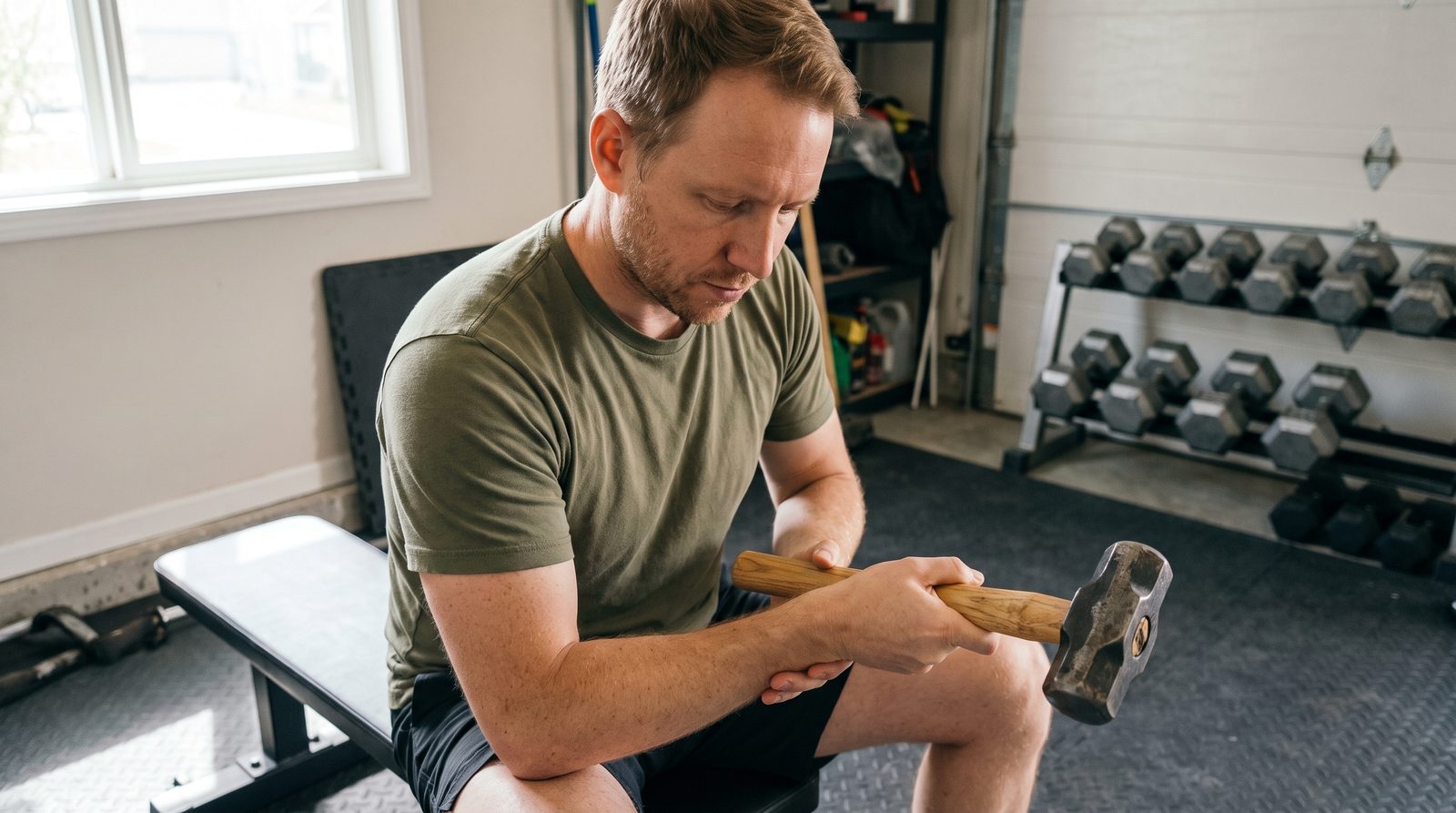
- Train your hand and wrist. Wrist curls, heavy holds and grip work build the strength for size that the medal winners had. Holding a hammer near the end of the handle and slowly tipping it side to side trains the forearm turn.
- Practice the movement itself. The 1986 study showed that strength in a movement grows when you practice that movement.[5] Pull with a partner at an easy effort and learn to keep your wrist curled toward you.
- Practice the start. The medal winners reacted about 24 milliseconds faster.[6] Have a friend say "go" at random moments and react.
Then protect your arm, because arm wrestling can break it. Doctors in Shanghai reviewed 27 young men who broke the upper arm bone in a match. Every break was a spiral fracture of the lower third of the bone. In the type with an extra bone fragment, 7 of 16 men also had an injured nerve. Cold weather and skipping the warm-up raised the risk.[8]
A 2026 study watched 74 videos of matches that ended in a broken arm. In 81% of the injured pullers, the wrist, elbow and shoulder had fallen out of line, often with the wrist behind the shoulder. Only 19% of their opponents were caught that way. Twisting the upper body was also tied to breaks, and 62% of the breaks happened while the injured puller was defending.[9]
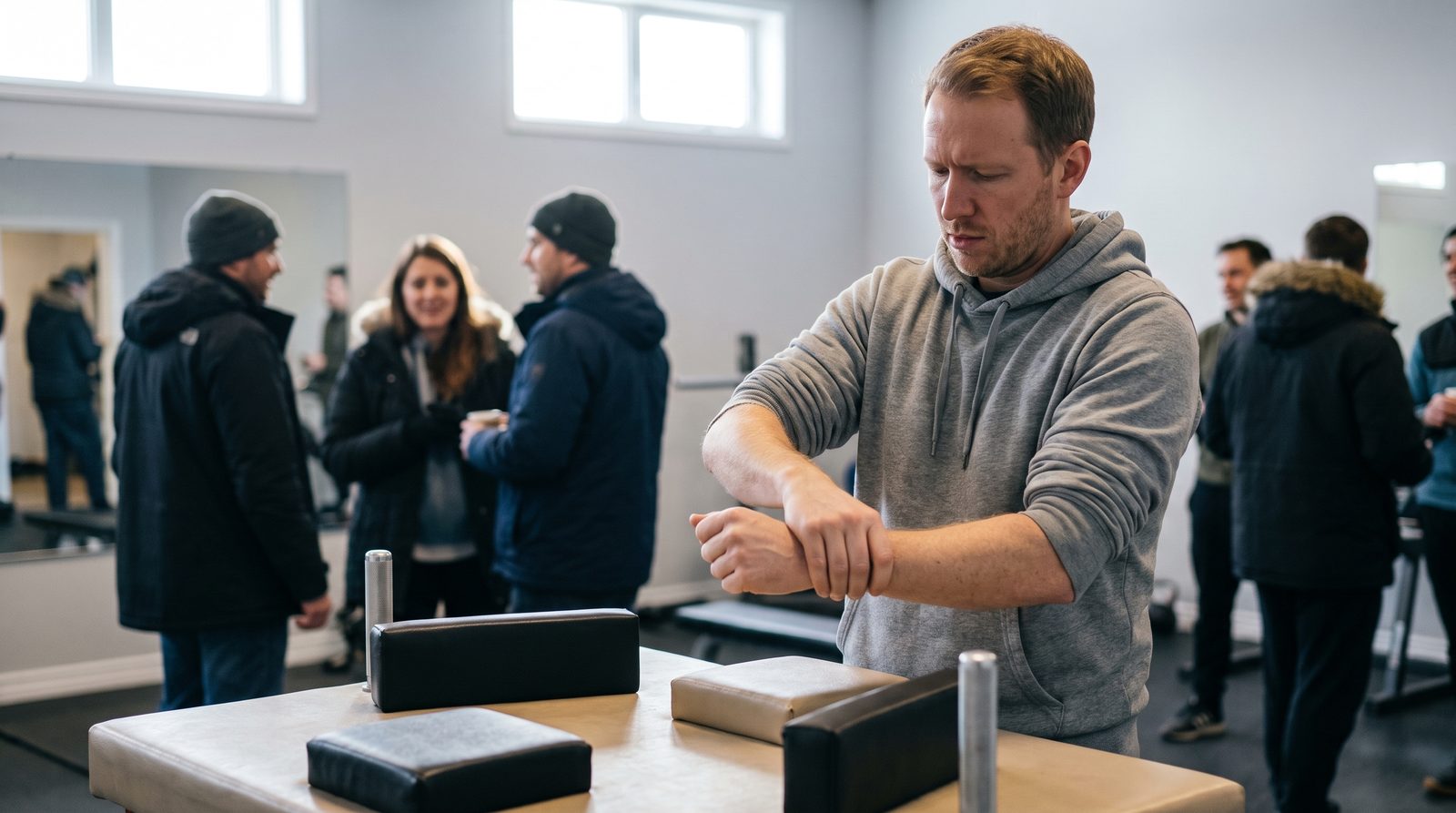
So keep your hand in front of your shoulder. Face your own arm. Warm up first. And when you're clearly beaten, let the arm go.
A bigger arm gives you a bigger engine. The smaller guy who keeps winning has just spent more time learning to drive it.