Biomechanics • 7 min read
Do You Have A Bench Press Body? Here's What Scientists Say
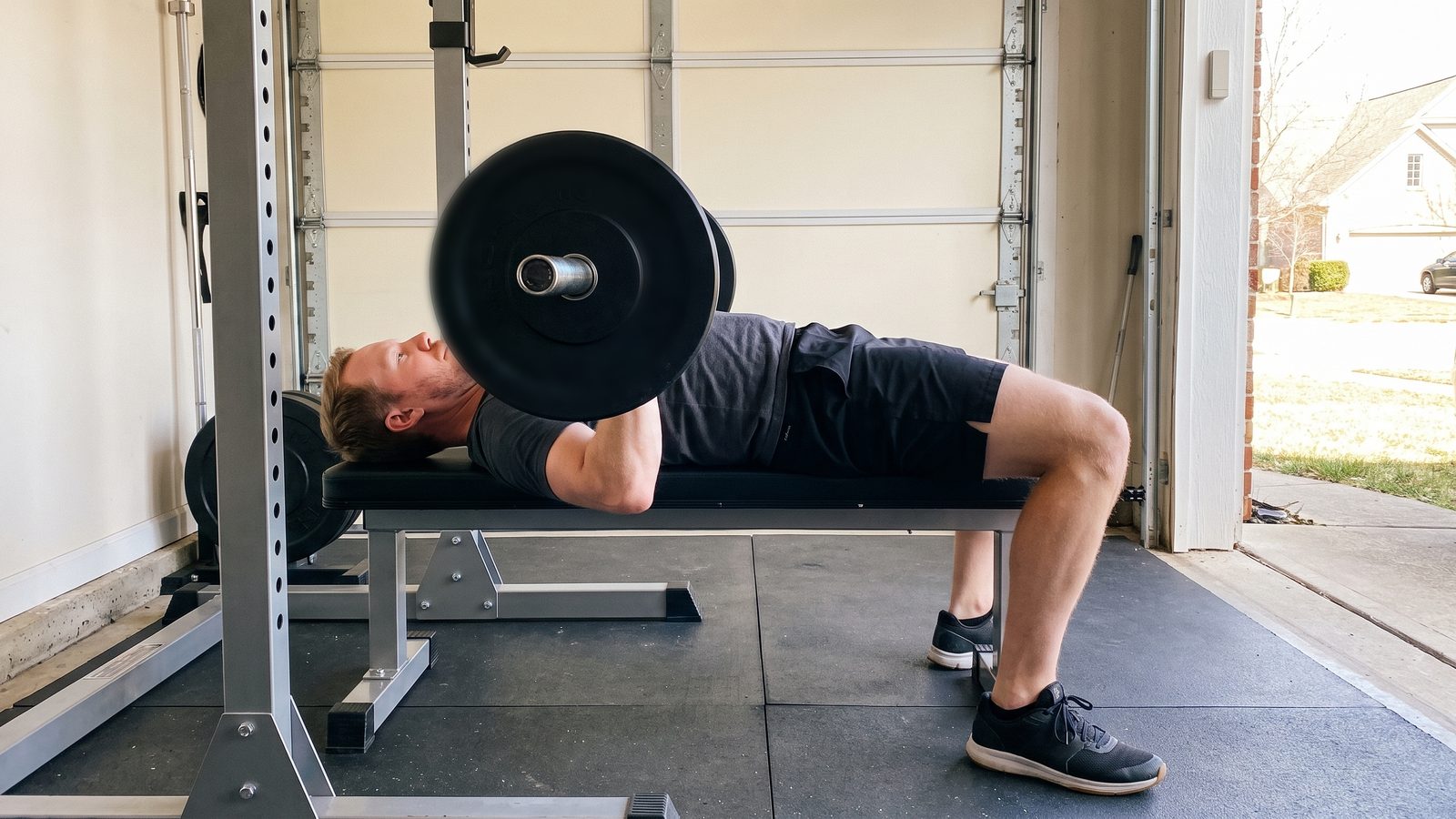
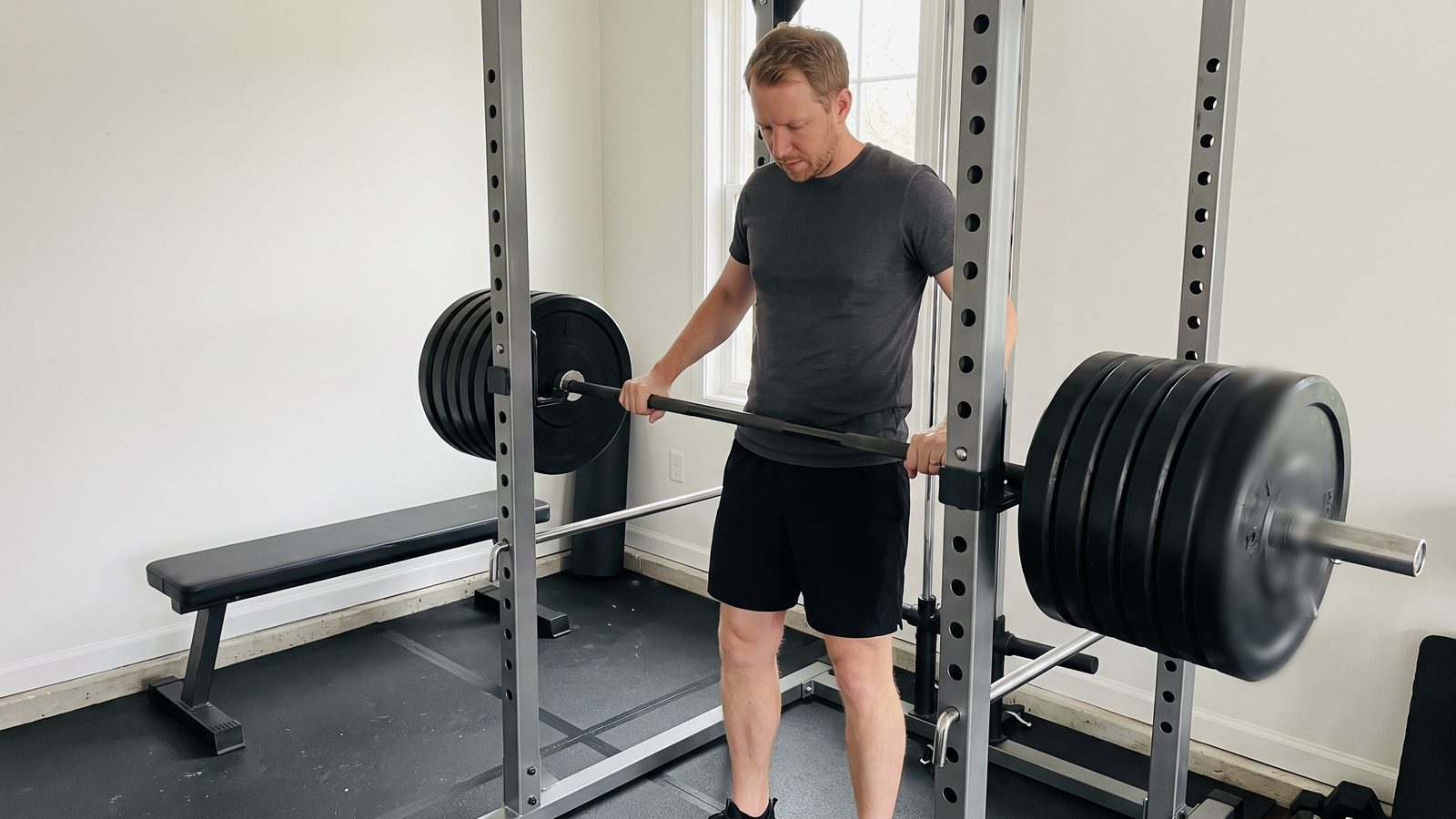
The classic bench body has short arms, short forearms, a barrel chest and broad shoulders. When researchers took a tape measure to real powerlifters, the chest was the measure that mattered most. It is also the only one on the list you can change.

The Claim
This is the perfect body for a 1,000-pound bench. You see that claim all over gym social media, usually over a photo of a very big man. The case goes like this. Bench pressing is a game of levers and distance. Short arms mean the bar has less far to go, so every rep takes less work. Short forearms make the lockout easier. A thick, barrel chest meets the bar sooner. Broad collarbones let you take a wider grip, which cuts a few more inches off the press and puts more of the load on your chest. Add a big upper back to push from, and you are built to bench.
You have seen the lived version at any gym. A short, thick lifter warms up with the weight you are testing today. The bar barely seems to move before it touches his shirt, and somebody says what everyone is thinking. He's built for it.
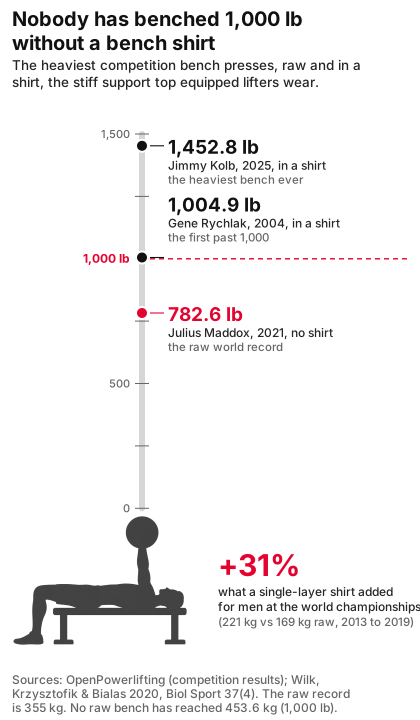
Before the tape measure comes out, one fact about that number. Nobody has ever bench pressed 1,000 pounds without a bench shirt, the stiff, tight support top that equipped powerlifters wear. The heaviest raw bench in competition is 355 kg, or 782.6 pounds, by Julius Maddox in 2021.[1] The first bench past 1,000 pounds was 1,004.9 by Gene Rychlak in 2004, in a multi-layer shirt.[2] Jimmy Kolb has since pressed 659 kg, or 1,452.8 pounds, also in a shirt.[3] At the world championships, men in the equipped division benched about 31 percent more than men in the raw division, 221 kg against 169.[4]
So the body in the hook had help. The body still matters, though, and that part has been measured.
What The Research Actually Found
The biggest study measured 59 drug-tested powerlifters at a provincial championship in Quebec, right before they competed.[5] They benched 147 kg on average. The researchers took 29 body measures and ratios from each lifter, from forearm length to hip girth, then checked every one against what that lifter pressed on the platform.
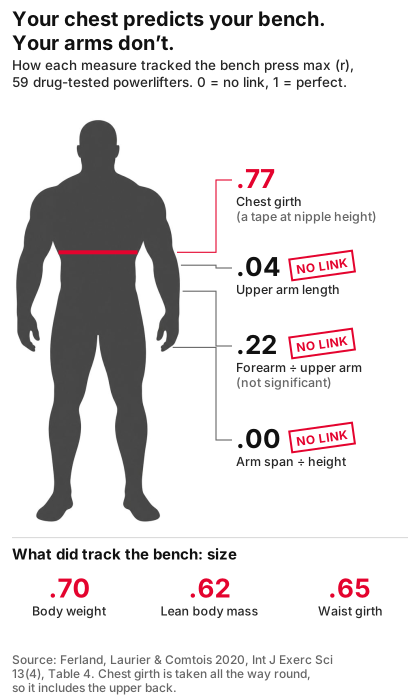
One number won by a distance. A tape measure around the chest at nipple height tracked the bench at r = 0.77, on a scale where 0 means no link and 1 means a perfect one. On its own it explained 59 percent of the spread between lifters. Body weight came next at 0.70. The tape goes all the way round, so it takes in the lats and upper back as well as the pecs. Upper arm length came in at 0.04, which is no link at all. Arm span against height, the classic long-arms number, was 0.00.[5]
A second group of 42 national-level powerlifters told the same story.[6] Chest girth tracked the bench at 0.63 and flexed upper-arm girth at 0.71. Upper arm length, forearm length and total arm length all sat near zero. The authors' summary was that limb lengths and bone widths were "typically not significantly related" to strength.
Start with arms. Short arms really do mean a shorter trip. In 21 trained men, a longer arm span went with a longer bar path (r = 0.46) and more work per rep (0.51). It did not go with a smaller max.[7] Long arms cost more work. Nobody has shown they cost you weight on the bar. We went deeper on that on the long arms page.
Forearms are a different story. No study has tested forearm length against the lockout. The ones that measured it found nothing, or the reverse. In 13 elite powerlifters, a forearm that was long compared with the upper arm went with a stronger bench for their body weight, at r = 0.60.[8] That is the opposite of the usual claim. The physics explains why forearm length barely matters. When your forearm stands straight up under the bar, the bar's pull on the elbow depends on how far your hands sit in front of or behind the elbow, not on the length of the bone. With a wide grip, researchers measured that distance at the bottom of the press at 0.00 metres.[9]
What about the usual reason given for the chest? The idea is that a deep chest brings your body closer to the bar and shortens the press. That has never been measured directly. When researchers measured the gap from a straight-armed bar down to the breastbone in 18 teenage powerlifters, it did not predict their max (r = -0.28, not significant). Chest girth did, at 0.53.[10] In the 13 elite lifters, chest depth on its own was a null too, at 0.15, while lean mass tracked the bench at 0.64 to 0.74.[8]
So a big chest measurement is mostly a measure of muscle. That also covers the idea of a massive upper back. No study has tested back size against how stable you are on the bench. But the tape around the chest wraps around the back too, so in every study above, the barrel chest and the big upper back are the same number.
What It Looks Like In Practice
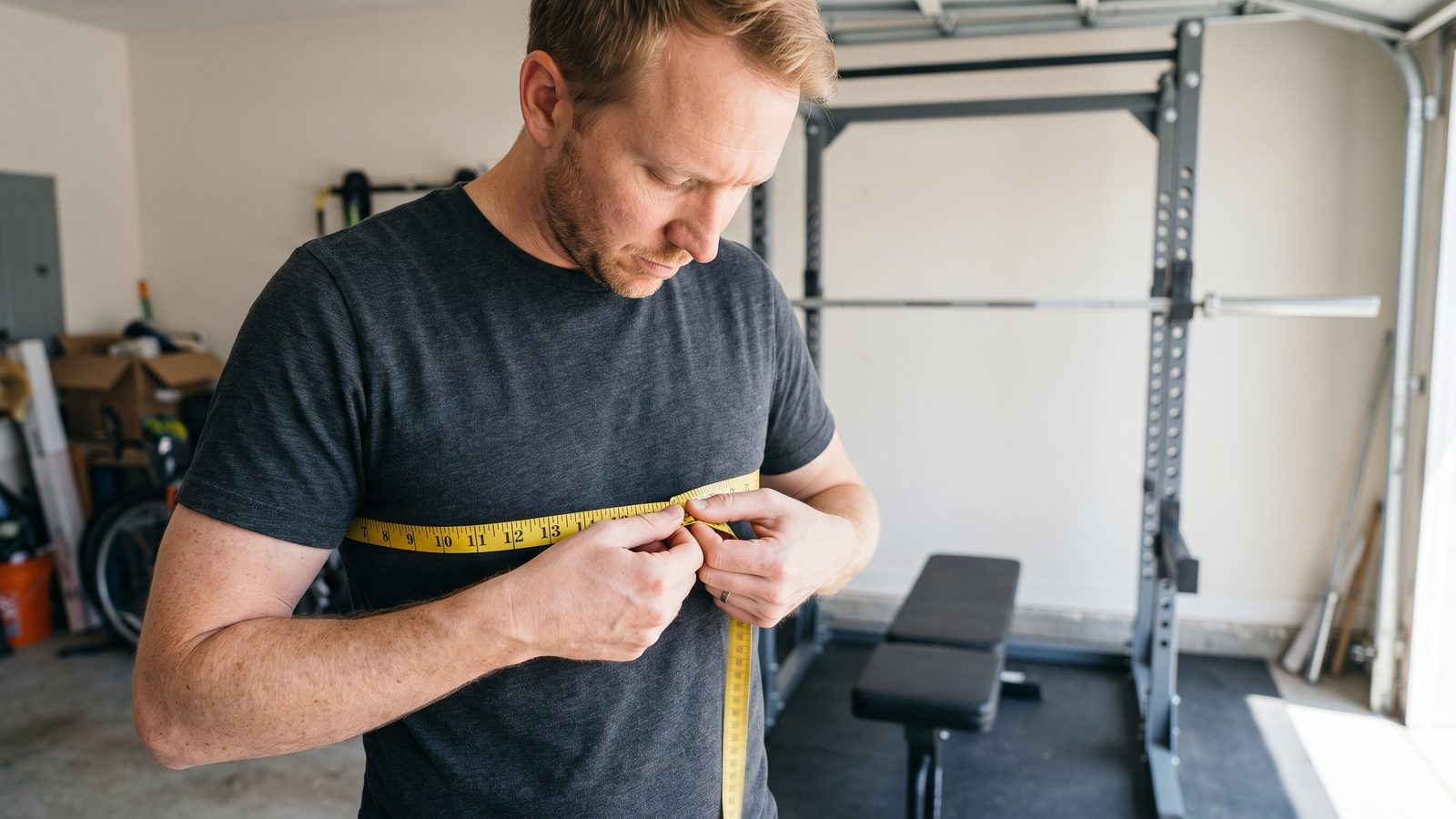
Measure yourself the way the Quebec study did. Stand tall with your arms relaxed and wrap a cloth tape around your chest at nipple height. Breathe out normally and read it. Then divide that by your height. In the 59 lifters, chest girth over height tracked bench strength per kilo of body weight at r = 0.49, the best of any body measure in the table.[5] Write the number down. Unlike your arm bones, it moves.
Grow it with muscle, not fat. In the elite group, fat mass had nothing to do with bench strength, while lean mass did.[8] Size also has limits. Across the men's world records, the bench rises with body mass to the power of 0.57.[11] In plain numbers, a lifter who weighs 50 percent more is predicted to bench about 26 percent more, not 50.
Train the whole tape, front and back. Presses build the chest. Rows and pull-ups build the lats and upper back that the same tape wraps around.
Now the shoulders. Grip width really does shorten the press. In 14 trained men, the bar travelled 39.9 cm at a shoulder-width grip, 37.3 cm at 1.4 times shoulder width and 33.8 cm at 1.7 times. That is about 2.4 inches saved, and the widest grip lifted 109.8 kg against 103.7 kg for the narrowest.[9] Chest muscle activity did not change with grip width, in that study or in a second one with 28 men.[12] The load moved from the elbows to the shoulders instead.
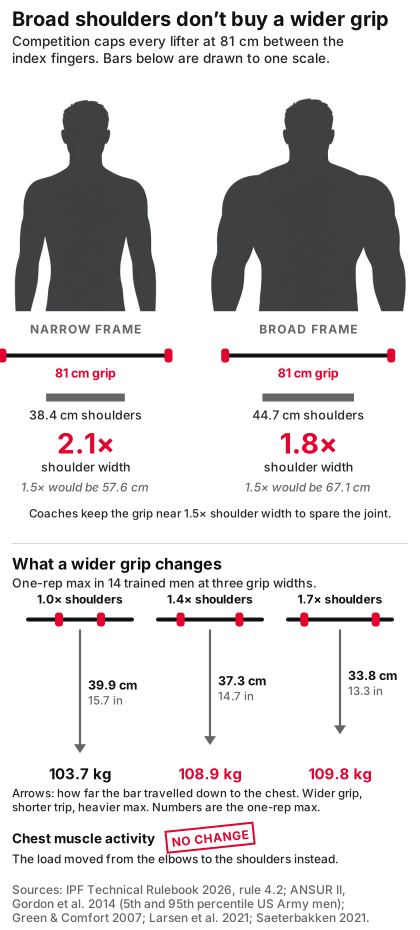
Here is the catch for broad collarbones. Powerlifting rules cap the grip at 81 cm between the index fingers for everyone, and competition bars carry marks 81 cm apart.[13] A man with narrow shoulders, 38.4 cm across, is gripping 2.1 times his shoulder width at that limit. A man with broad ones, 44.7 cm across, is at 1.8 times. Those two widths are the small end and the big end of a survey of more than 4,000 US Army men.[14] Coaches suggest keeping the grip at about 1.5 times shoulder width or less to spare the shoulder joint.[15] Broad shoulders don't buy a wider grip. They make the widest legal grip a little easier on the joint.
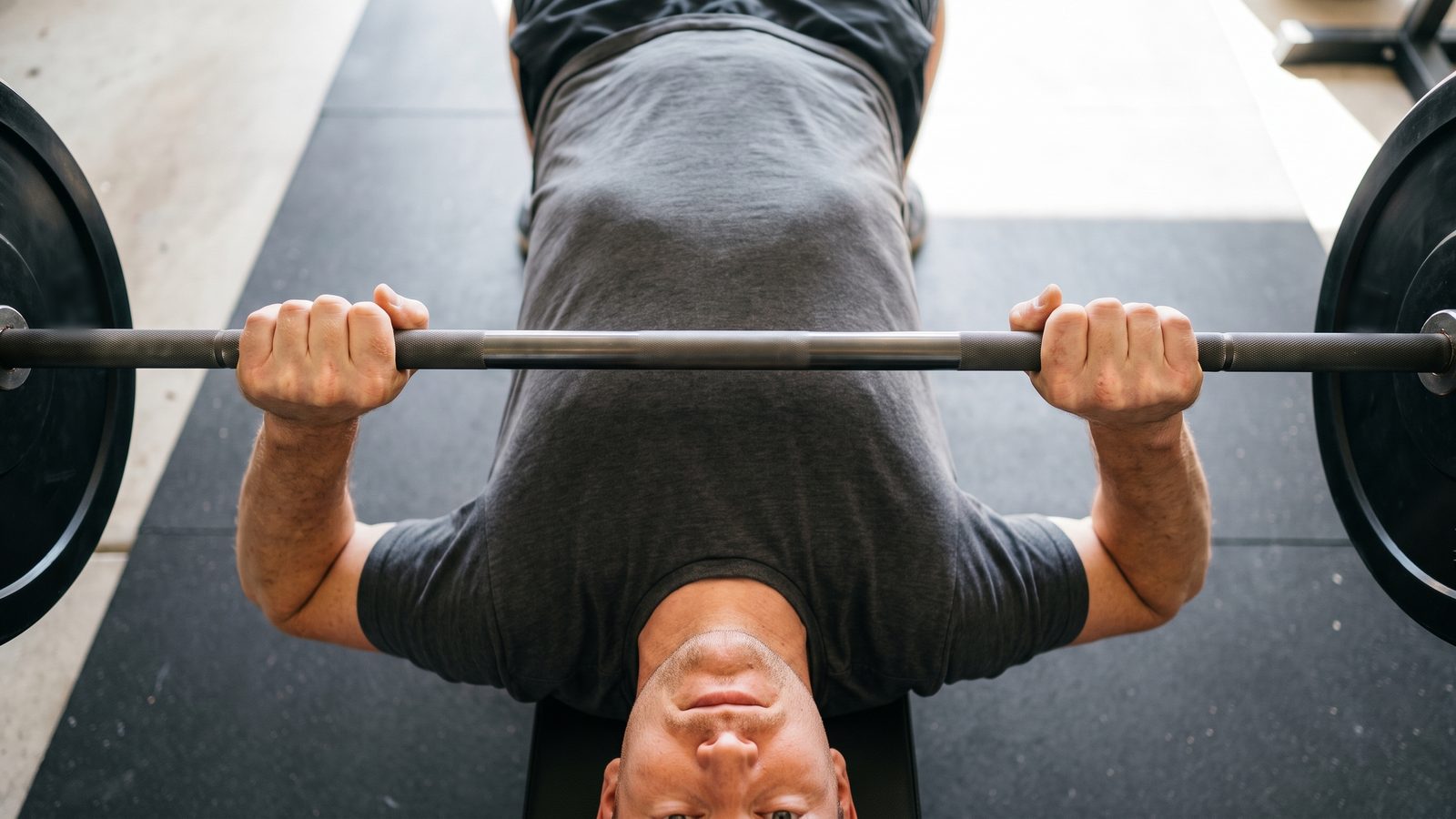
So take the widest grip your shoulders are happy with, up to the rings. If a wide grip hurts, bring it in a little. Medium and wide were less than a kilo apart in the same study.[9] The arch is the other legal way to shorten the press.