Lifting Science · 6 Min Read
Morning Or Evening? The Best Time Of Day To Lift, According To Science
Most lifters are a few percent stronger in the late afternoon than they are first thing in the morning. Here's why your body works that way, and how morning lifters catch up.

The 6 AM Problem
You know the feeling. The alarm goes off, you walk to the rack half awake, and a weight that flew up last Thursday evening feels glued to the floor. Same bar. Same plates. Same you. Only the hour changed.
The idea behind it is simple. Your body runs warmer in the late afternoon, warm muscles work better, and so you're stronger later in the day. Ask around a gym and you'll hear that the best time to lift is somewhere between 3 and 7 PM.
That holds up. Scientists have tested lifters at different hours for decades, and the late-day edge shows up again and again. They also found something more useful, especially if the only time you can train is before work.
How Much Stronger Is Evening You?
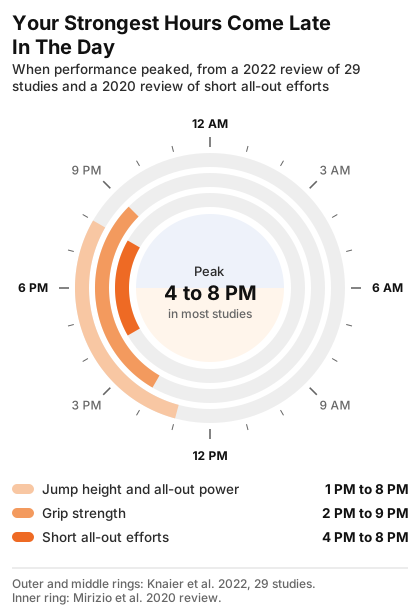
A 2022 review gathered 63 studies that tested people at three or more times of day and pooled 29 of them.[1] Power on a sprint bike, jump height and grip strength were all higher in the evening. Jump height and all-out power peaked somewhere between 1 PM and 8 PM. Grip peaked between 2 PM and 9 PM. A 2020 review of short all-out efforts, the kind that last under a minute, found the peak between 4 PM and 8 PM in most studies.[2]
How big is the gap? Smaller than the feeling, but real. When 72 men were tested at about 7:30 AM and again around 6 PM, their leg press force was 4.4% higher in the evening.[3] On a 100 kg squat, 4% would be about 4 kg. A study of 10,785 adults found the same pattern in grip. People squeezed about 1 kg harder in the evening than in the morning.[4]
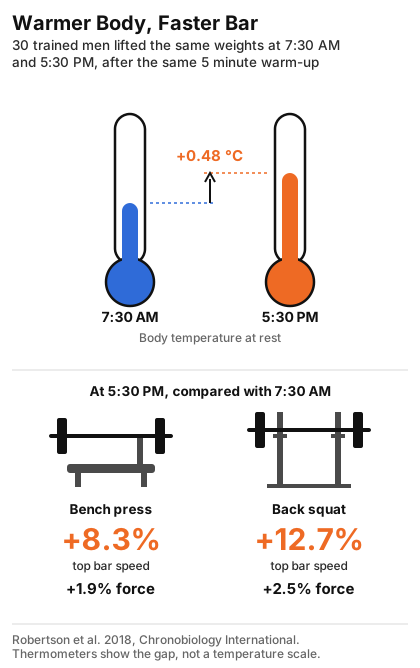
The clearest lifting data comes from 30 trained men who benched and squatted the same weights at 7:30 AM and 5:30 PM, after the same 5 minute warm-up.[5] In the evening, their bench press bar hit an 8.3% higher top speed and their squat bar a 12.7% higher one. The force they pushed into the bar rose by 1.9% and 2.5%.
Why A Warmer Body Lifts More
Those same 30 men were 0.48 °C warmer at rest in the evening.[5] That sounds like nothing. Muscle is sensitive to heat, though. In a classic 1979 experiment, researchers brought the muscle temperature of four men anywhere from 30 to 39 °C. Every 1 °C of muscle temperature moved their strength, power, jumps and sprints by 4% to 6%.[6]
Why would a little heat matter? Researchers think warmer muscle contracts faster, its fluid gets thinner, and nerve signals travel along it more quickly.[2] It's the same reason a warm-up works.
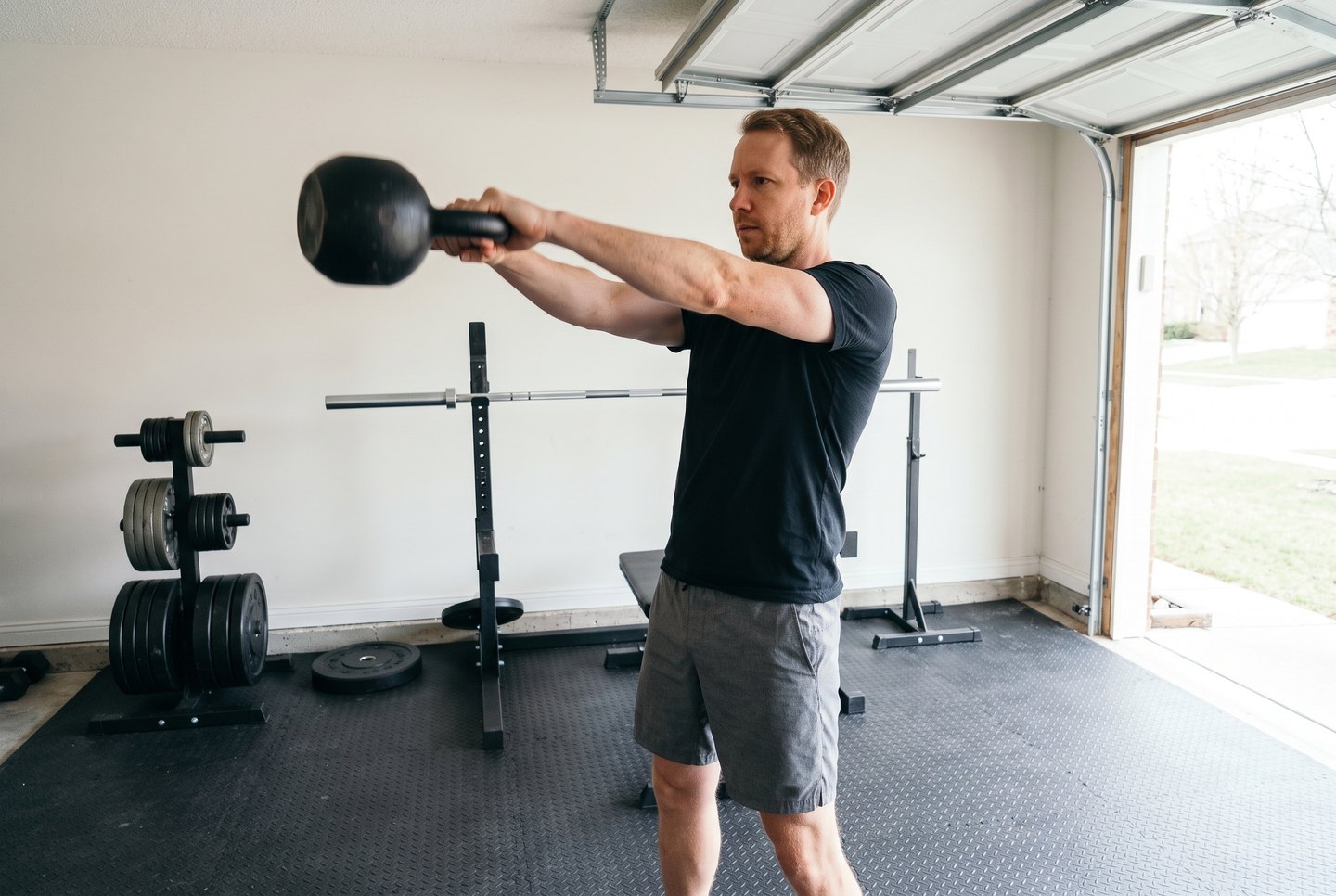
Heat is a big part of the story, and the body's own clock is the rest. When researchers warmed men up in the morning until their core temperature matched the evening, their strength still stayed below evening levels.[7] The 2020 review points to a daily clock that runs inside the muscle cells themselves.[2]
A good warm-up still pays off. In one study, 12 minutes of easy cycling with three short sprints raised power in the morning and in the afternoon, and that boost stacked on top of the afternoon edge.[8]
Not Everyone Peaks At 5 PM
Group averages hide people. In that study of 72 men, the researchers also sorted them by how their force actually changed across the day.[3] Nineteen were 16.1% stronger in the evening. Forty-five barely changed, just 2.1% stronger. And eight were the opposite: 10.8% stronger in the morning.
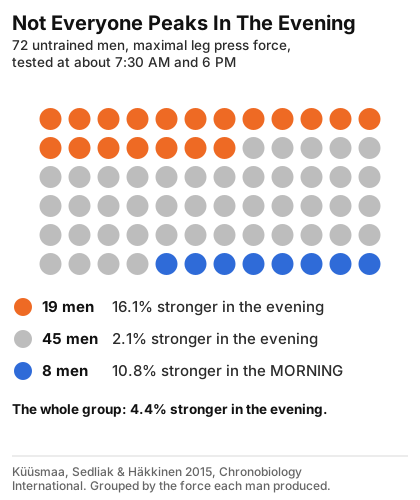
So if you've always felt strongest early, you may not be imagining it. The only way to know is to check your own numbers at both times.
Your Body Learns Your Training Hour
Here's the part that matters most for morning lifters. The gap is not fixed.
In a study from Tunisia, 30 people did 8 weeks of leg training, three sessions a week.[9] One group trained at 7 AM, one at 5 PM, and one did not train. Before the program, all three groups did better in the evening, by about 3% to 18% depending on the test. Afterward, the morning group was just as strong at 7 AM as at 5 PM. The other two groups still had the evening edge.
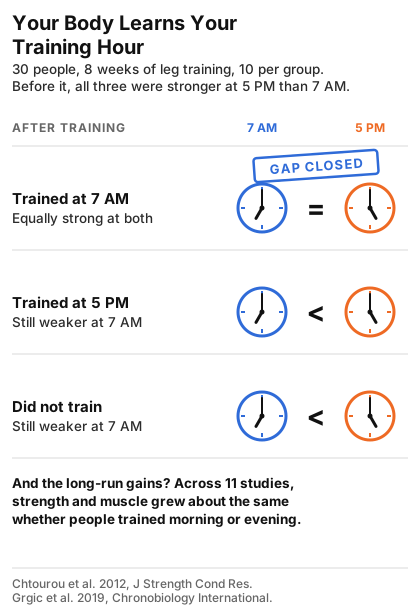
A 2019 review of 11 studies found the same thing.[10] Training in the morning raised morning strength to evening levels. Training in the evening kept the evening edge. Over the full programs, strength and muscle grew about the same either way. A 2023 review of 26 studies agreed.[11] It found no clear winner between hours. What did help was training and testing at the same time of day.
The longer studies line up too. Over 10 weeks, thigh muscle grew 2.7% in a morning group and 3.5% in an afternoon group, a gap too small to count.[12] Over 24 weeks of lifting plus cardio, 42 men in four groups all added 14% to 24% to their leg press max.[13] The evening groups did add more muscle in the second half of that study. If you get to choose, the evening may carry a small extra edge over many months.
What It Looks Like In Practice
- If you can pick, lift in the late afternoon or early evening. That's when most people are strongest, and it's the best slot for a max test or a new personal best.
- If mornings are all you have, lift in the morning, at the same hour each time. Within about 8 weeks your morning strength can catch up, and your long-run gains will be about the same.
- Warm up longer before an early session. Give it 12 to 15 minutes of easy cycling with a few short, hard bursts before your first heavy set.
- Test your max at the hour you train. Your body adapts to your usual time. A morning lifter testing at night is testing at an hour the body isn't used to.
- Check yourself. For a few weeks, write the time next to your top sets, in a notebook or on your phone. If your numbers run higher at 7 AM, you might be one of the 8 in 72.
The late afternoon is your body's strongest window, and the research backs it. When life won't give you that window, pick one hour, keep it, and let your body catch up.