SCIENCE · 5 MIN READ
One Arm at a Time Might Be the Strength Hack You're Missing
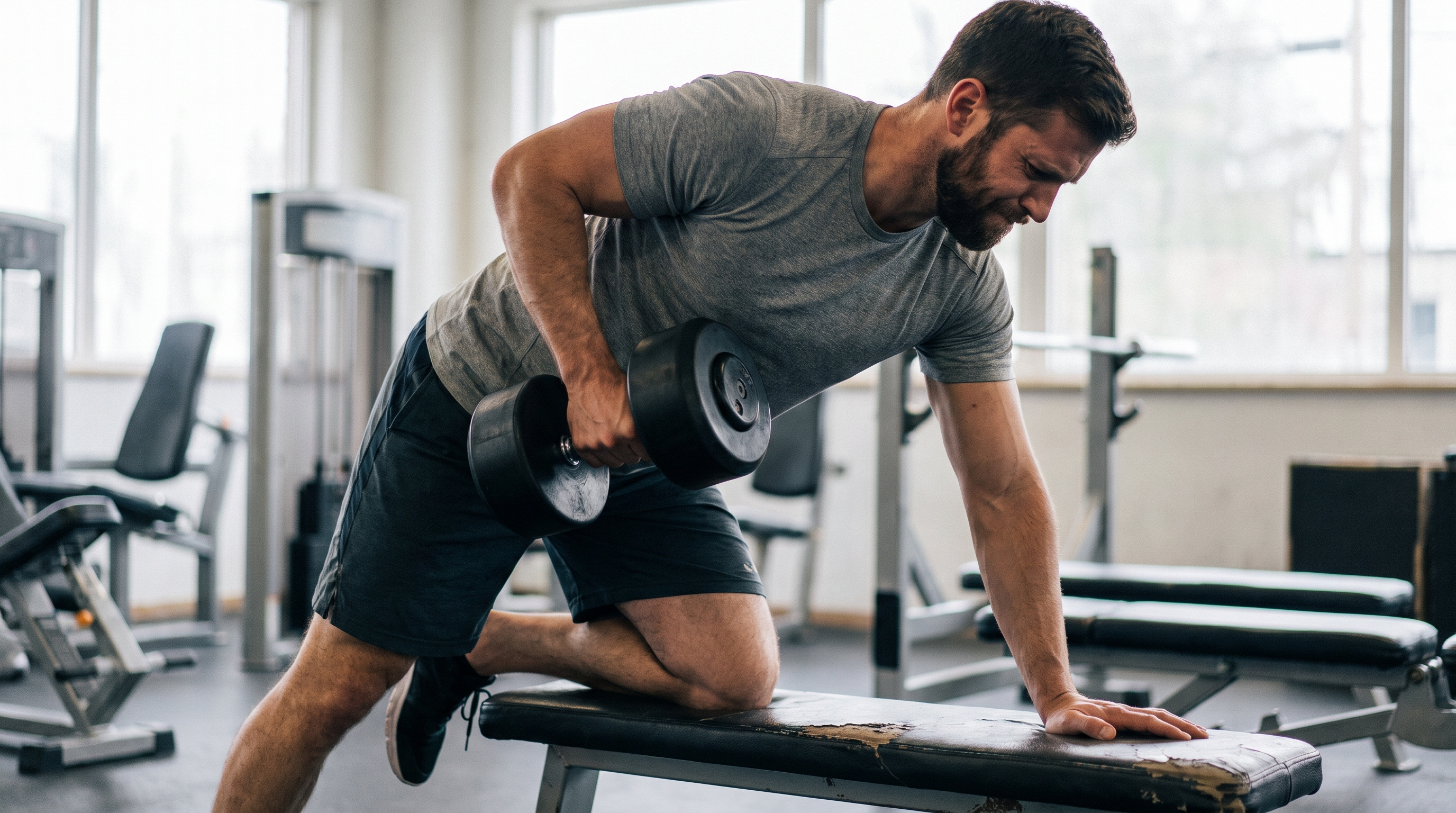
Your muscles produce less force when both sides work at the same time, and the gap is large enough to matter in the gym.

The Claim
You have been pressing the same pair of dumbbells for weeks, and the weight will not move. The sets feel the same as they did a month ago. The reel says: switch to heavy one-arm work.
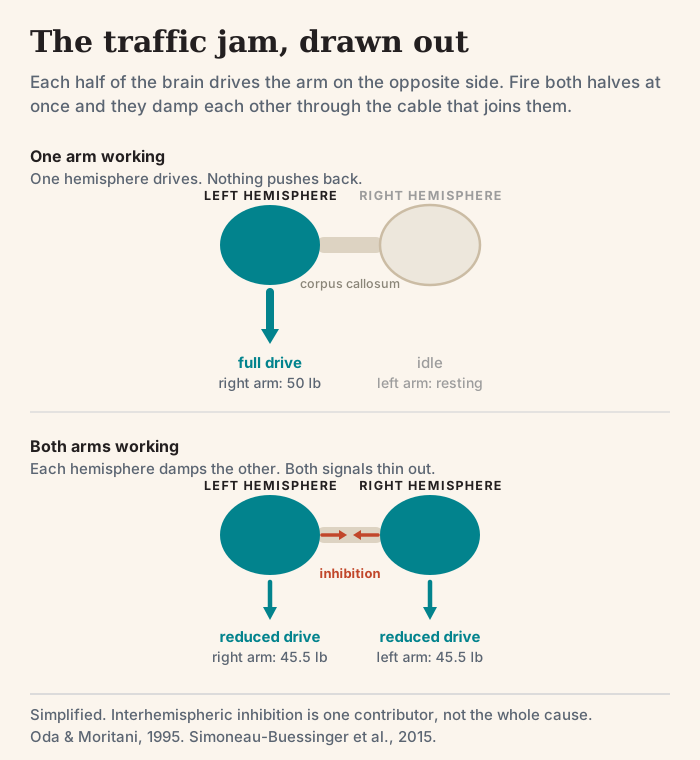
The reason it gives is strange. Your right arm can press 50 pounds overhead. Your left arm can press 50 pounds. But put both arms to work at once and the total is less than 100. Your limbs are weaker together than apart.
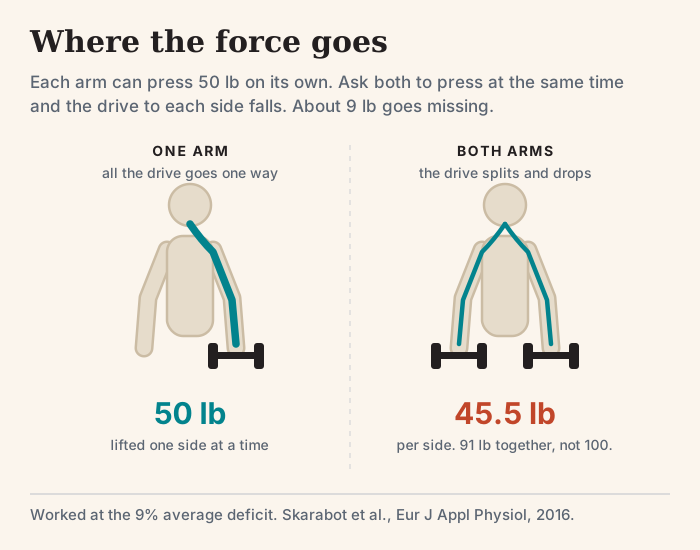
That gap has a name. Researchers call it the bilateral deficit, and it has been measured in labs for over sixty years.
What the Research Actually Found
The observation dates back to 1961, when Franklin Henry and L. E. Smith at UC Berkeley noticed that the combined force of both hands gripping at the same time was lower than the sum of each hand gripping alone.[1] That was a grip-strength test, not a gym lift, but the pattern kept showing up in other movements.
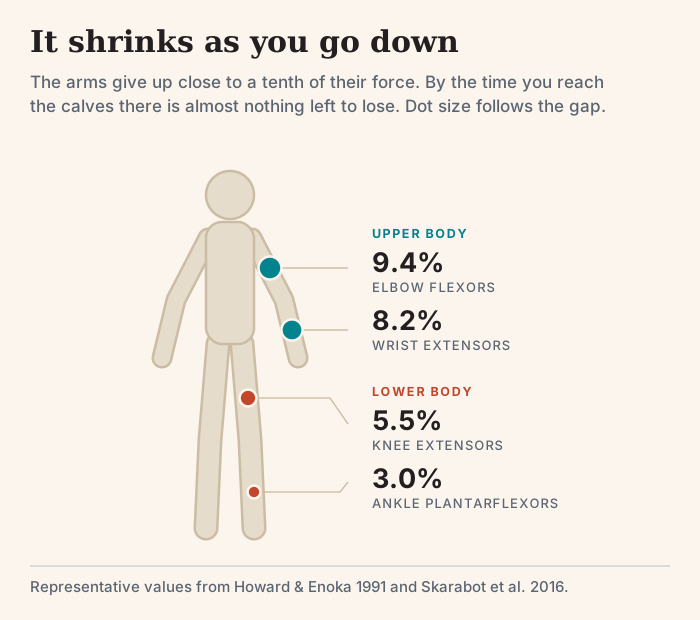
In 1991, Joel Howard and Roger Enoka at the University of Arizona measured the deficit across several muscle groups and found it ranged from 3 to 10 percent. The key finding: the gap was neural, not muscular. Motor unit activation dropped when both limbs contracted together compared to when each worked alone.[2]
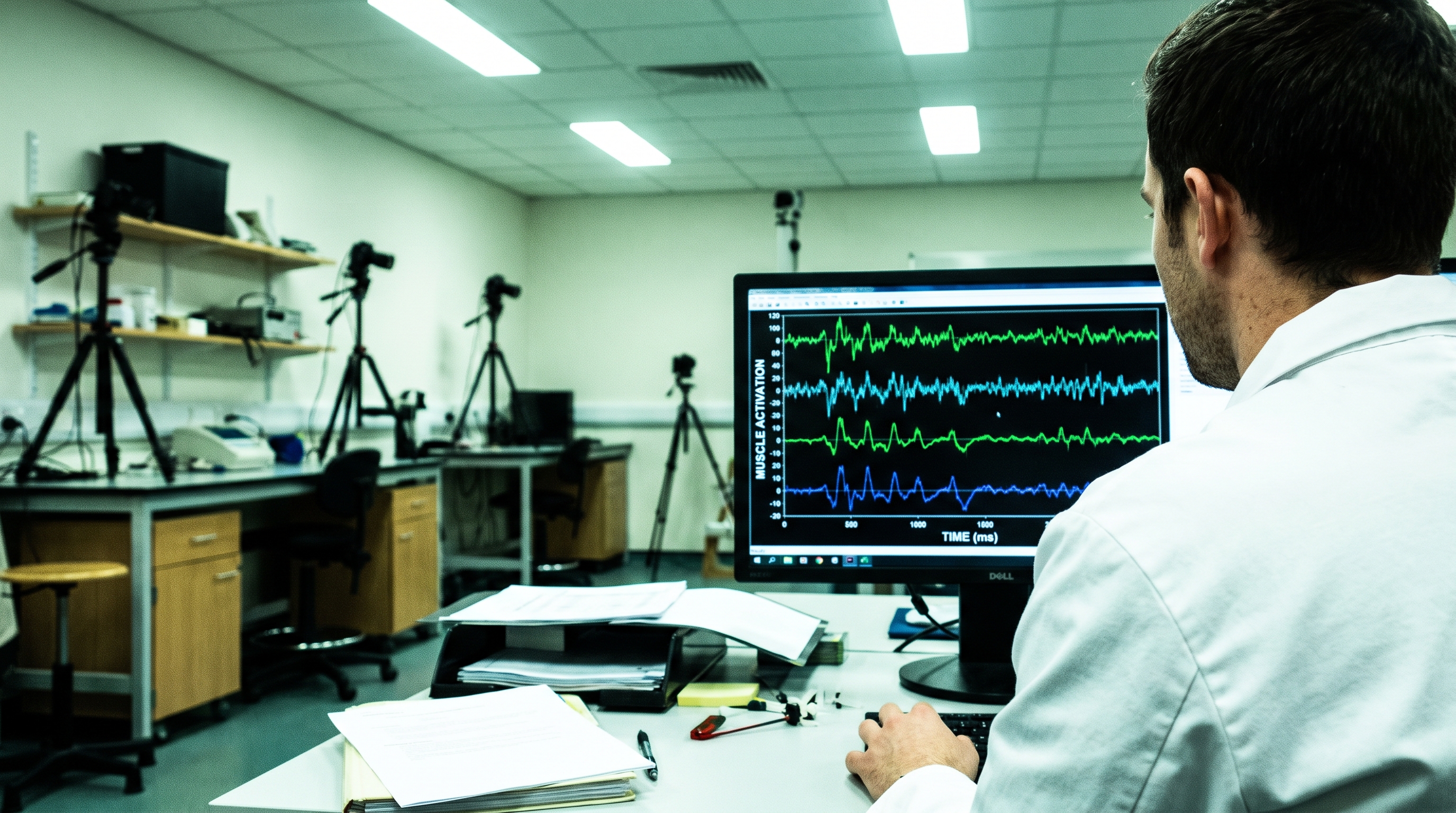
Shigeo Oda and Toshio Moritani in Kyoto put a finer point on it in 1995. They measured the deficit at 5.2 percent in the elbow flexors and recorded the electrical activity of both the muscles and the brain's motor cortex. During bilateral contractions, the cortical signal was lower. Less drive from the brain meant less force from the muscle.[3]
The most complete summary came in 2016. Nejc Skarabot and colleagues reviewed every bilateral-deficit study they could find across multiple decades of research. The deficit appeared in roughly 70 percent of the comparisons, averaging about 8 to 9 percent. It was larger in the arms than the legs, and larger in untrained people than in trained ones.[4]
Why It Happens
The reel calls it a "neural traffic jam," and that is a good way to picture it. Here is what happens underneath.
When both halves of the brain fire at the same time to drive left and right limbs, they slow each other down through the corpus callosum, the thick cable of nerve fibres that connects them. The brain's drive to each side drops. One arm alone gets the full signal. Both arms together split a weaker one.

But that is not the whole story. In 2015, a team in France showed that simply changing body position during a bilateral test (seated versus lying, for example) changed the size of the deficit. That points to posture and mechanics as part of the cause, not just the brain.[5]
What It Looks Like in Practice
The application is straightforward. If your bilateral overhead press has stalled at 60 pounds per hand, your unilateral max per arm may sit at 65 or higher. One-arm work lets you train at that higher threshold without waiting for both sides to get there together.
The simplest swap: replace one of your bilateral pressing or rowing sessions each week with the single-arm version of the same lift. Single-arm dumbbell press, single-arm dumbbell row, single-arm cable pulldown. Same movement pattern, one side at a time, heavier weight.
Drop sets fit here too. Press the heavy single-arm weight for your working sets, then drop to a lighter load and finish with both arms together. You get the higher-threshold stimulus first and the bilateral volume after.
Three to four weeks of this is enough to tell whether the deficit was the bottleneck. If your bilateral press moves when you go back to it, the deficit was a contributor. If it does not, the stall was somewhere else.
References
- Henry FM, Smith LE. Simultaneous vs. separate bilateral muscular contractions in relation to neural overflow theory and neuromotor specificity. Research Quarterly. 1961;32(1):42-46. doi:10.1080/10671188.1961.10762069
- Howard JD, Enoka RM. Maximum bilateral contractions are modified by neurally mediated interlimb effects. Journal of Applied Physiology. 1991;70(1):306-316. doi:10.1152/jappl.1991.70.1.306
- Oda S, Moritani T. Maximal isometric force and neural activity during bilateral and unilateral elbow flexion in humans. European Journal of Applied Physiology and Occupational Physiology. 1995;69(3):240-243. doi:10.1007/BF01094795
- Skarabot J, Cronin N, Strojnik V, Avela J. Bilateral deficit in maximal force production. European Journal of Applied Physiology. 2016;116(11-12):2057-2084. doi:10.1007/s00421-016-3458-z
- Simoneau-Buessinger E, Leteneur S, Toumi A, Dessurne A, Gabrielli F, Barbier F, Jakobi JM. Bilateral strength deficit is not neural in origin; rather due to dynamometer mechanical configuration. PLOS ONE. 2015;10(12):e0145077. doi:10.1371/journal.pone.0145077
- Secher NH. Isometric rowing strength of experienced and inexperienced oarsmen. Medicine and Science in Sports. 1975;7(4):280-283. PubMed:1235156