
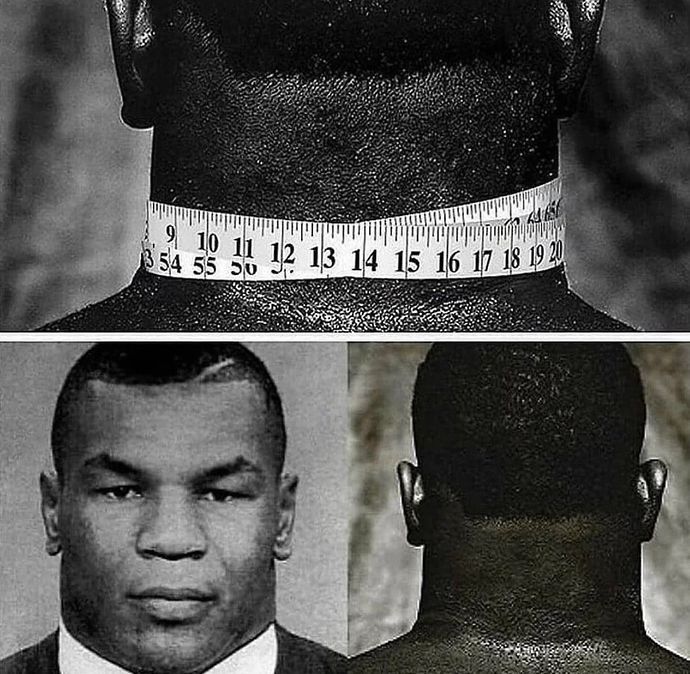
Note: After this you will know exactly what a neck bridge asks a spine to do, why most strength coaches quietly stopped programming it, and what they use instead. You will also know why the replacement costs money when the bridge was free.
The first coach who showed me a neck bridge did not explain it. He walked past a row of us on the mats, said "get on your head," and kept walking. Everybody arched back until the top of the skull was on the floor. We held it until somebody's eyes watered.
Nobody asked why. It was free, it was hard, and the men who did it had necks like fire hydrants. That was the whole argument, and for about eighty years it was good enough.
It is not that the bridge does nothing. It builds a strong neck, which is exactly why it survived. The problem is the price the position charges to get you there, and how long the bill takes to arrive.
The Whole Argument, Before You Scroll
| The Neck Bridge | Kensui EZ-HELM V2 | Iron Neck 3.0 Pro | |
|---|---|---|---|
| What presses on the neck | Your bodyweight, through the skull | Plates you pick, hanging at the ears | Air pressure against a harness |
| Smallest step up in load | None. You get your bodyweight | 2.5 lb | Dial increments |
| Neck position while loaded | Deep extension, held at end range | Any range you choose to stop in | Near neutral, supported |
| Resisted rotation | No | Yes, figure-8 | Yes, on the Pro only |
| Price | Free | $199 | $599 |
| Get the EZ-HELM |
Kensui and Iron Neck prices checked on each company's own store on August 20, 2026. Iron Neck also lists a standard 3.0 at $349 without the rotation dial.
A 1924 Manual Said The Quiet Part Out Loud
Earle Liederman was one of the best known physical culture men of his era. His 1924 book The Science of Wrestling and the Art of Jiu-Jitsu tells the reader to practice the bridge, and then tells them how to make it harder.
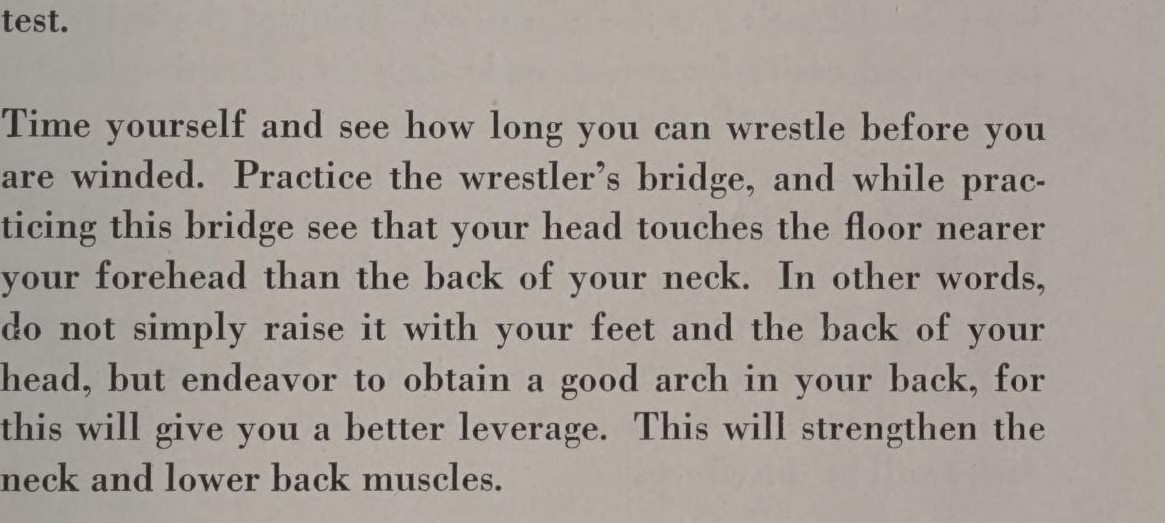
Read what it actually asks for. Get the head over toward the forehead rather than the back of the skull. Do not just lift with the feet. Arch harder, because the arch gives better leverage.
That instruction is the bridge in one sentence. The goal is a bigger arch, and a bigger arch means the neck goes further into extension while your bodyweight is already sitting on it. Liederman was not being reckless by the standards of 1924. He was writing down what everybody taught.
What Mike Tyson Said About His Own Neck
In September 2020, Tyson talked about his training on The Joe Rogan Experience. He brought up the head bridges himself. His words about them were blunt: "they destroy your neck." He said he would do them for three minutes at a time, rest a minute, and repeat for five, six or eight rounds. He also said he later had surgery on his neck.
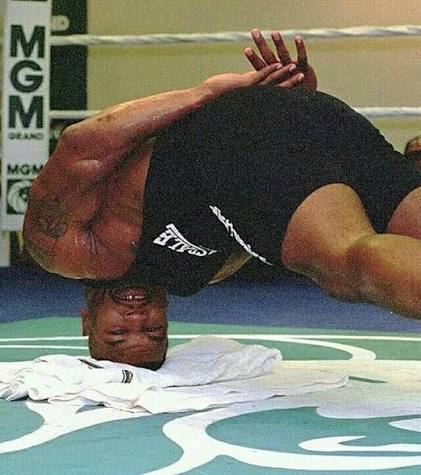
Two things are worth being careful about here. That is Tyson's account of his own body, not a medical finding, and nobody can hand you the scan that proves which training built the neck and which training wore it out. He is one man with one history in a sport that hits people in the head for a living.
What makes it worth repeating anyway is who is saying it. The most famous neck in boxing belonged to someone who did more of this exercise than almost anyone alive, and his own verdict on it is not fond. Rogan's response in that conversation was to bring up a device that loads the neck without pressing down through the discs, which is roughly where the rest of the strength world had already landed.
Clinicians Have A Name For That Position
Here is the part that surprised me. Extend the neck, rotate it, then press straight down through the top of the head. That combination has a name in a clinic. It is called Spurling's test, and its entire purpose is to squeeze the openings where nerve roots leave the spine until a patient's arm symptoms come back, so the examiner can confirm where the problem is.
There is measured work behind why that position is the one they picked. A 1992 study in Spine loaded cadaver cervical spines with 10 pounds and measured the openings directly. At 20 degrees of extension they were 10 percent narrower than neutral. At 30 degrees, 13 percent.
Be careful with what that does and does not say. It describes what the position does mechanically. It is not evidence that a healthy person who bridges will be injured, and Spurling's test is used on people who already have a suspected problem. No trial has ever taken a room of healthy athletes, made half of them bridge for a decade, and counted the damage.
What you can say plainly is this. The bridge trains the neck in the one position where the openings are tightest, using the one load you cannot adjust, and it was chosen for those properties by accident rather than on purpose. It was simply what a gym had in 1924, which was a floor.
Strength Coaches Kept The Goal And Changed The Tool
Nobody sensible argues against a strong neck. A review in Sports Medicine covering neck training found that programmes reliably build neck strength across trained and untrained people, using isometric or dynamic work, with a wide range of resistance devices. The goal held up fine.
The tool is what moved. Once resistance can be attached to the head directly, the skull stops being the thing you balance on and becomes the thing you hang weight from. You keep the loading and drop the position.

That is what the Kensui EZ-HELM V2 is. A padded harness with a short sleeve on each side that takes any 2 inch Olympic plate, up to 100 pounds. It weighs 2 pounds on its own, so an untrained neck can start with the helmet and nothing else and still be training against something.
The part that matters most for this argument is the smallest step. A bridge gives you one option, which is your entire bodyweight through your head on day one. A plate sleeve gives you 2.5 pounds, then 5, then 10, in whatever range of motion you decide to stop in.


Both clips show band work. The TensionFlex bands are a separate $39 accessory. The helmet itself is loaded with plates.
Kensui EZ-HELM V2
Plate-loaded to 100 lb, 2 lb on its own, flexion, extension, side curls and figure-8 rotation. $199 with a 100-day money-back trial.
Get the EZ-HELMWhere This Argument Gets Weaker
A page like this should tell you what it cannot prove, so here it is.
- No study shows that neck bridges injure healthy people who progress sensibly. The mechanical case is strong and the outcome case does not exist.
- Bridges genuinely do build neck strength. If they did nothing, they would have died out on their own.
- The link between neck strength and concussion risk is still unsettled. We went through that literature in a separate piece, and it does not support anyone promising protection.
- For rehab work under a clinician, the Iron Neck is the better tool and it is not close. Gravity-reduced, near-neutral, low-load training is what a healing neck needs, and a plate-loaded helmet does not do that. It costs $599 for a reason.
The honest version of this article is narrower than the headline. Not "bridges will hurt you," but "bridges load the tightest position with the one weight you cannot change, and there is now a way to train the same muscles without doing either of those things."
What It Costs
The bridge was free, and free is the reason it lasted. It needed a floor and a coach willing to say three words.
The EZ-HELM is $199. That is one third of the Iron Neck 3.0 Pro at $599, and it is roughly what a decent pair of adjustable dumbbells runs. Kensui puts a 100-day money-back trial on it, which is longer than most people take to decide whether they will keep training their neck at all.
Whether that is worth $199 depends on how much you believe Tyson about his own neck. He got the thickest neck in boxing out of the free option, and he is on record about what came after.
Sources
- Liederman E. The Science of Wrestling and the Art of Jiu-Jitsu. New York, 1924, p. 33. Scanned by the Library of Congress. archive.org
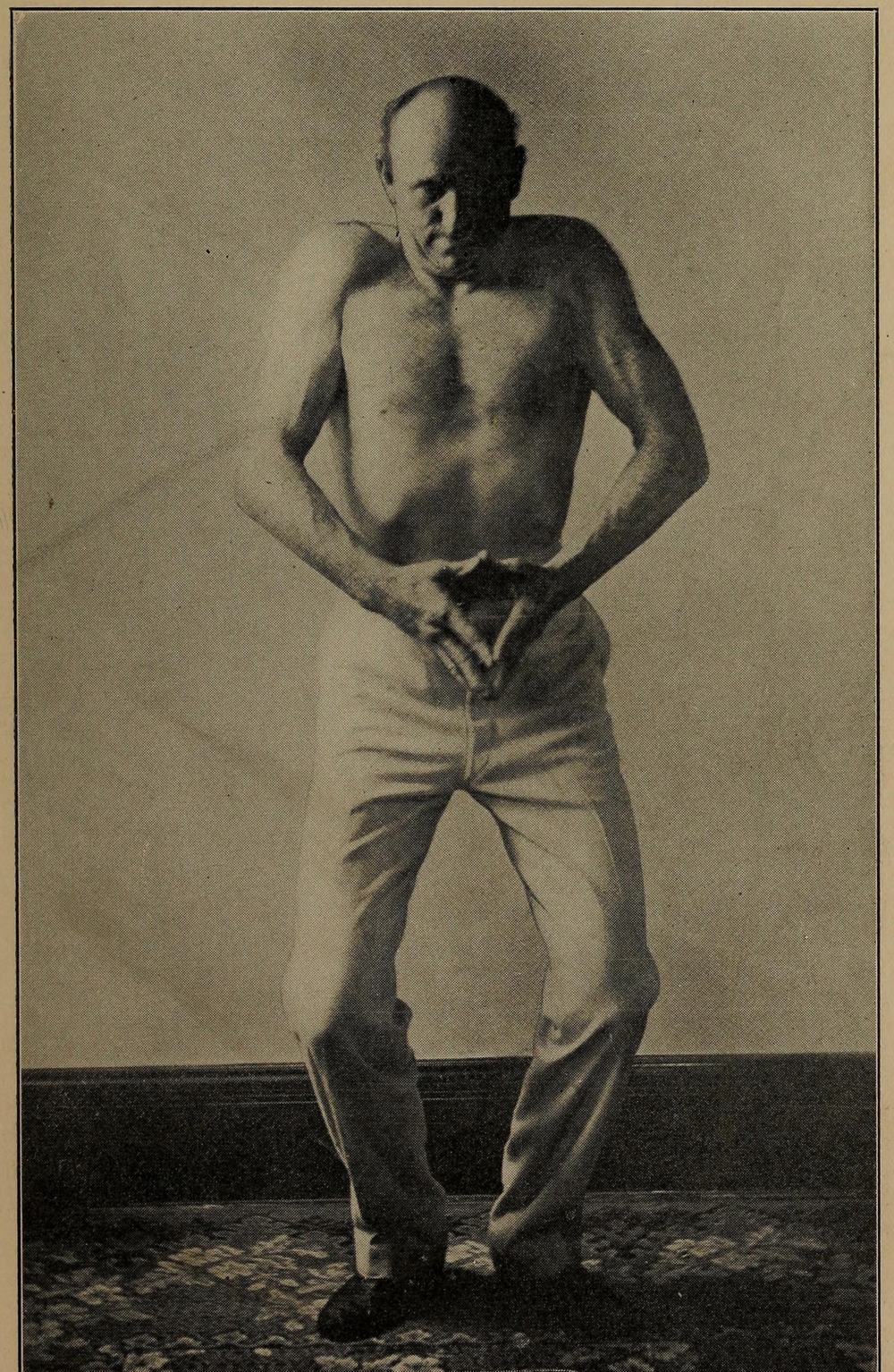
- Fitzsimmons R. Physical Culture and Self-Defense. 1901, plate facing p. 35. Scanned by the Library of Congress. archive.org
- The Joe Rogan Experience, episode 1532, September 4, 2020. Tyson's remarks on head bridges and neck surgery. Quoted from published transcripts of the episode.
- Yoo JU, et al. Effect of cervical spine motion on the neuroforaminal dimensions of human cervical spine. Spine. 1992;17(10):1131-1136. PMID 1440000
- Spurling test. StatPearls, NCBI Bookshelf. NBK493152
- Versteegh T, et al. Neck muscular strength, training, performance and sport injury risk: a review. Sports Medicine. 2016. PMID 26861960
Train The Neck Without Standing On It
Plate-loaded to 100 lb. Flexion, extension, side curls and figure-8 rotation. Start with the 2 lb helmet and add 2.5 lb at a time.
