Persian Wrestlers Trained With This Weapon for 3,000 Years. An MIT Engineer Just Fixed Its One Flaw.

The mace is the oldest resistance training tool in recorded history. For 30 centuries, it had one problem: you could not change the weight.
The Weapon That Built Wrestlers and Soldiers
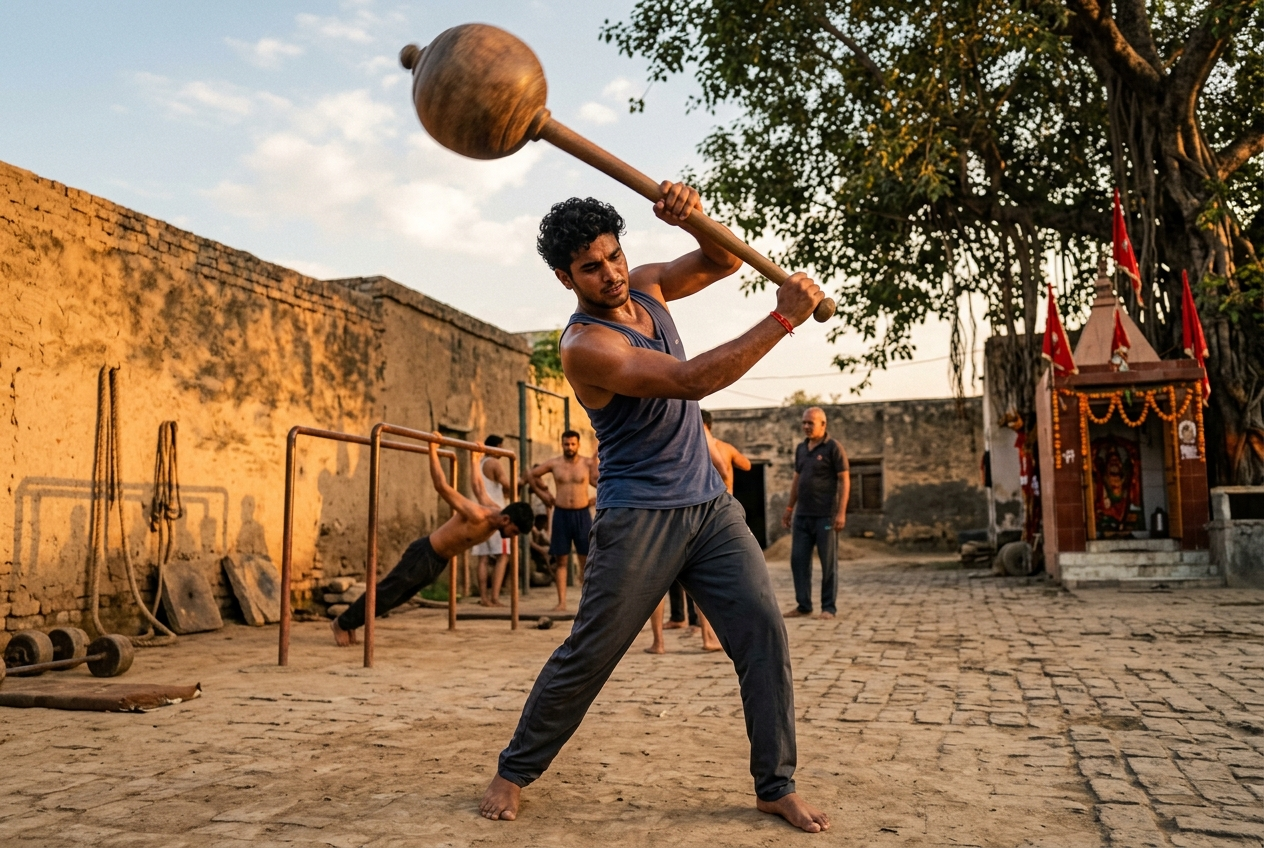
Somewhere in what is now Iran, roughly 3,000 years ago, a wrestler picked up a heavy wooden club and swung it over his head.
He was not inventing an exercise. He was training for war.
The club was a meel, a thick wooden shaft with a weighted stone or metal head, and the building he swung it in was called a zurkhaneh: a "house of strength" that doubled as gymnasium and recruitment hall for the Persian military. The heavier the club you could control through a full overhead arc, the more seriously the army took you.
The zurkhaneh ritual combined strength with rhythm. Wrestlers swung pairs of meels in synchronized sets, often for 10 to 20 minutes without rest. The drill built endurance alongside raw power: the same shoulders and grip that controlled a battle mace in combat controlled a training meel inside the gym.
The practice outlived the empire that started it. Indian wrestlers adopted the weighted club under the name gada, connecting it to the weapon carried by the Hindu deity Hanuman. Northern India's akhara training halls still use solid wooden gadas today, some weighing over 60 pounds, swung in the same circles their predecessors traced centuries ago.
What Made It Work
A barbell distributes weight evenly across your hands. A mace concentrates it at one end, far from your grip. Every swing is a fight against leverage.
Your shoulders stabilize through a range of motion most lifts never touch. Your grip endures a load that shifts direction with every degree of rotation. Your core works under true rotational force, the kind that matters in a golf swing, a punch, or a fall you need to catch.
The offset load trains deceleration too: the ability to slow a moving weight under control. That pattern shows up in throwing, hitting, and bracing for impact. Every rotational sport benefits from it, and most gym programs build none of it.
Sports scientists call this rotational strength. Boxers, wrestlers, and baseball players have trained it for decades. The mace is how it started.
For roughly 3,000 years, this tool had one problem nobody solved.
You Could Not Change the Weight
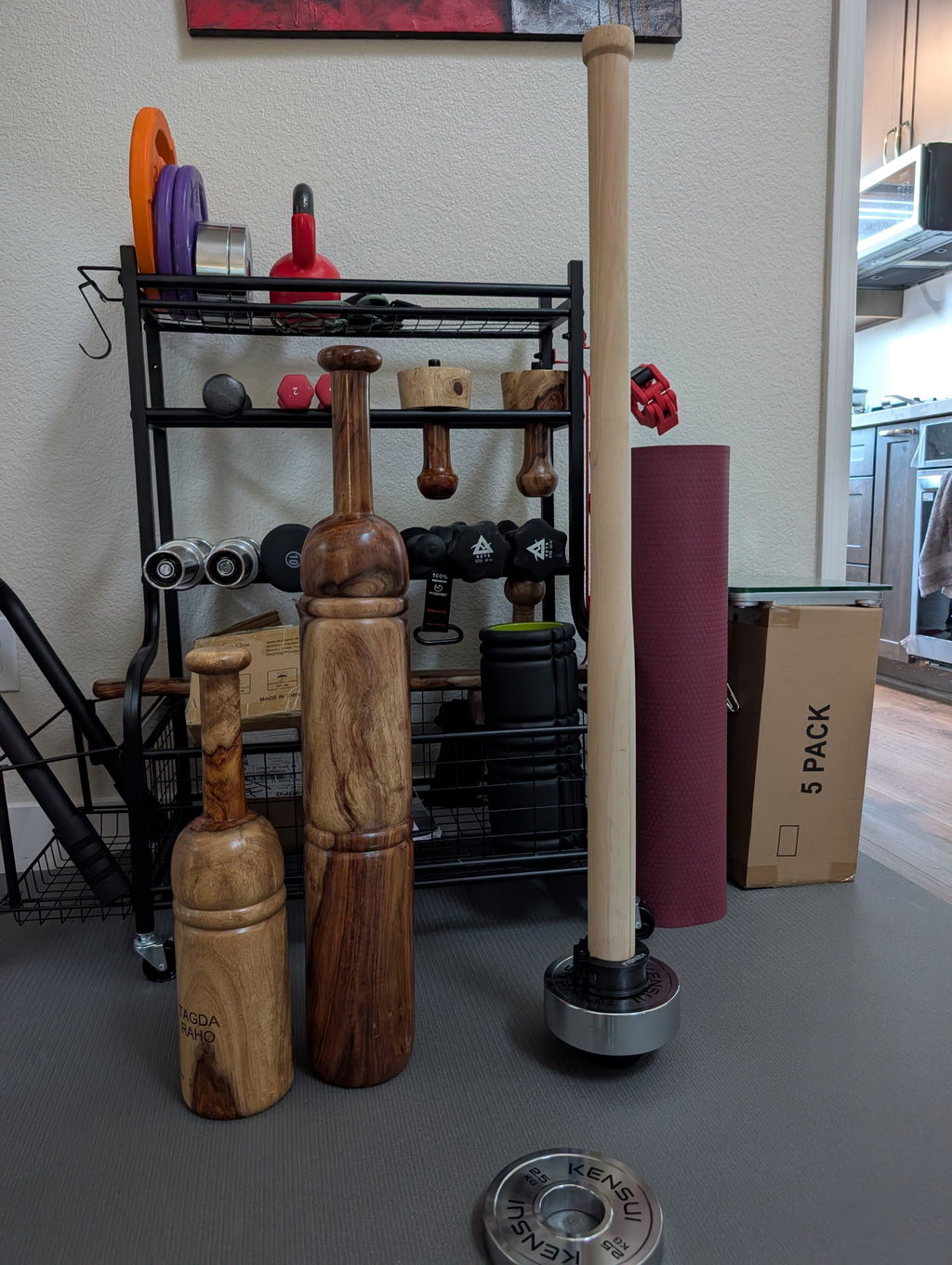
A 20-pound gada is always 20 pounds. You cannot warm up with 5, train with 15, and finish heavy at 25. To progress, you buy another mace.
A full set of fixed steel maces from 10 to 30 pounds costs $250 to $400, and that only gives you five weight increments across five separate tools. The brands that built this market are thinning out. Onnit discontinued its entire steel mace line. Set For Set stopped selling physical maces altogether.
Two adjustable options survived, and both carry trade-offs.
The Rogue Mace ($185 to $225) is plate-loaded and well made. But the lightest model starts at 10 pounds empty. If you have never swung a mace through a full 360-degree circle, 10 pounds overhead is not a warm-up. It is the workout.
The Adex system ($185 to $379) starts lighter at 6 pounds. But it uses proprietary cylindrical weights that fit nothing else you own. Need a replacement collar or a heavier set? You buy from Adex or nobody.
What the Engineer Changed
The same MIT engineer who designed the EZ-VEST (two degrees from MIT, over 141,000 vests sold, featured in GQ, Men's Health, and BarBend) applied the same principle to the mace: make the handle hollow and let people load their own plates.
The engineering underneath that idea matters more than the idea itself.
A traditional solid mace distributes weight along the entire shaft. Some sits in the handle. Some sits in the head. A hollow handle with plates locked at the far end concentrates all the load at the tip. The center of mass sits farther from your hands than in a solid mace of the same total weight.
That changes the physics. A 20-pound EZ-Mace generates more rotational torque than a 20-pound solid mace of equal length, because the moment arm is longer. It feels harder for the same listed weight. That is not a defect. That is the entire point. The gada works as a training tool because of the leverage challenge, and this design amplifies it.
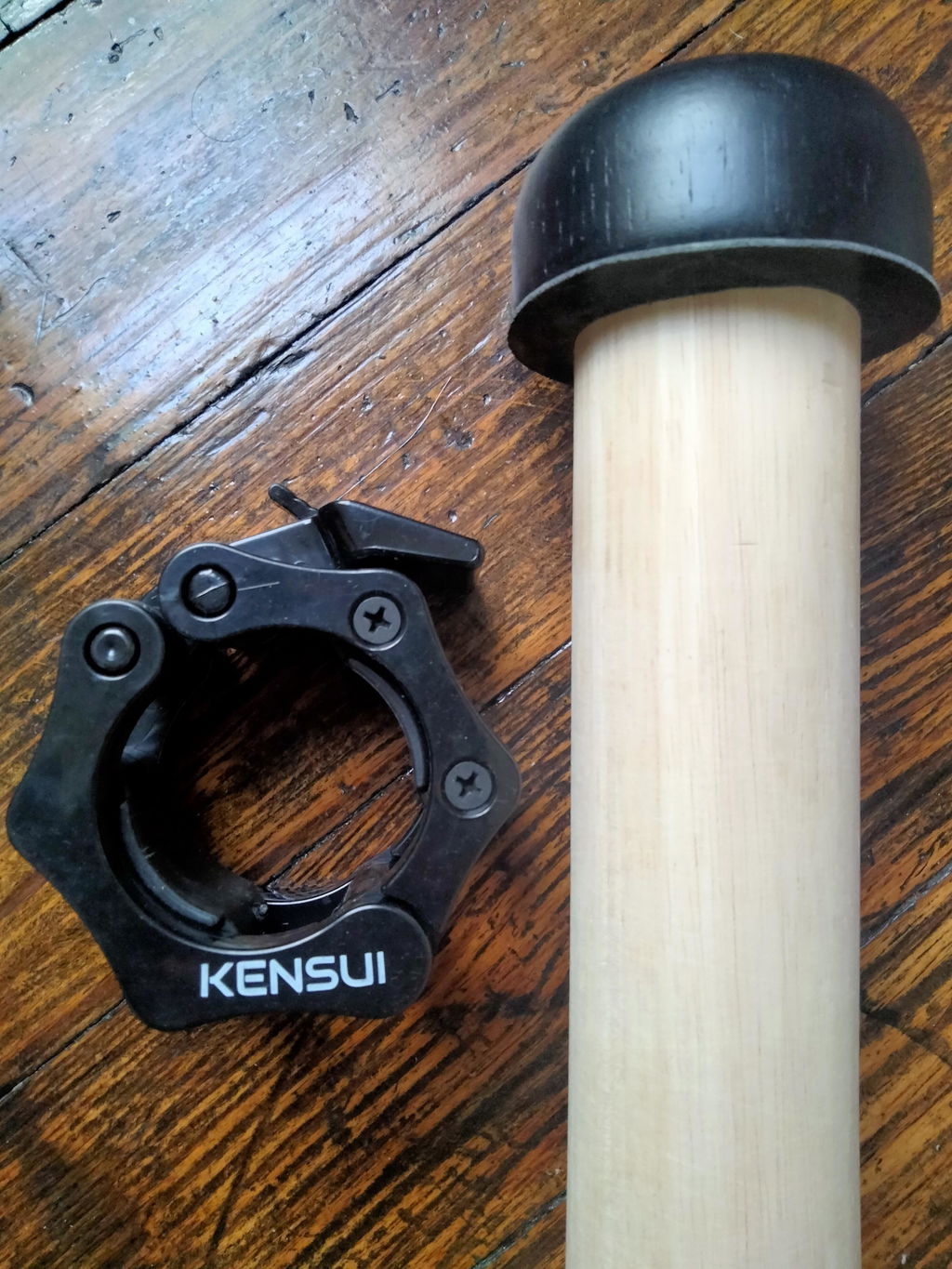
The plates are standard 2-inch Olympic plates, the same ones sitting on every gym's plate tree. Slide them on, lock the included collar, and go. No proprietary weights. No brand-locked ecosystem.
Starting Light Matters More Than You Think
The PRO model weighs 2 pounds empty.
That sounds like a toy until you try a mace 360 for the first time. The movement asks your shoulders to track a load behind your head and back while your hands pass the handle from one grip to the other mid-swing. It is technical, and the penalty for going too heavy too soon is a steel bar swinging past your ear with momentum you cannot redirect.
Two pounds lets you learn the pattern at zero risk. Add a 2.5-pound plate when the movement is clean. Keep progressing in small jumps, the same way you would add weight to a barbell. Neither the Rogue (10 lb minimum) nor the Adex (6 lb minimum) gives you a truly unloaded rehearsal.
The wood is not decoration. Traditional gadas were always wooden. The PRO handle brings the same material into a modern adjustable design, which is worth noting because every other adjustable mace on the market is steel. The grip diameter (40 mm) is slightly thicker than a standard Olympic bar (28 mm), which means your forearms work harder per rep. It grips without chalk and does not build the hot spots a knurled steel bar creates over a long session.
For lifters who already know the movement, the MAX model ($149, steel handle) starts at about 5 pounds and takes the same Olympic plates.

How It Compares
| EZ-Mace V2 PRO | Rogue Mace | Adex Original | |
|---|---|---|---|
| Price | $75 | $185 | $185 |
| Weight System | Olympic plates (2") | Olympic plates (2") | Proprietary |
| Empty Weight | 2 lbs | 10 lbs | 6 lbs |
| Handle | Malaysian rubber wood | Stainless steel | Steel |
| Collar Included | Yes | No | Yes |
| Length | 40 in / 103 cm | 31 in | 40 in |
| Availability | In stock | In stock | Sold out |
| Learn More |
Prices checked on each maker's listing, August 2026. Rogue price reflects the 10 lb / 31-inch model ($185). Adex price reflects the Original Handle kit ($185). The Adex system was sold out at time of review.
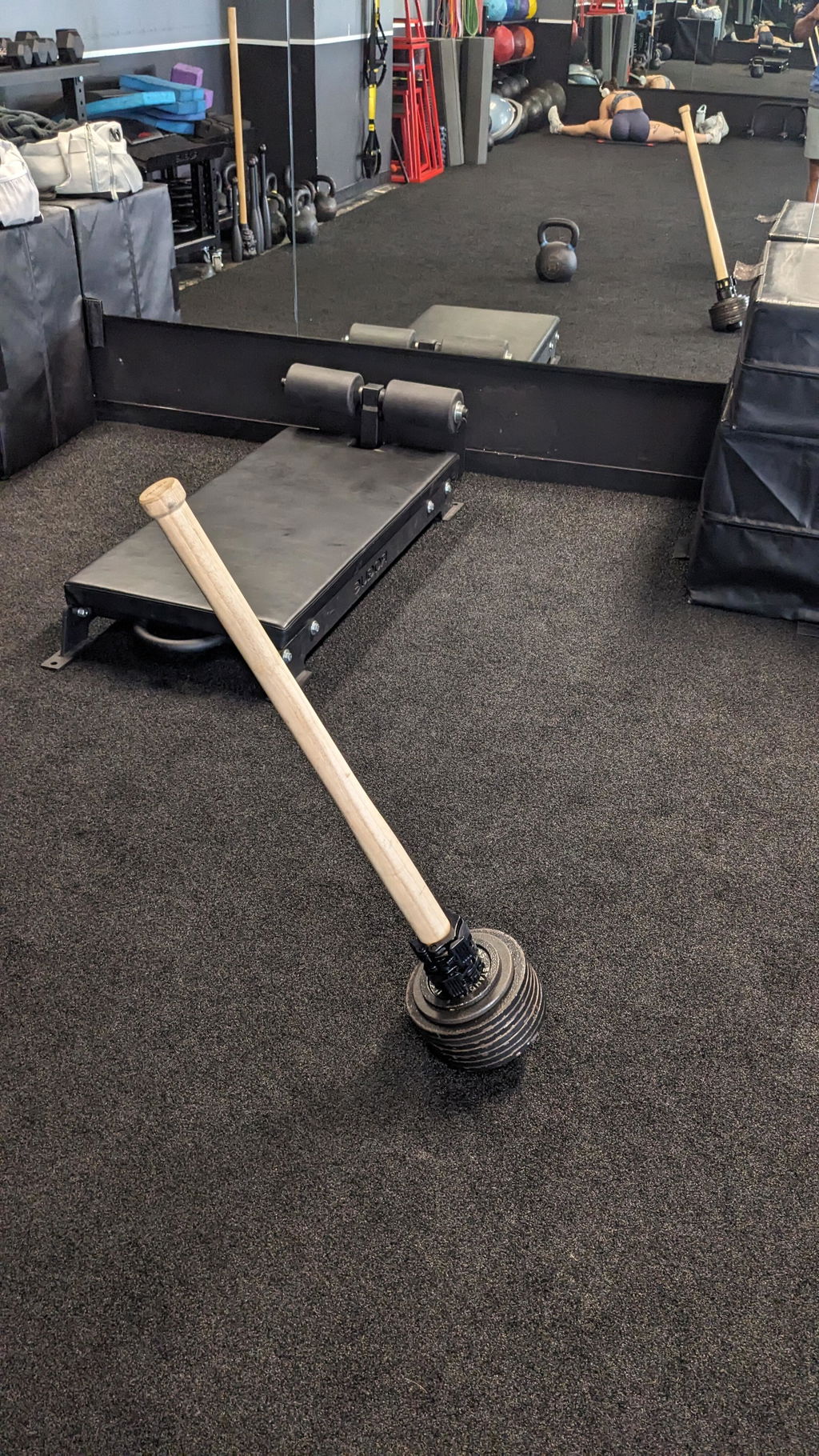
"The EZ-MACE is the real deal! I love the feel of the natural beech wood grip. I worked up to 30 pounds, which is the heaviest I've ever done. Overall this thing is a winner and provides tremendous value for the money."@bells_and_bodybuilding — Verified Buyer
What It Costs
Two models, both in stock. The PRO is $75 for the wood handle. The MAX is $149 for steel. For context, the cheapest adjustable competitor starts at $185, and neither ships with the low entry weight or standard plate compatibility you get here.
Both come with the collar included, a 100-day money-back guarantee, and free shipping on orders over $100.
100-day money-back guarantee · Free shipping over $100
Frequently Asked
Do I need Olympic plates?
How much weight can it hold?
PRO or MAX?
Can I use it for steel mace flows?
Science Meets Gym is editorially independent. Kensui provided product access for this review. We may earn a commission on purchases through our links at no cost to you. All product claims, ratings, and prices were verified at time of publication.
