I Bought $700 in Adjustable Dumbbells Before Finding the $49 Fix
Four selectorized sets later, the thing that finally worked turned the plates I already owned into a full dumbbell rack.

My garage gym took eleven years to get right. The dumbbells took four tries and most of a year's hobby budget.
Here is the trap nobody warns you about. A pair of adjustable dumbbells looks like the smart way to save space and money. One purchase replaces a whole rack. That is the pitch on every box. So I kept buying the pitch, and I kept getting burned by the same two problems: they cap out at a weight I outgrow, or they break in a way that turns $300 into landfill.
By the time I added it up, I had spent a little over $700 on four different sets. Then a buddy at my gym handed me a pair of metal handles that cost $49, and I have not touched a selectorized dumbbell since.
Here are the four I regret, what went wrong with each, and the $49 fix that ended the search.
Spin-Lock Adjustable Dumbbells
Cheap, simple, and loose by the third set.
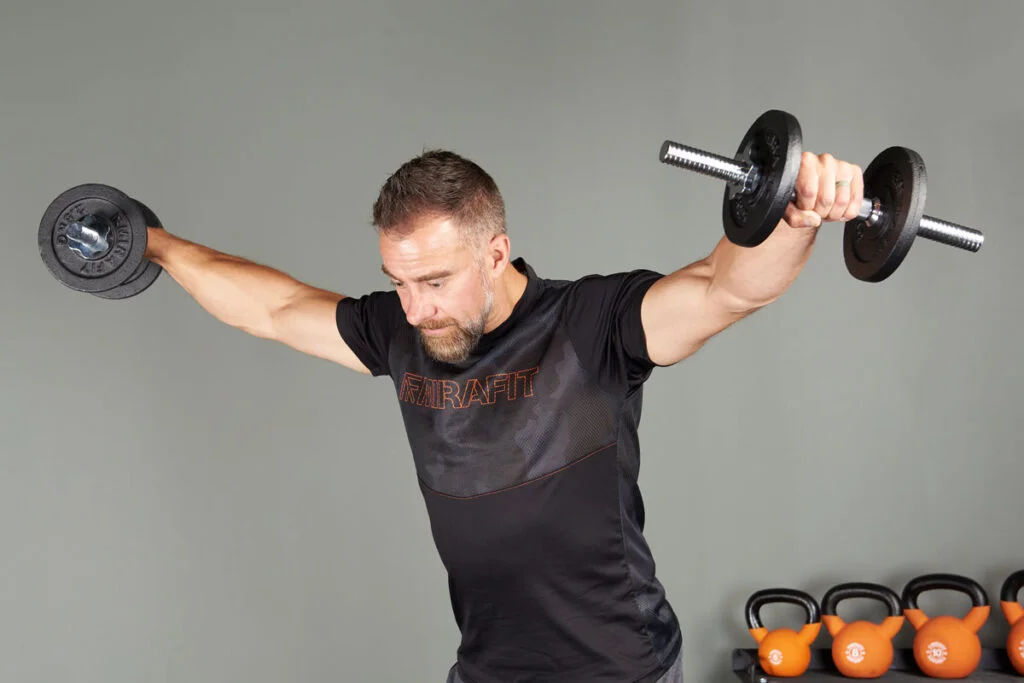
This was my "get started without overthinking it" purchase. Two chrome bars, a pile of cast plates, and spin collars to hold it all together. On paper it is the most honest design here, because it uses real plates instead of a plastic shell.
The problem showed up fast. Spin collars do not stay tight. A few hard sets of rows and the vibration backs them off. I had a plate slide down the bar mid-press and clang onto the floor an inch from my foot. After that I started double-checking both collars before every set, which is exactly the kind of friction that makes you skip the gym.
Changing weight is slow, too. You unscrew a collar, slide plates on or off, then screw it back down and torque it by hand. Do that on both ends of two dumbbells between every exercise and you spend more time spinning collars than lifting.
A loaded plate on a smooth threaded bar relies entirely on friction at the collar. Repeated impact and rotation loosen that grip over time, which is why spin-lock collars creep open under real training loads. It is a known failure mode, not a defect in your particular set.
Bottom line: A fine first step that taught me real plates beat plastic. The collar system makes it too slow and too loose to trust under heavier work.
PowerBlock Sport 24
Clever design. I outgrew it in two months.
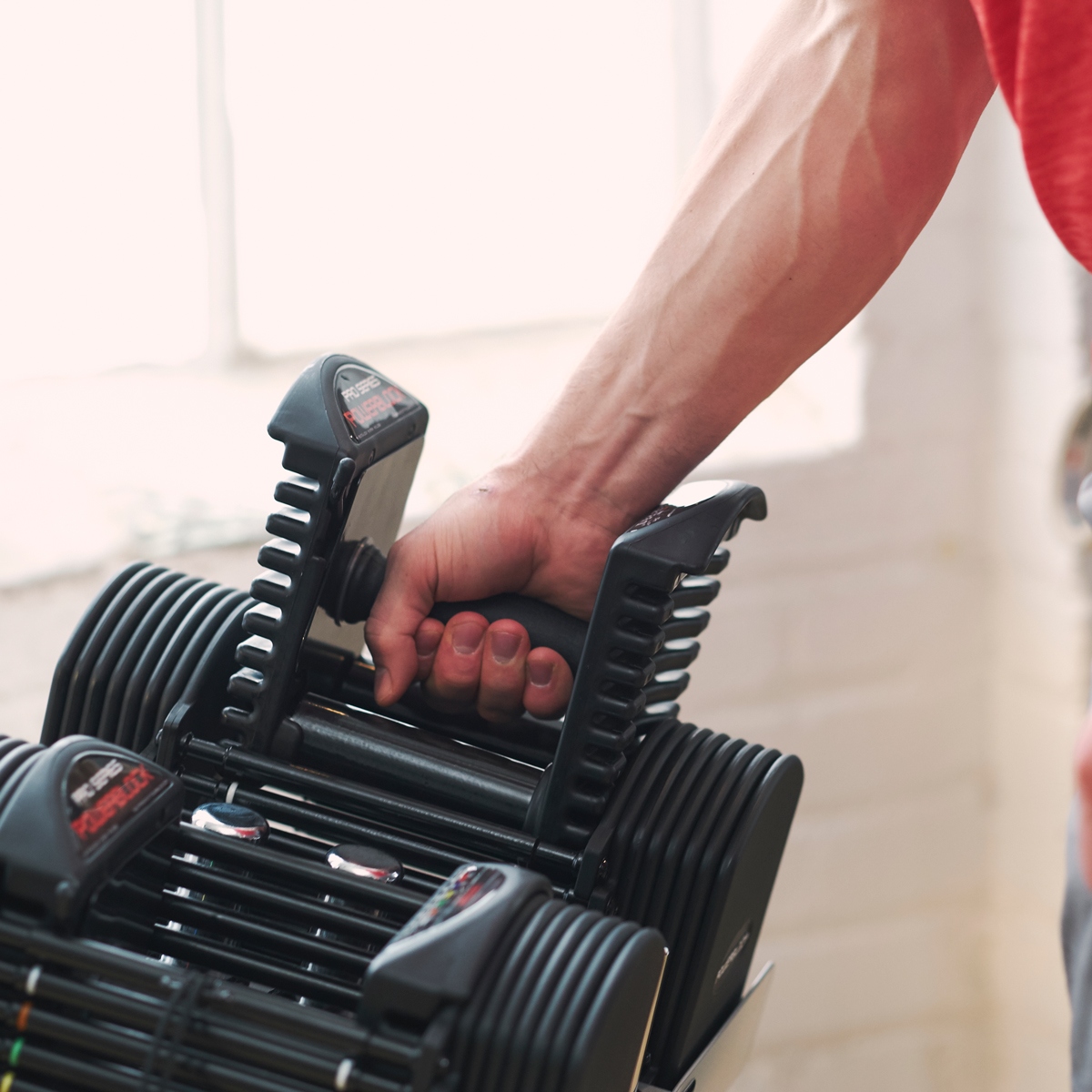
The PowerBlock fixed the speed problem. Drop a pin, pull the handle, and your weight changes in a couple of seconds. I liked it more than anything else on this list for the first few weeks.
Then two things caught up with me. First, the cage shape. Your hand sits inside a rectangular frame, and on curls and presses the outer block knocks against my forearm and wrist. You learn to angle around it, but you should not have to. Second, and this is the real killer, 24 pounds per hand is not much. For rows, goblet squats, and any pressing, I blew past it almost immediately.
PowerBlock sells expansion kits to push the weight higher, so I priced those out. By the time I added the stage that would actually carry me, I was spending more than a heavier set would have cost in the first place. The "starter" price stops looking like a deal once you do that math.
Strength gains depend on progressive overload, which means you need headroom to keep adding weight for years, not weeks. A 24-pound ceiling caps your biggest movements early, and once an implement can no longer challenge you, it stops driving adaptation.
Bottom line: Fast to adjust and well built, but the low weight ceiling and the boxy hand position pushed me to upgrade again. Buying up the expansion kits erases the value.
Bowflex SelectTech 552
The popular one. Also the bulkiest and the most fragile.
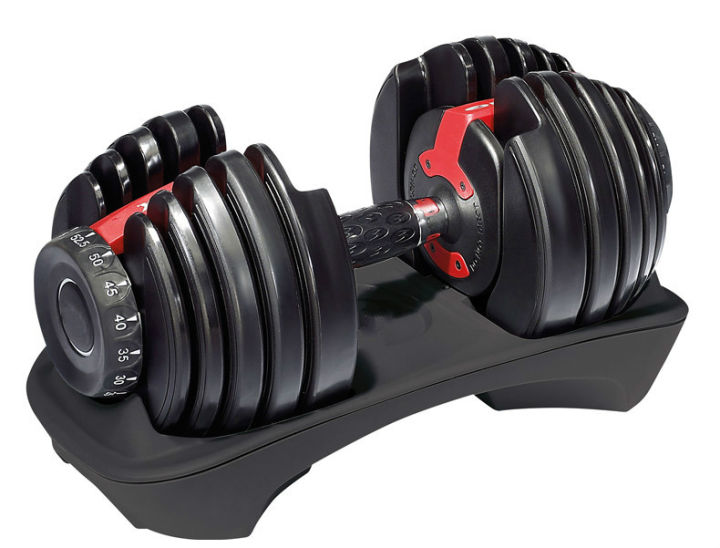
This is the set everyone recommends, so I finally caved. The dials are satisfying, the range is wide, and 52.5 pounds felt like plenty after the PowerBlock. For a while I thought my search was over.
Two flaws wore me down. The first is size. Even at light loads the dumbbell stays full length, so the plastic ends are long enough to clip my ribs on heavy presses and bang the floor on rows. The second is the rule that you can only change weight while the dumbbell sits in its cradle. You cannot drop these and you cannot adjust them mid-air, so drop sets and quick swaps mean walking back to the dock every time.
Then one slipped off the edge of my bench from about a foot up. A normal dumbbell shrugs that off. This one jammed the dial and locked half the plates in place. A loaded plate sitting in a plastic housing has a failure point that iron simply does not, and I found it.
Dial-selector dumbbells hold their plates inside a molded shell with a plastic selector mechanism. That mechanism is the weak link. A short drop that would never hurt a solid plate can crack the housing or jam the dial, because the load path runs through plastic instead of steel.
Bottom line: Wide range and easy to read, but bulky on every lift and one bad drop from the trash. Spending $279 on something this drop-sensitive felt like a mistake the moment it broke.
NordicTrack iSelect
Voice control on a dumbbell. I just wanted to lift.
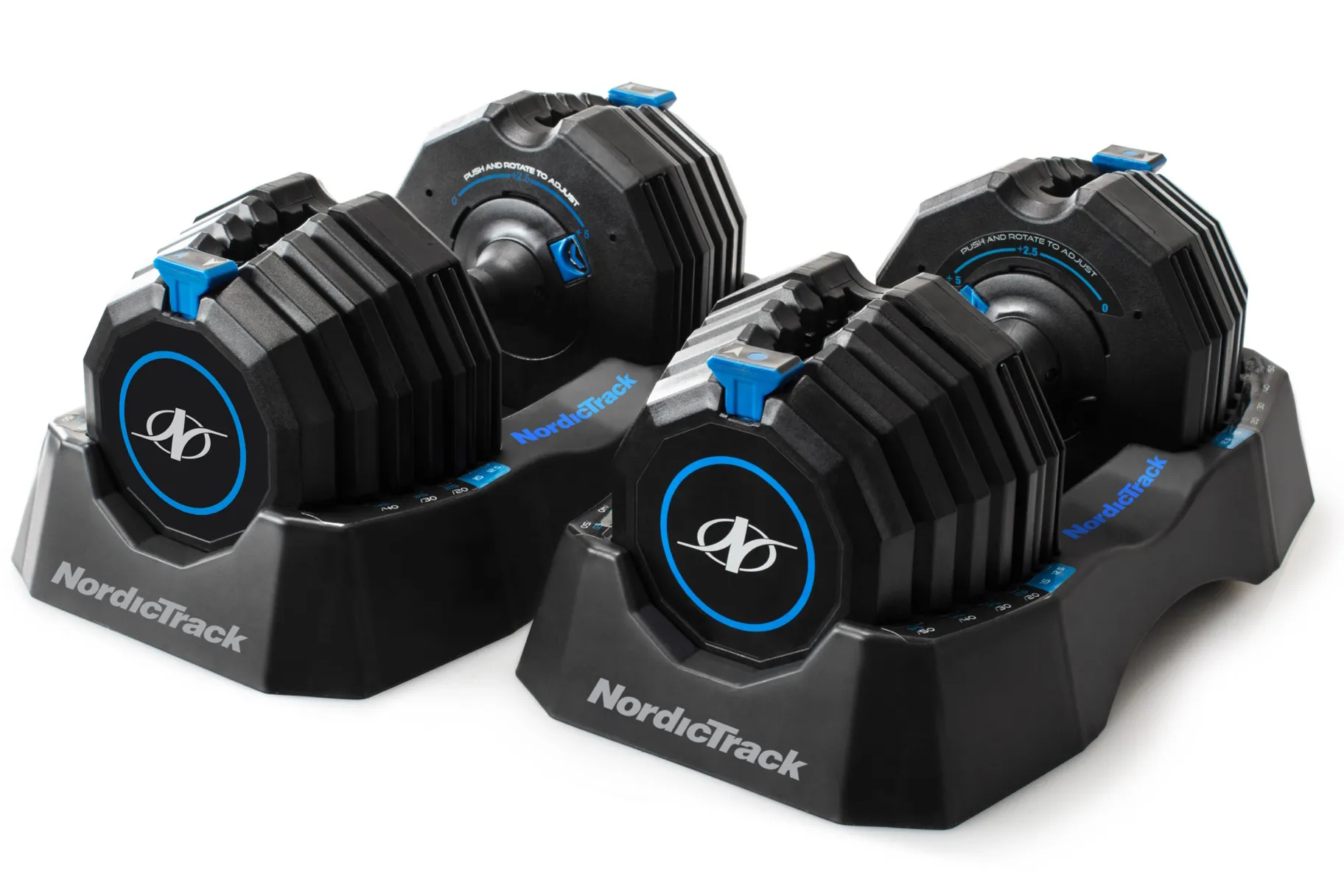
By now I was annoyed, and the iSelect promised something new. Tell it a weight out loud or tap the app, and the same dial mechanism Bowflex uses spins to your number. The demo looked like the future. The reality felt like a chore.
It runs on the same plastic dial platform, so it carries the same bulk and the same drop fragility as the 552. Now it also needs a charged base, a paired app, and a working connection to do the one thing a dumbbell should always be ready to do. My phone deciding to update at the wrong moment is not a problem I want between me and a set of rows.
The voice feature is a party trick. Once the novelty wore off, I was left with a 50-pound ceiling, a battery to keep alive, and an app login standing between me and my workout. That is the opposite of what a home gym is supposed to feel like.
Every extra system between you and your first rep is a point of failure. Batteries die, apps log out, and firmware updates pick bad moments. The most reliable training tool is the one that works the same way on day one and day one thousand, with nothing to charge or connect.
Bottom line: A gadget wrapped around the same fragile platform. The tech adds friction and the 50-pound cap still held me back. This was the purchase that finally made me quit selectorized dumbbells for good.
Then a guy at my gym watched me complain and handed me two metal handles.
His exact words: "You already own a stack of plates. Why are you buying the weight twice?" I did not have a good answer. That was the whole problem in one sentence.
Kensui AdaptaBELL: The Handles That Made My Plates the Dumbbells
The AdaptaBELL is not a dumbbell. It is a pair of knurled handles that lock standard or Olympic plates onto an aluminum post. You load the plates you already own, twist the collar tight, and you are holding a dumbbell at exactly the weight you want. The first time I loaded one it took about ten seconds, and every other set in my garage suddenly looked silly.
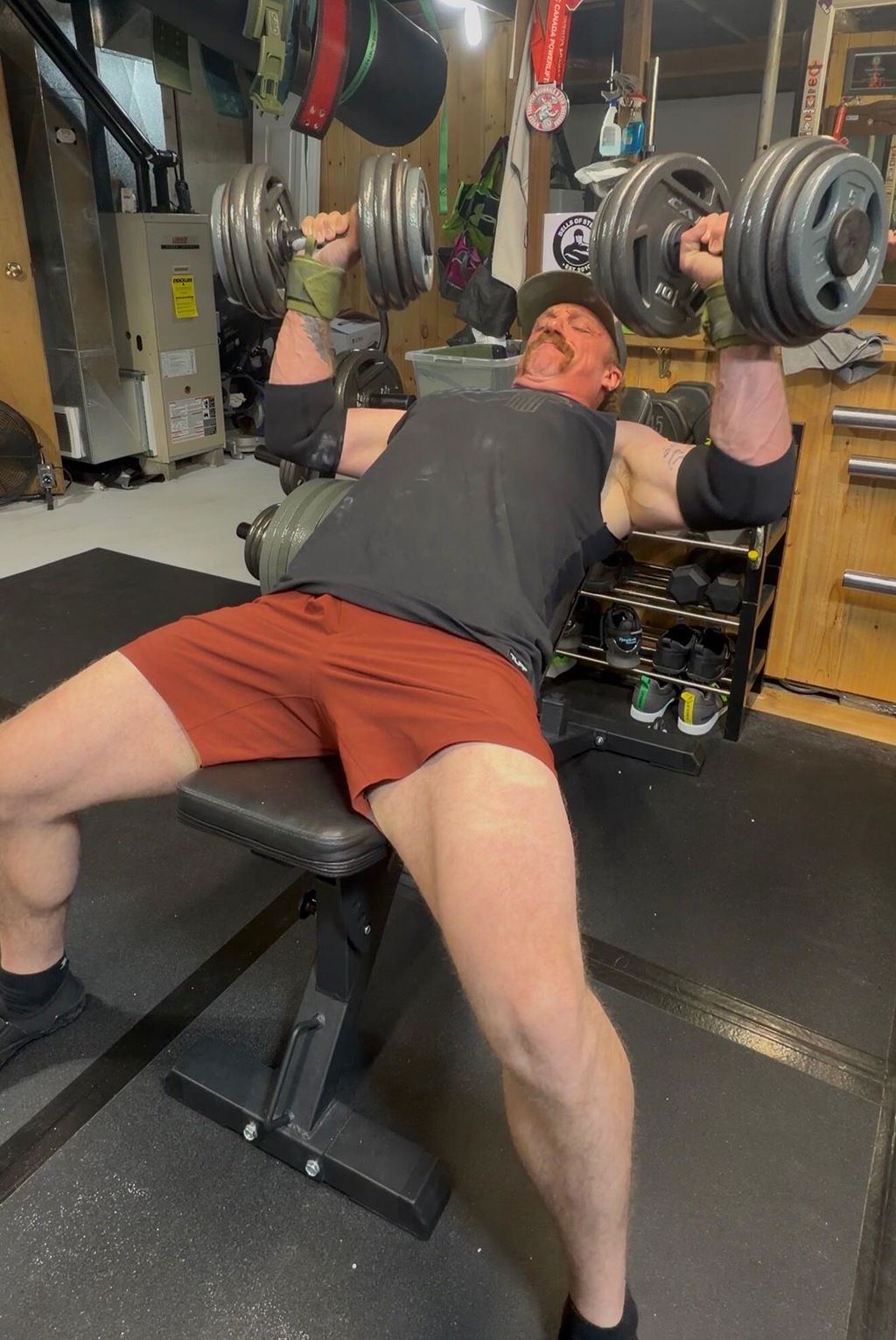
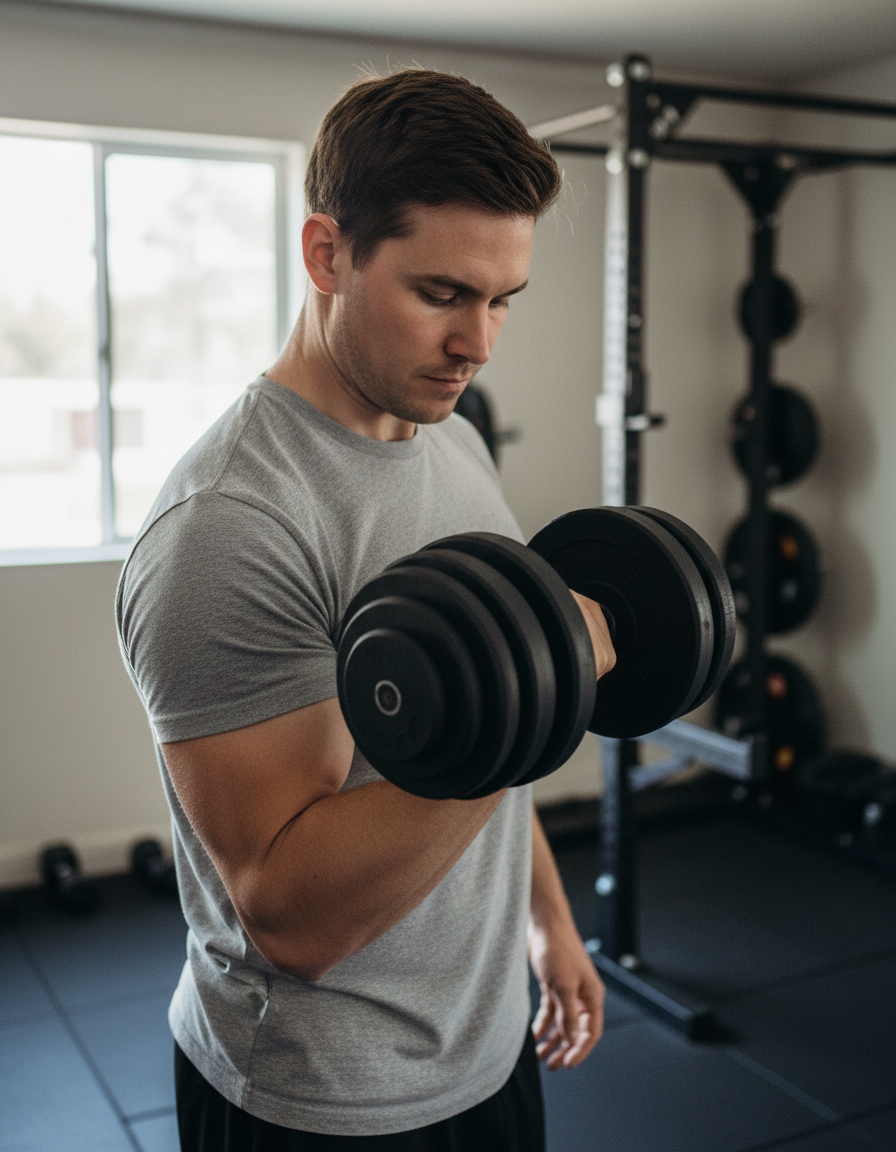
Here is why it solved all four problems at once. The collar locks down hard and stays locked, so nothing creeps loose like my old spin collars. There is no plastic shell to crack, because the load sits on a metal handle the way it does on a barbell. And there is no ceiling I am going to hit, since the weight is just however many plates I slide on.
The version my friend handed me was the PRO at $49 a pair, which carries up to 140 pounds across the pair. That covers basically all of my dumbbell work. If you press and row heavy, the MAX runs $149 a pair and holds 300 pounds across the pair on knurled aluminum with zero plate overhang. Either way you are paying for a handle once, not paying for the metal weight all over again.
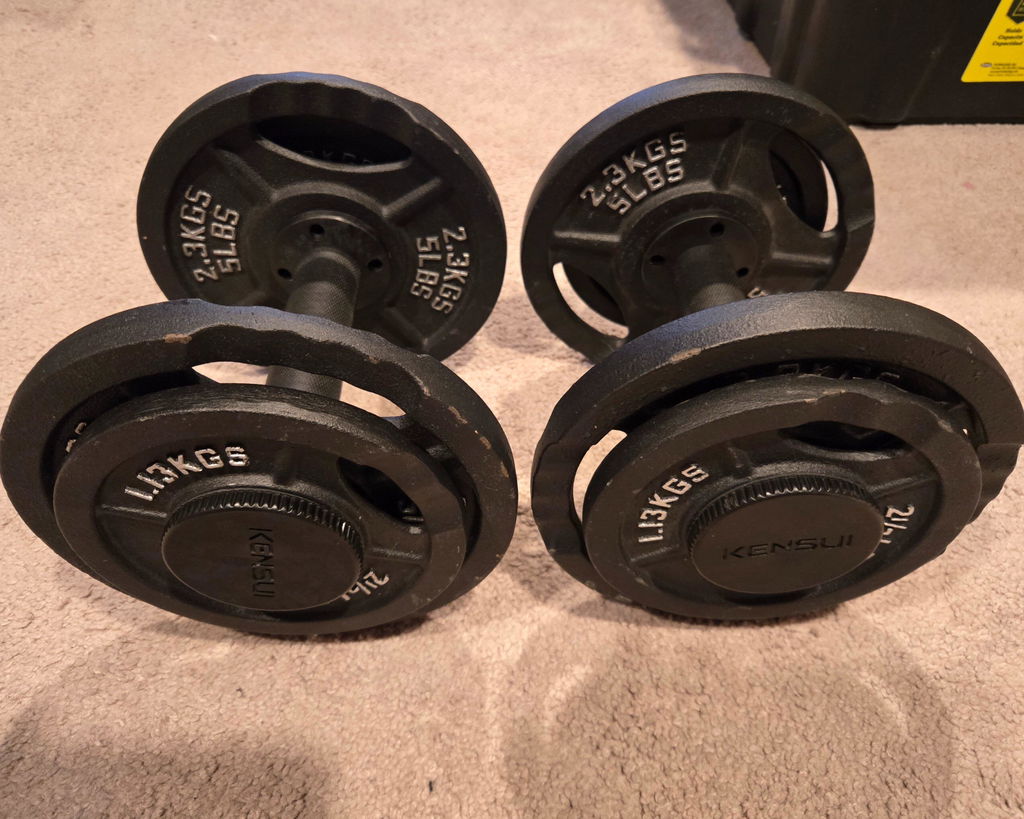

Bottom line: The AdaptaBELL fixed every problem the other four created, and it did it for $49. After four sets that capped out or cracked, the answer was a handle that turns the plates in my garage into any dumbbell I need.
| Product | Price | Max Weight | Material | Drop Safe? |
|---|---|---|---|---|
| Spin-Lock Set | $89 | ~40 lb/hand | Chrome + cast iron | Yes |
| PowerBlock Sport 24 | $129 | 24 lb/hand | Welded steel cage | No |
| Bowflex 552 | $279 | 52.5 lb/hand | Plastic shell | No |
| NordicTrack iSelect | $199 | 50 lb/hand | Plastic shell | No |
| AdaptaBELL PRO | $49/pair | 140 lb/hand | Aluminum + steel | Yes |
| AdaptaBELL MAX | $149/pair | 300 lb/hand | Knurled aluminum | Yes |
The Final Verdict
After $696 and a year of buying the same promise four different ways, the pattern was obvious. Every selectorized set either runs out of weight or breaks where the plastic meets the load. The AdaptaBELL skips both traps by going back to real plates on a metal handle.
"I have a full set of Olympic plates from years ago. These handles turned them into every dumbbell I need. Wish I found these before I bought the Bowflex."
"Bought the PRO pair for my apartment gym. Solid grip, plates lock in tight, and I saved about $500 versus buying a fixed set."
Stop buying the weight twice. Buy the handle once.
Get the AdaptaBELL15% off with code SMGDBVIP at checkout.
15% reader discount, applied automatically at checkout.
15% off with code SMGDBOCT at checkout, through October 11.
$8 off with code SMGDB8 at checkout.
100-day money-back guarantee • PRO from $49/pair • Works with plates you own
