Pickleball • 9 min read
I Thought Pickleball Was My Workout. Turns Out It's The Thing I Need To Train For.
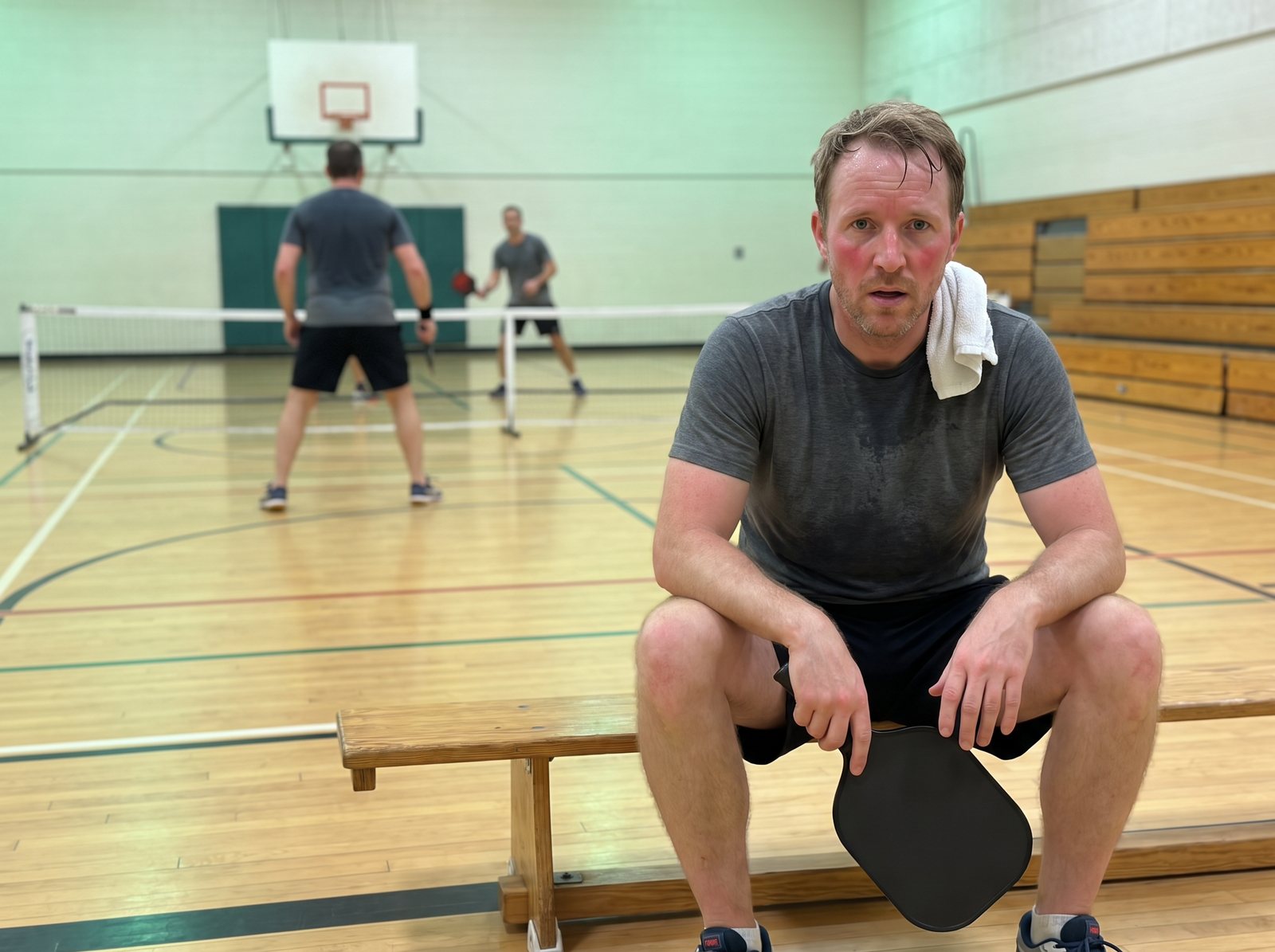
Last winter I played pickleball three nights a week and called it my training. By January my overhead press had slipped 10 pounds, and my grip was fading by the third game every night. Then I read the emergency room numbers and saw what the court had been doing all along. Here is what I paid for patches, what the research says, and the $49 tool that became my ten minutes before every game.

Three Nights A Week Felt Like Enough
I play golf on Saturday mornings with the same three guys. Last November the season ended, and one of them dragged me to the indoor pickleball nights at our rec center. I lost my first game 11 to 4 and came back two nights later.
By December I was there Monday, Wednesday and Thursday. Two hours a night, three or four games, and I drove home soaked. That felt like training, so I let the gym go. Four lifting days became two, then one, and some weeks none. The court counted. That was the deal I made with myself.
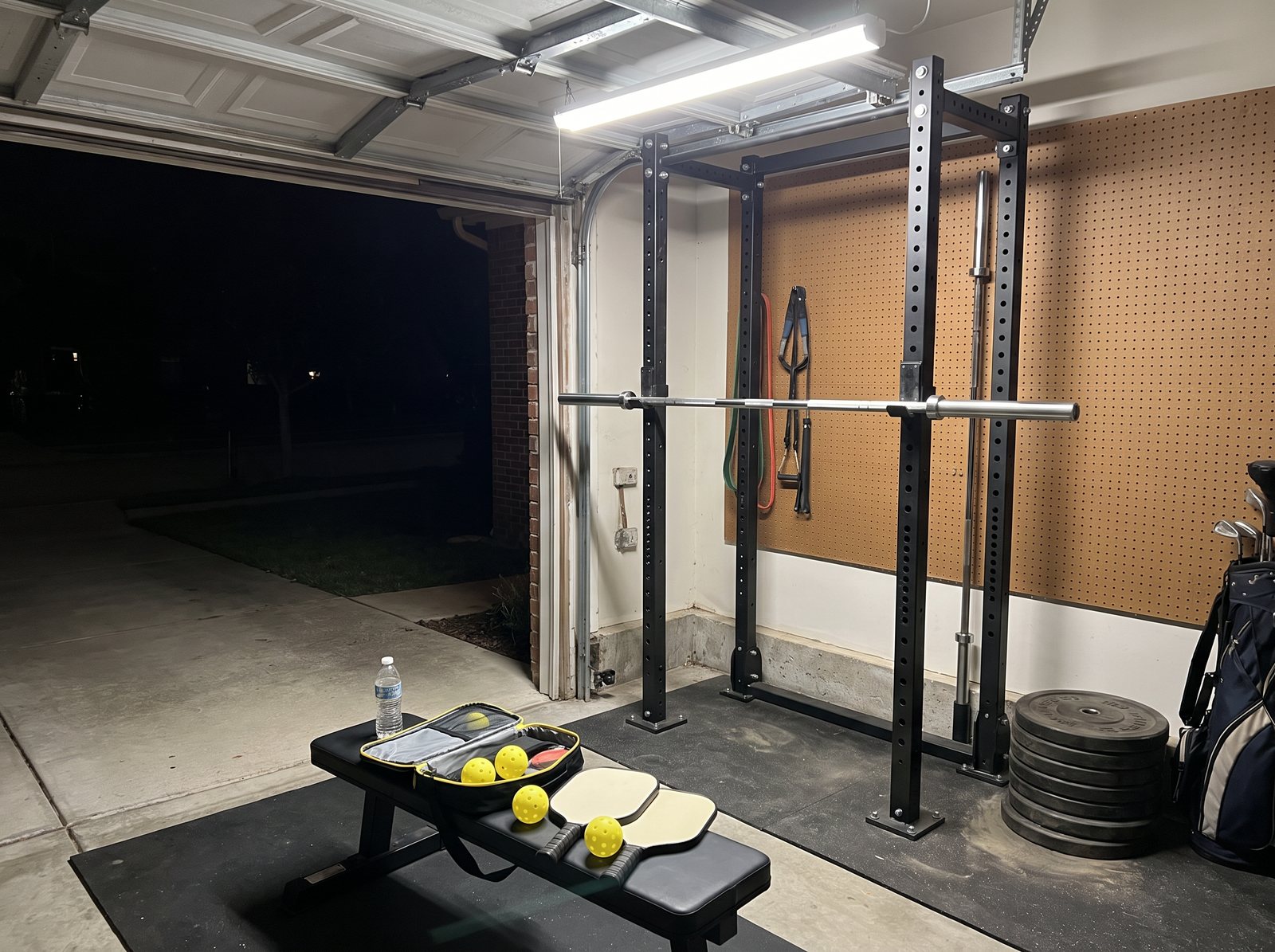
My log says what that deal cost. I keep one because I measure everything, which is how I ended up renting a golf simulator bay to time my driver. In January I added a cheap hand dynamometer, a grip gauge you squeeze, and started testing before the first game and after the third.
What three nights a week did, October to late January
- Overhead press, five reps135 to 125 lb
- Dead hang from the bar70 to 52 sec
- Grip before game one52 kg
- Grip after game three44 kg
- Overheads that landed deep, game oneabout 8 of 10
- Overheads that landed deep, game threeabout 4 of 10
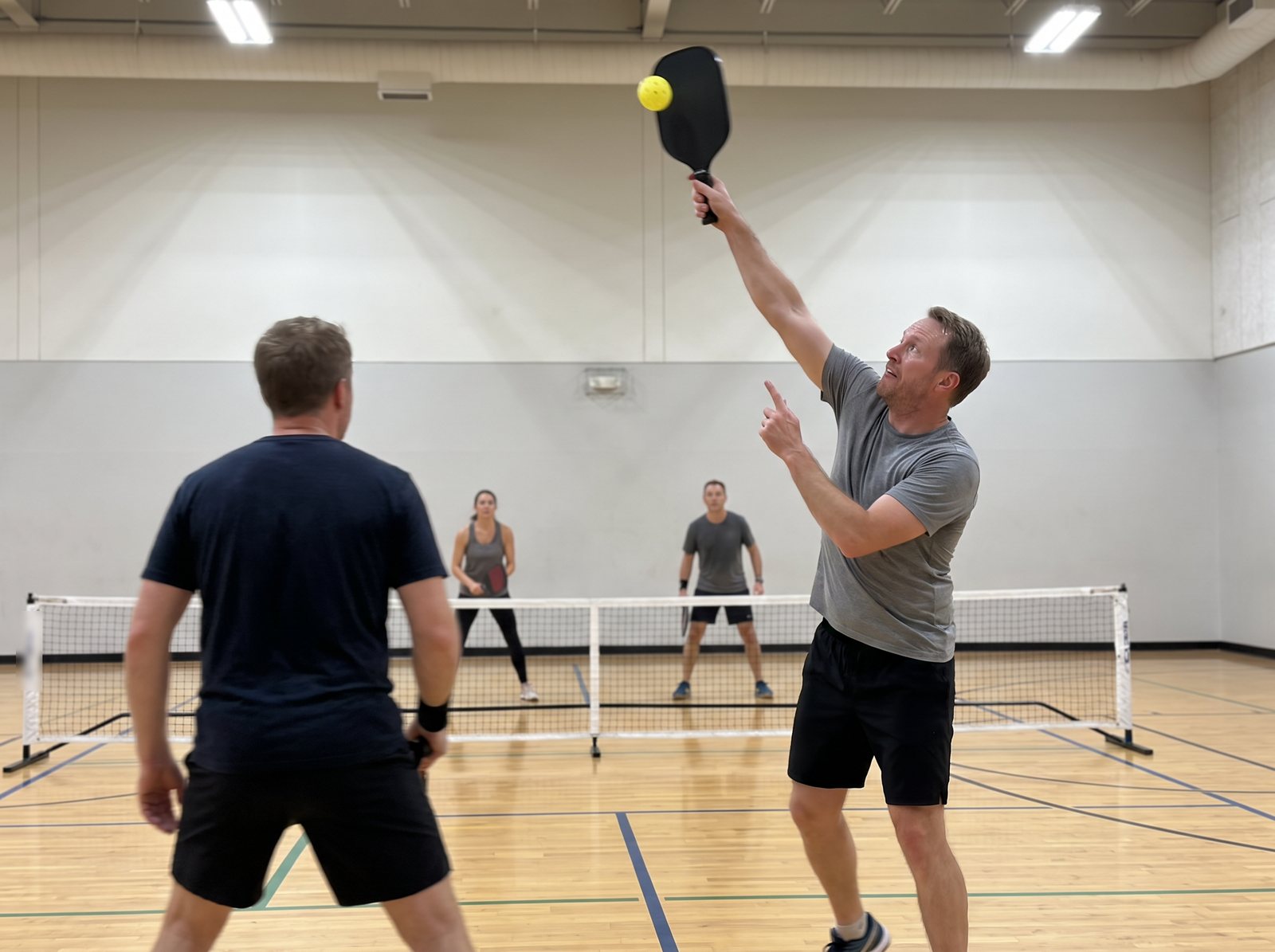
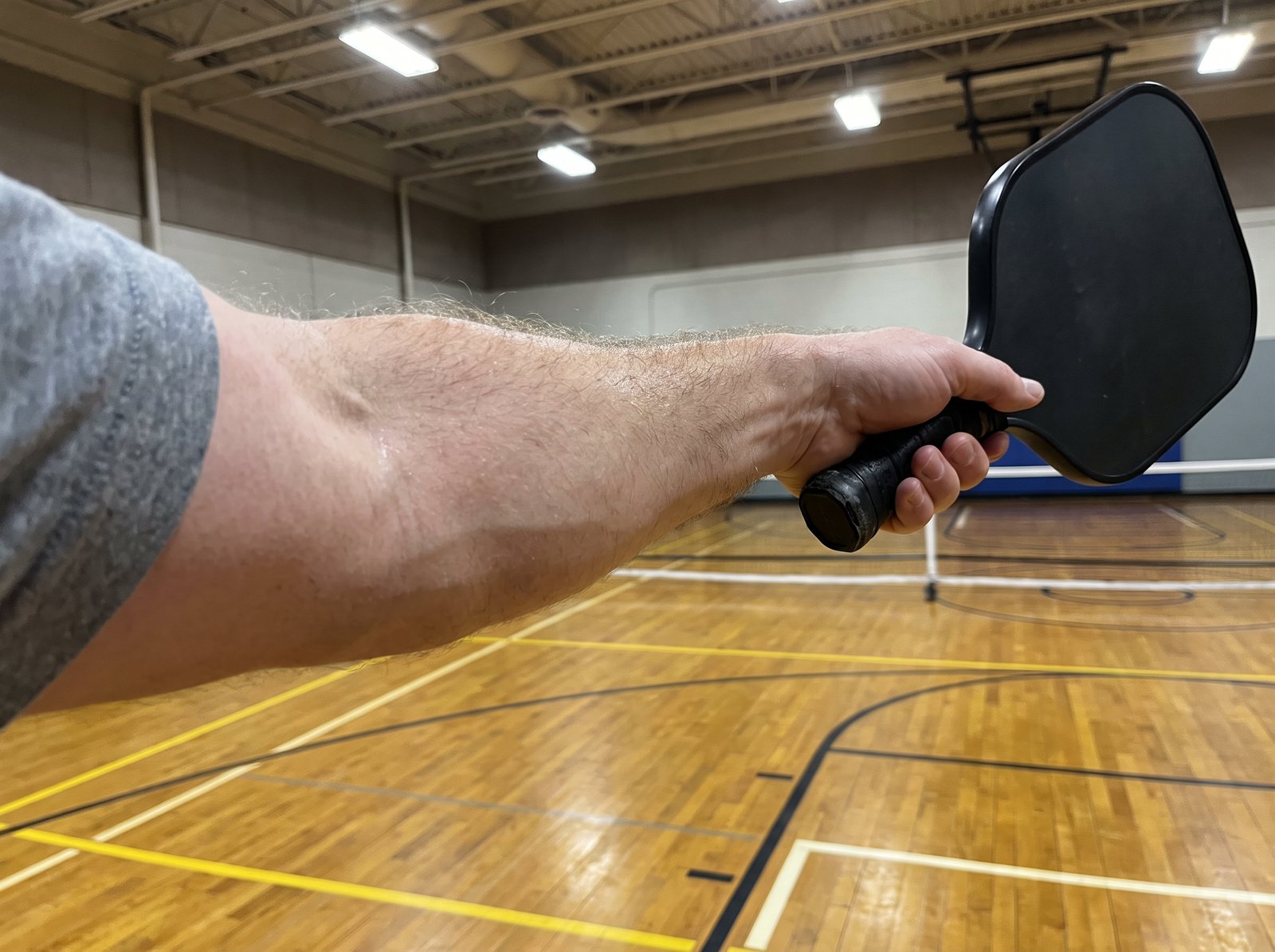
The court was where it showed. By the third game the paddle turned in my hand on balls I caught near the edge. My overheads were fine at seven o'clock and dropped short by nine, into the kitchen, the strip by the net where nobody may volley, and the other team was waiting there.
I Bought A Patch For Each Problem
So I did what I had done with golf. I spent money on it.
What I bought to play better by game three
- McDavid Elbow Strap with Pads$17.99
- CRBN¹ X Series 12MM paddle$149.99
- Prohands Gripmaster$21.95
Spent, at today's prices$189.93
Overheads deep in game three, a month laterstill about 4 of 10
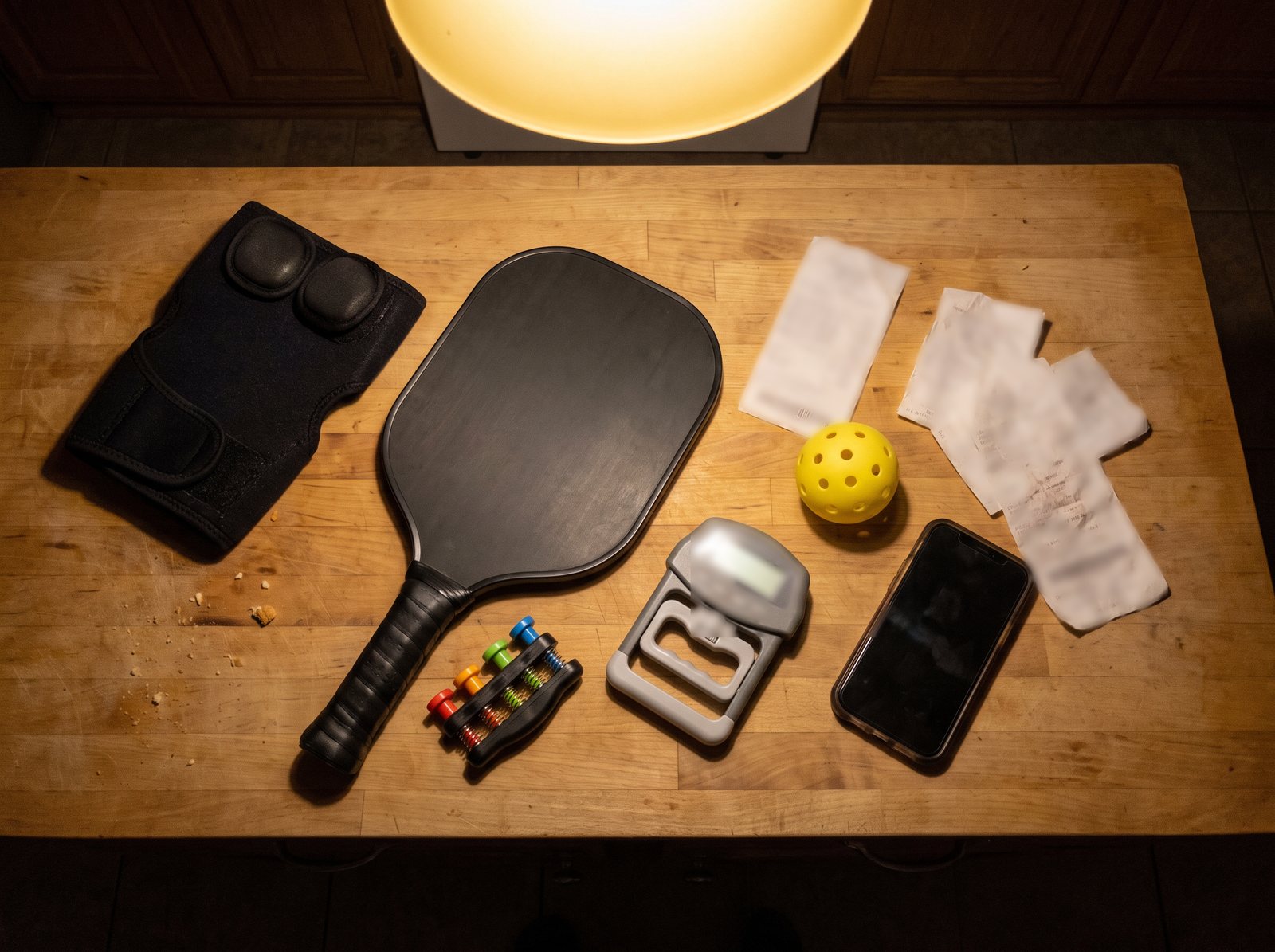
The strap came first, because half the men on our court wear one. McDavid's strap presses on the forearm just below the elbow, and it does that well. That is a job for a sore elbow. Mine was just tired.
The paddle cost the most. CRBN says the edge construction on its X Series gives "a greatly expanded sweet spot," and I believe it. Fewer balls died off the edge in game one. It wins outright on forgiveness. A bigger sweet spot cannot help a hand that has stopped holding the paddle steady, though, and by game three I was back to the same mishits.
The Gripmaster lived in my car. It is a good finger trainer and the best value on this list for squeezing. Squeezing was not the problem either. A paddle does not ask you to crush it. It asks you to hold a light thing steady at the end of your arm while it tries to tip.
The Emergency Room Numbers Changed My Question
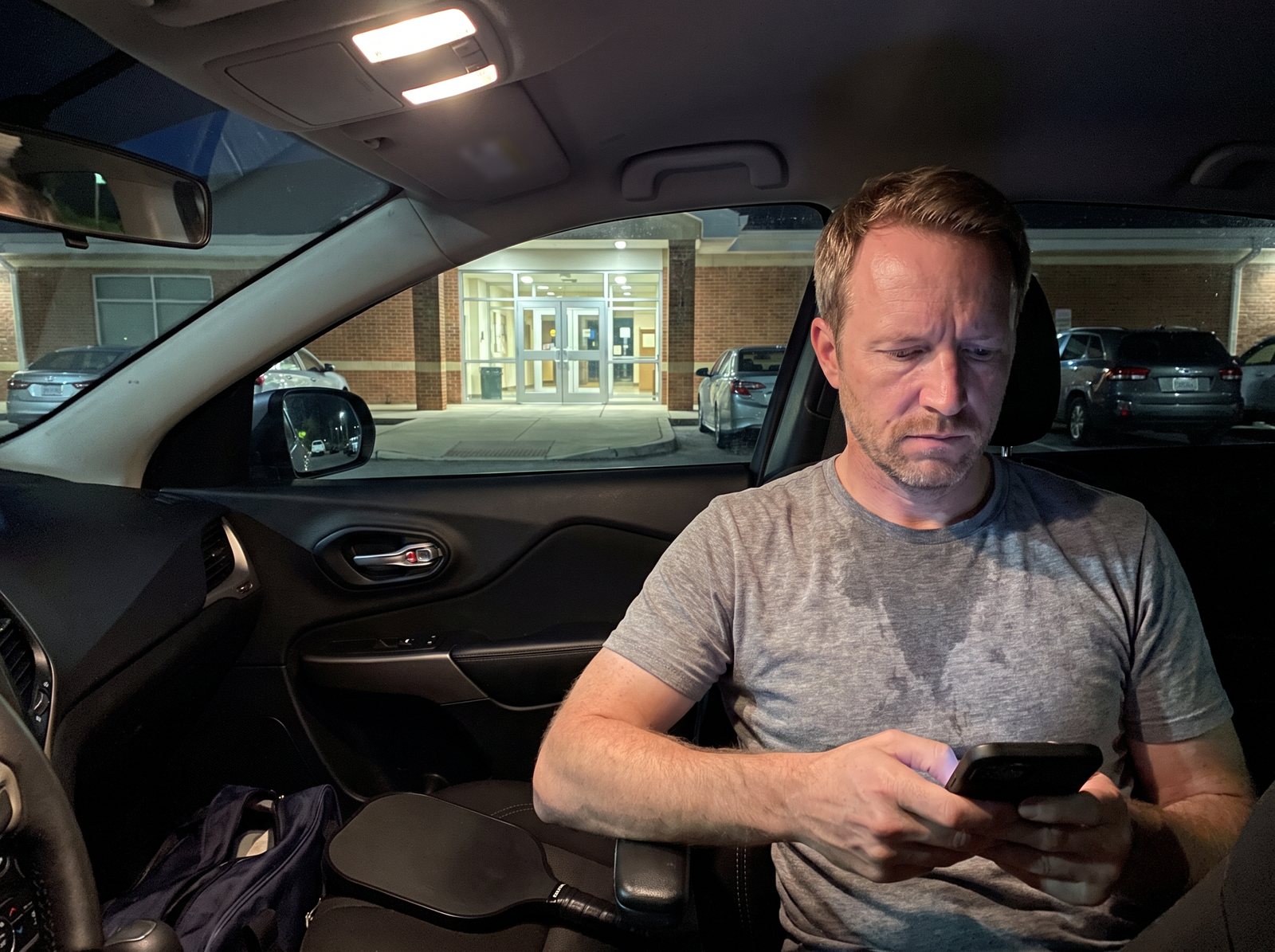
One Thursday in late January I sat in the parking lot after game three, too tired to start the car, and looked up why my arm gave out before my legs did. What I found was a study of emergency room visits.
McMillan and colleagues used a national injury database to estimate how many people came into US emergency rooms after playing pickleball. It ran in Sports Health in 2025.
Pickleball visits to US emergency rooms, national estimates
- 20141,313
- 202324,461
- Share aged 60 to 7973.8%
- Share caused by a fall51.3%
Those numbers are not about me. I am not in that age band, though plenty of the people across the net are, and most of them play more nights than I do. The sport also grew. The industry's own count says 24.3 million Americans played in 2025, so more visits partly means more players.
What the paper changed was my question. Its authors point to warming up, technique coaching and balance work to cut down on falls, and none of that is about lifting. But it made something plain that I had dodged all winter. The court was never my workout. It was the test, three nights a week, of my grip, my wrist and my shoulder, and I had stopped preparing for it.
In August a review in Orthopaedic Nursing put the part I had been circling in one line: "repeated gripping of the paddle stresses the wrist flexors and extensors." Those are the muscles on either side of the forearm. The same review lists inadequate physical conditioning among the things that raise the odds of getting hurt. That point rests on research from other sports, not on pickleball trials, as its citations show. It is their reading, and it is not a promise anything can keep. What I took from it was smaller. The sport asks the forearm for something specific, and I had stopped training it.
What A One-Handed Sport Asks The Arm For
So before I bought anything else, I wrote down what the court was asking for, the way I did for my golf swing.
- One hand. The paddle arm plays every shot. Whatever I trained had to load one arm at a time.
- A load out past the fist. A paddle is light, but it sits beyond my hand, so the wrist and forearm hold a lever on every ball. Weight in the palm misses that.
- The wrist in every direction. Tipping up and down, turning palm up and palm down, bending back and forward. A dink, a roll and a block each lean on a different one.
- The shoulder turning. Overheads, and the long reach for a wide ball.
- Ten minutes on a court night. I was not adding a fourth night of anything. It had to fit before the first game and ride in the car beside my bag.
- Small steps up. Light enough to start with nothing on it, and heavier in small jumps for months.
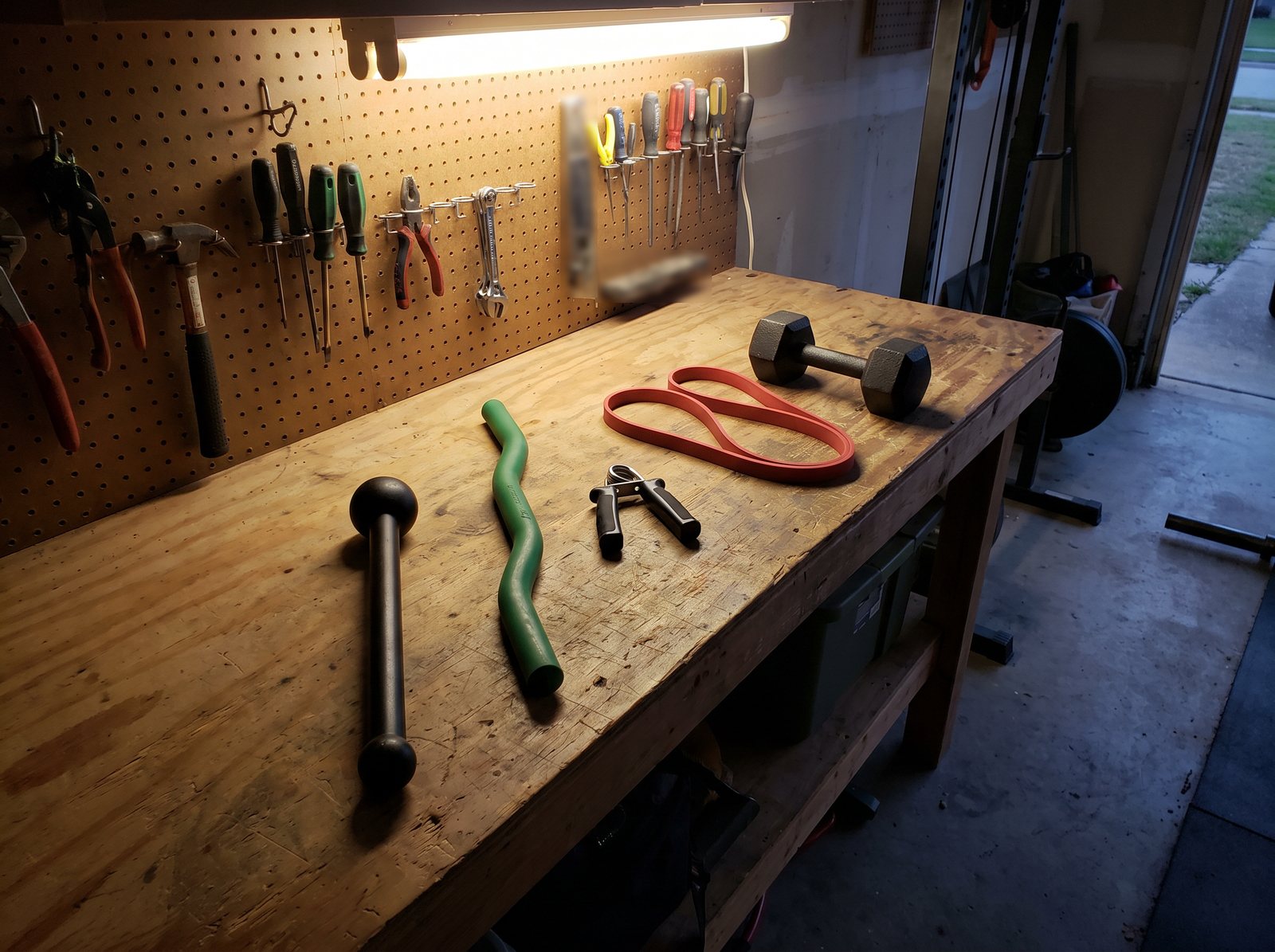
Then I ran the cheap options against it.
The $49 Club In My Court Bag
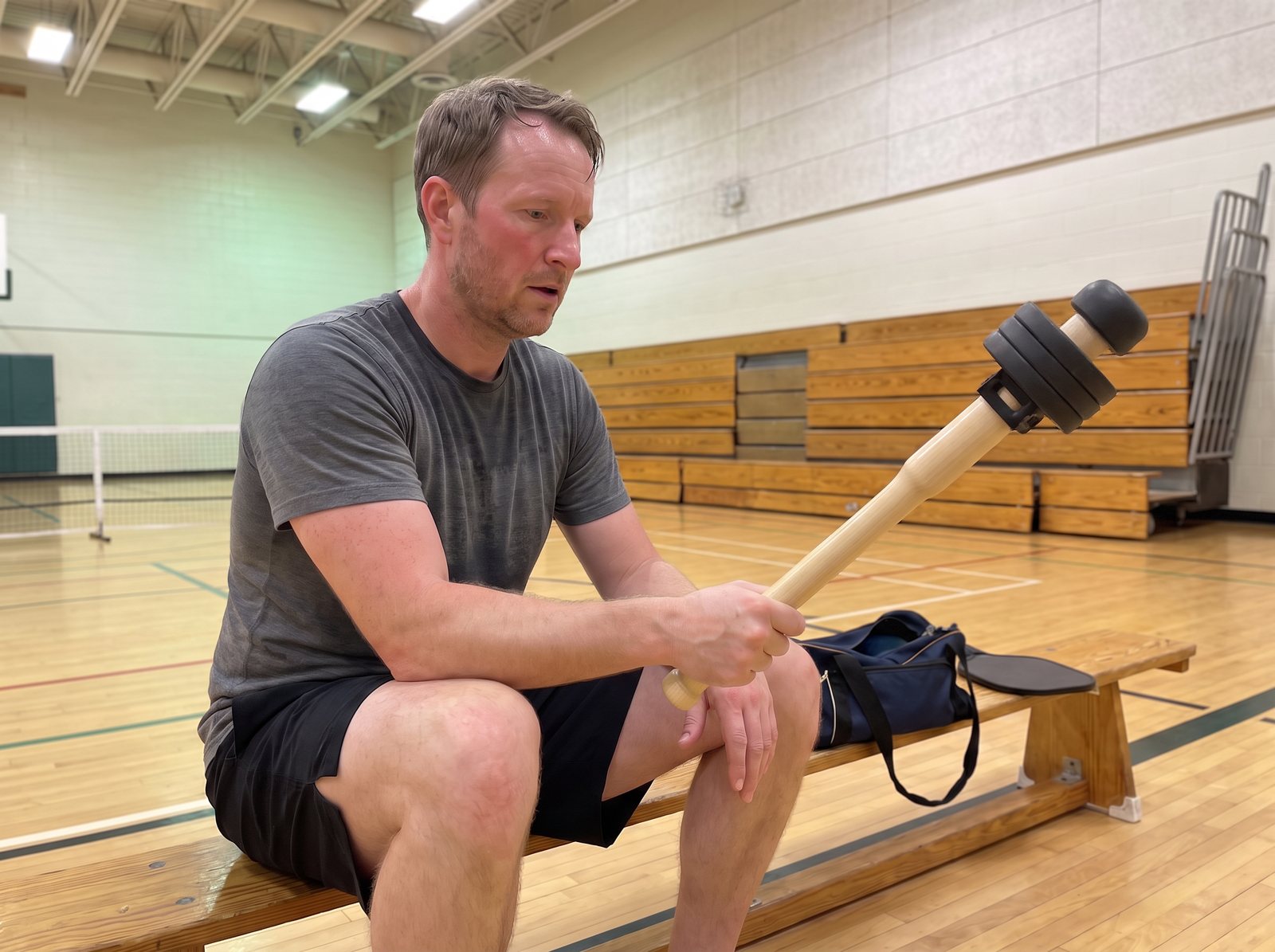
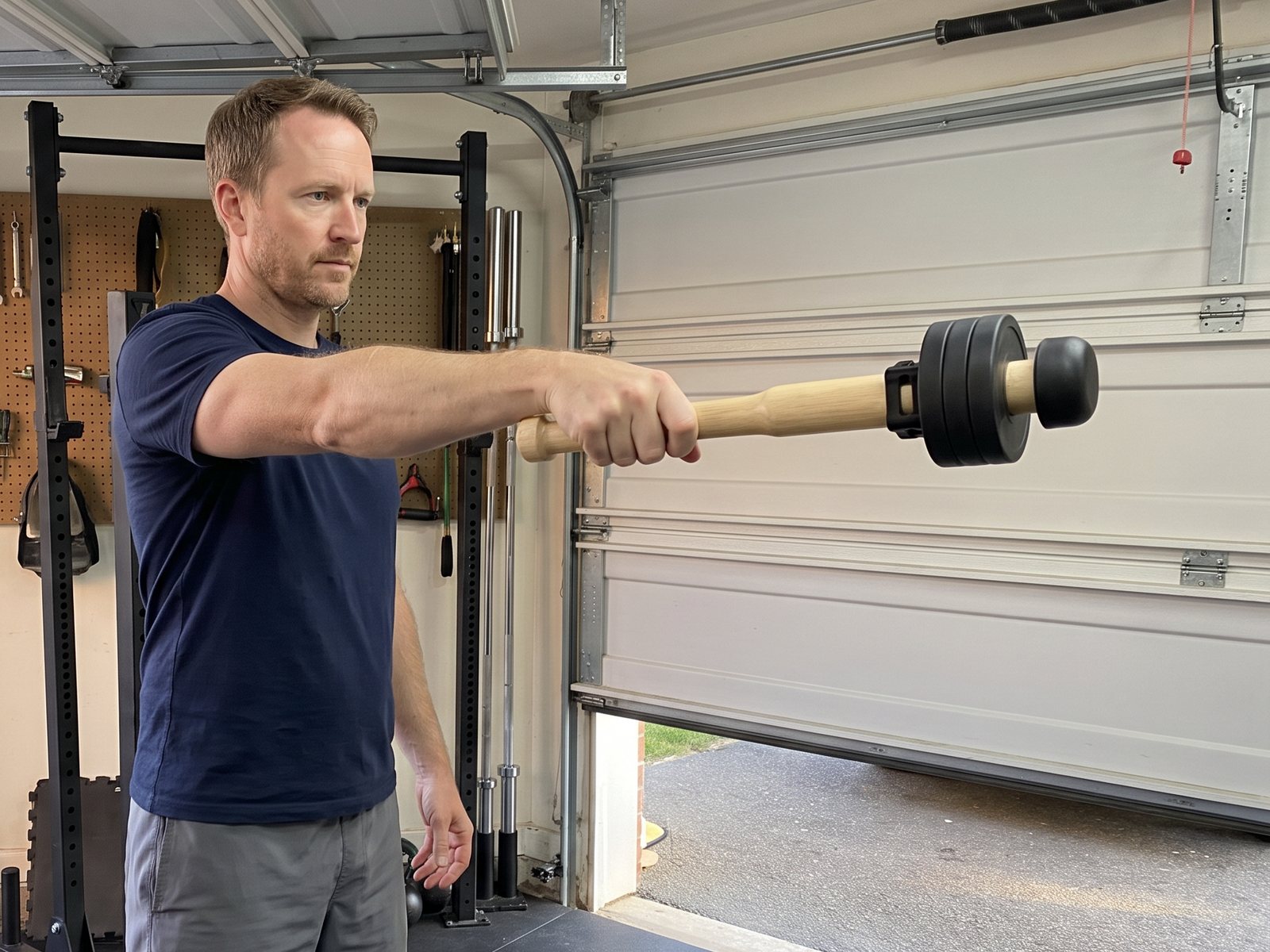
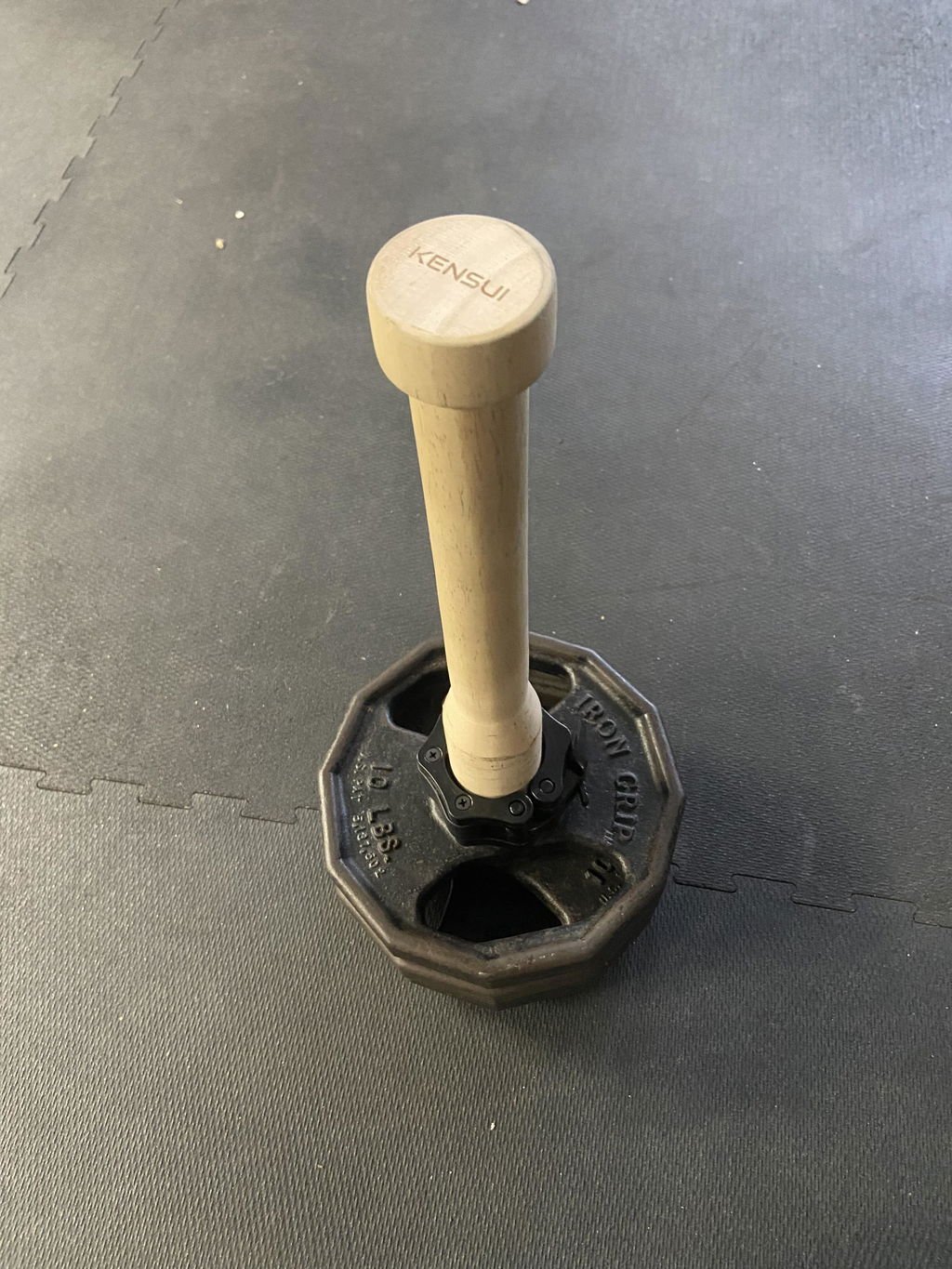
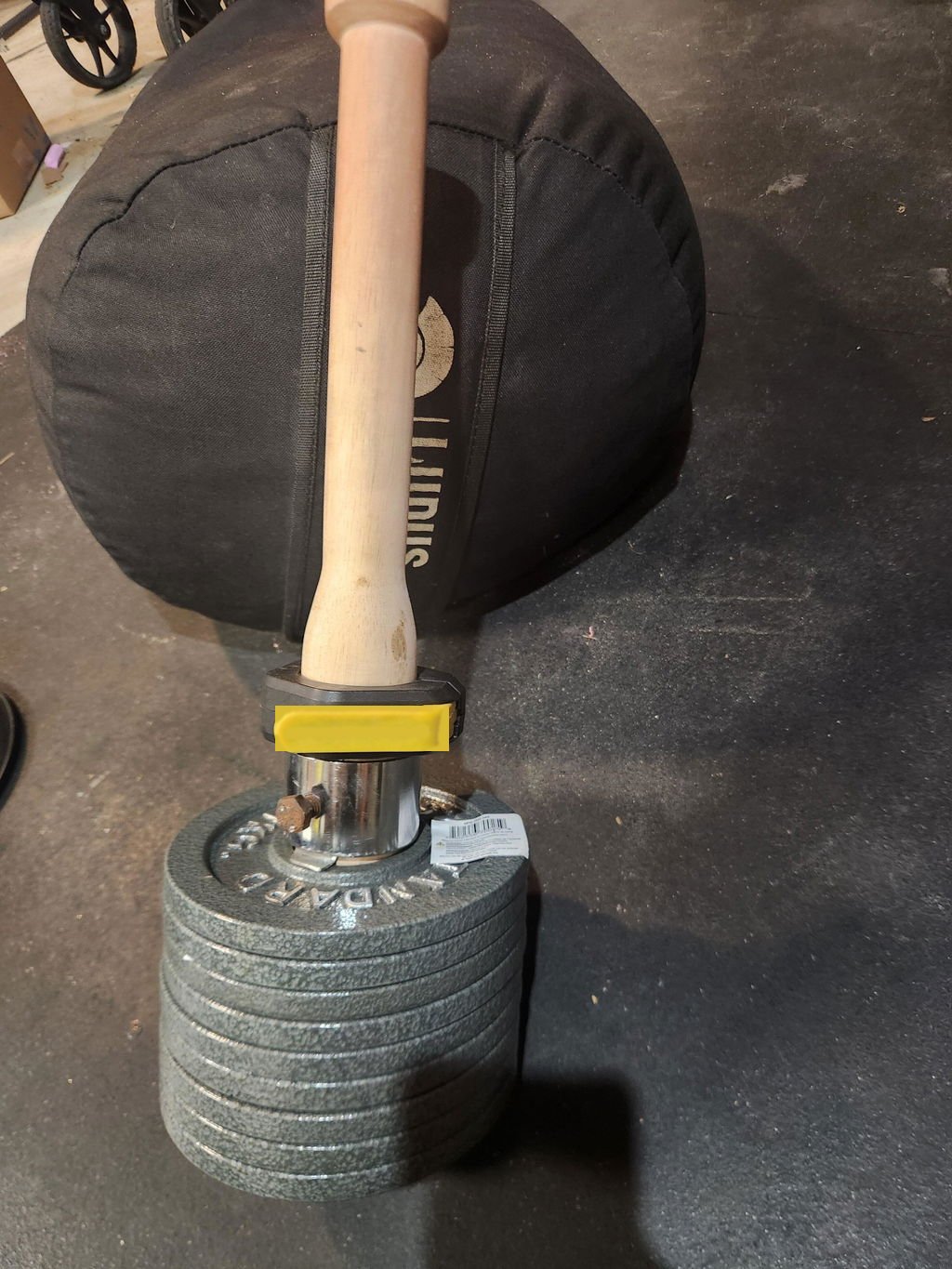
What passed is a club. It is an old tool, a handle with the weight out at one end, tipped and swung with one hand. Mine is the Kensui EZ-CLUB V2 PRO, a wooden handle with a short sleeve at the far end for standard two inch Olympic plates and a black collar that locks them on. It sells as a single for $49.
It clears the first two tests by design: one hand, with the load out past the fist. It tips, turns and bends the wrist in every direction the court uses, and it swings behind the shoulder. It starts with no plates at all. And it takes the same plates as my barbell, so the steps are as small as the plates I own. Kensui also makes a steel MAX for $99, built to load heavier. For ten minutes before a game, I never needed it.
The Verdict
Kensui EZ-CLUB V2 PRO
- One hand, with the load out past the fist. Tests one and two.
- Tips, turns and swings, so the wrist and shoulder work in every direction. Tests three and four.
- Starts as a bare handle and takes any two inch Olympic plate, so ten light minutes can grow for months. Tests five and six.
Ten Weeks Of Ten Minutes
I bought it in February and used it on court nights only, ten minutes at the end of the bench before the first game. I also went back to lifting two days a week, because the paper had made that point for me.
Three moves, one arm and then the other. Tip the club forward and back from the wrist with my elbow at my side. Turn it slowly palm up and palm down, like a door handle. Then slow swings behind the shoulder and back. Weeks one and two were the bare handle. Weeks three to six had one 2.5 lb plate on it. By week ten it carried a 5 lb plate for the wrist work and 10 lb for the swings.
Same tests, February to mid April
- Overhead press, five reps125 to 135 lb
- Dead hang from the bar52 to 66 sec
- Grip before game one52 to 54 kg
- Grip after game three44 to 50 kg
- Overheads that landed deep, game threeabout 4 to 7 of 10
One player, a cheap gauge, my own tally, no control group.
Read that honestly. I went back to lifting at the same time, and the press number belongs to the lifting, not the club. The numbers that moved most were the game three numbers, and the ten minutes were the only thing I did on court nights. I still cannot tell you how much of it was the club.
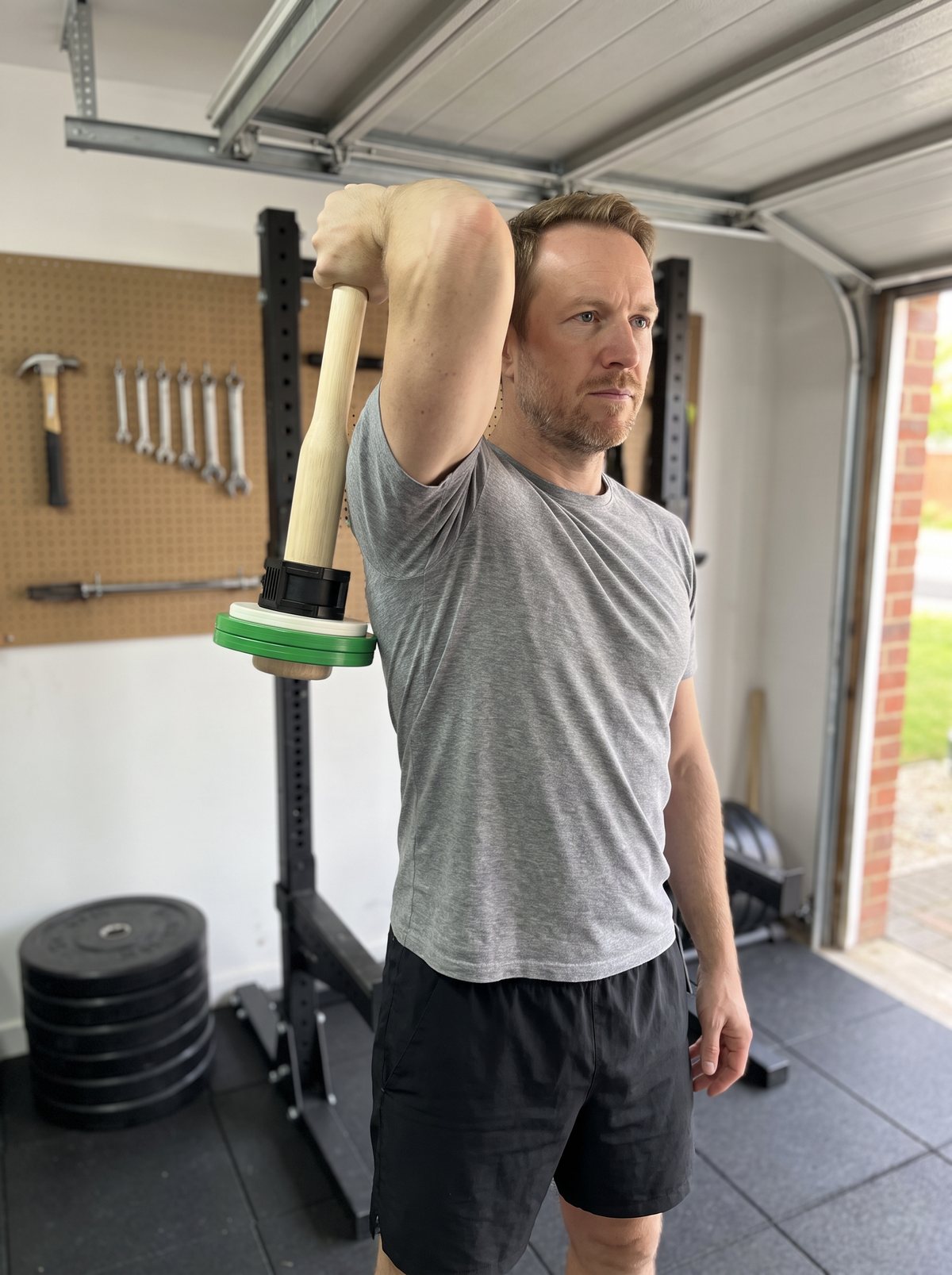
The closest controlled study I found used a mace, not a club, in elite wrestlers, not pickleball players. In 2026 Akaras and colleagues put 13 wrestlers on 15 minutes of mace work three times a week for 12 weeks and compared them with 14 who trained without one. Grip in the dominant hand went from 56.56 to 59.31 kg, while the other group barely moved, from 56.50 to 56.97. Different tool, different people, same idea: a load on a lever, a few minutes at a time.
If you read my golf story, you know I own a mace too. I bought it in June, after all this. It is the right tool for golf, because a golf swing is two hands on a long lever. A paddle is one hand. The mace stays in the garage. The club goes in the car.
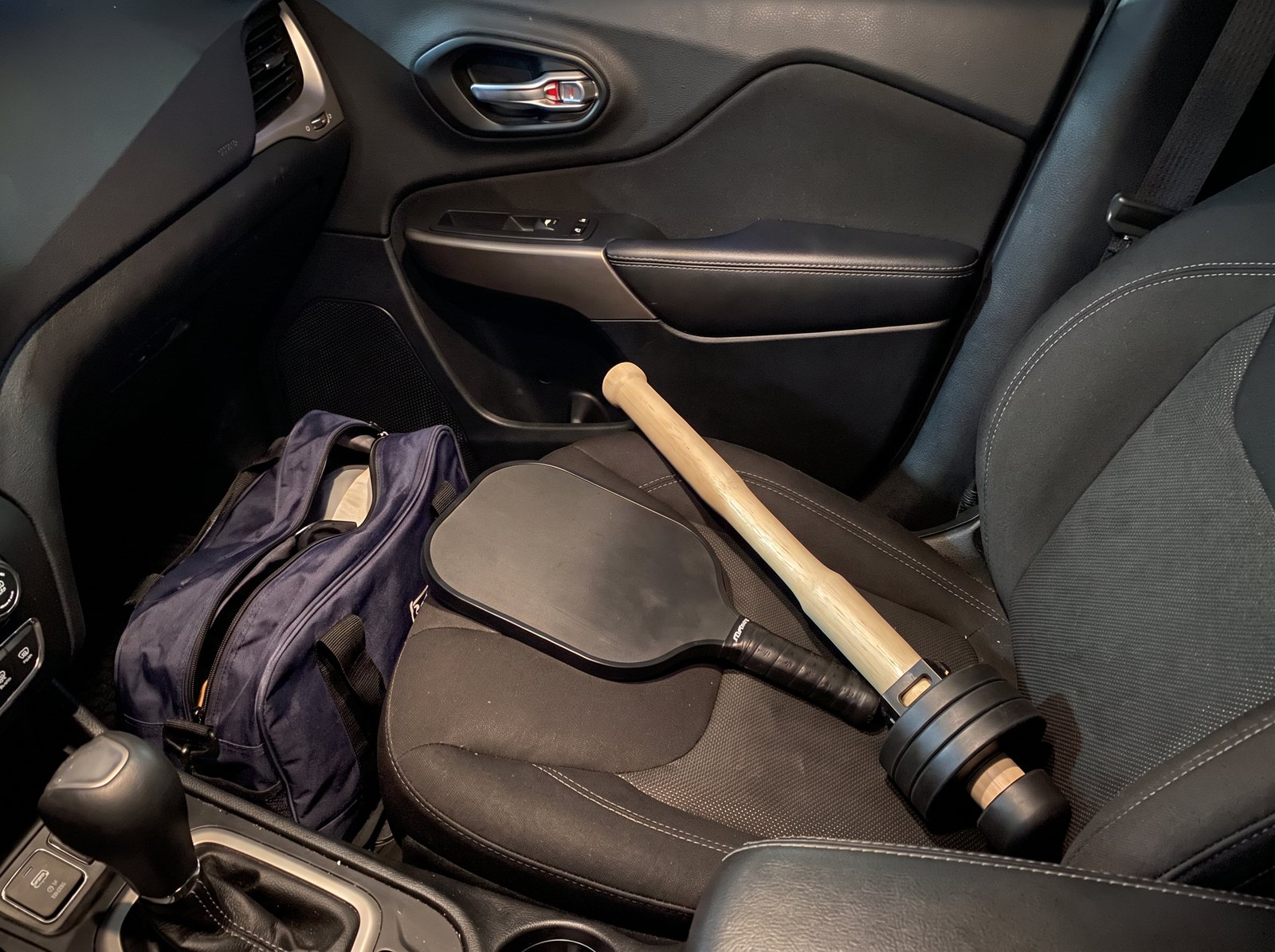
The weak spot is the collar. Owners report the included collar starting to slip around 30 lb, and Kensui's own page says to add a second collar past 60. I never went near that on court nights. If you plan to load it heavy on a lifting day, budget for a better collar. It also takes two inch Olympic plates only. Standard one inch plates will not go on.
"The grips feel smooth but not slick even when sweaty or wet."
Quentin S., verified EZ-CLUB PRO owner, five stars"I'm very glad I bought this club with adjustable weight first, as I had no idea how much I could handle."
Phillip, verified EZ-CLUB PRO owner, five stars$49 for the PRO single (wood) · in stock, ships in 24 hours · 100 day money back guarantee
| Kensui EZ-CLUB V2 PRO | Retrospec 5 lb steel club | Titan 10 lb steel club | Prohands Gripmaster | TheraBand FlexBar | |
|---|---|---|---|---|---|
| Price | $49 single | $19.99 | $74.97 | $21.95 | $20.33 to $37.43 |
| Load out past the fist | Yes | Yes | Yes | No, in the fingers | No, held in both hands |
| Gets heavier | Any two inch plate you own | Buy the next club | Buy the next club | Buy a stiffer one | Buy a stiffer one |
| Wrist in every direction | Yes | Yes | Yes | Squeeze only | Twist and bend |
| Wins on | One tool from bare handle to heavy | The cheapest light club | A fixed 10 lb, nothing to load | Finger strength for the least money | The cheapest way to train the twist |
| Learn More |
The honest short version: a $19.99 fixed club does the first month of this, and a free band does the shoulder. The club is not a training week either. It is the ten minutes I could keep.
Three Questions From The Bench
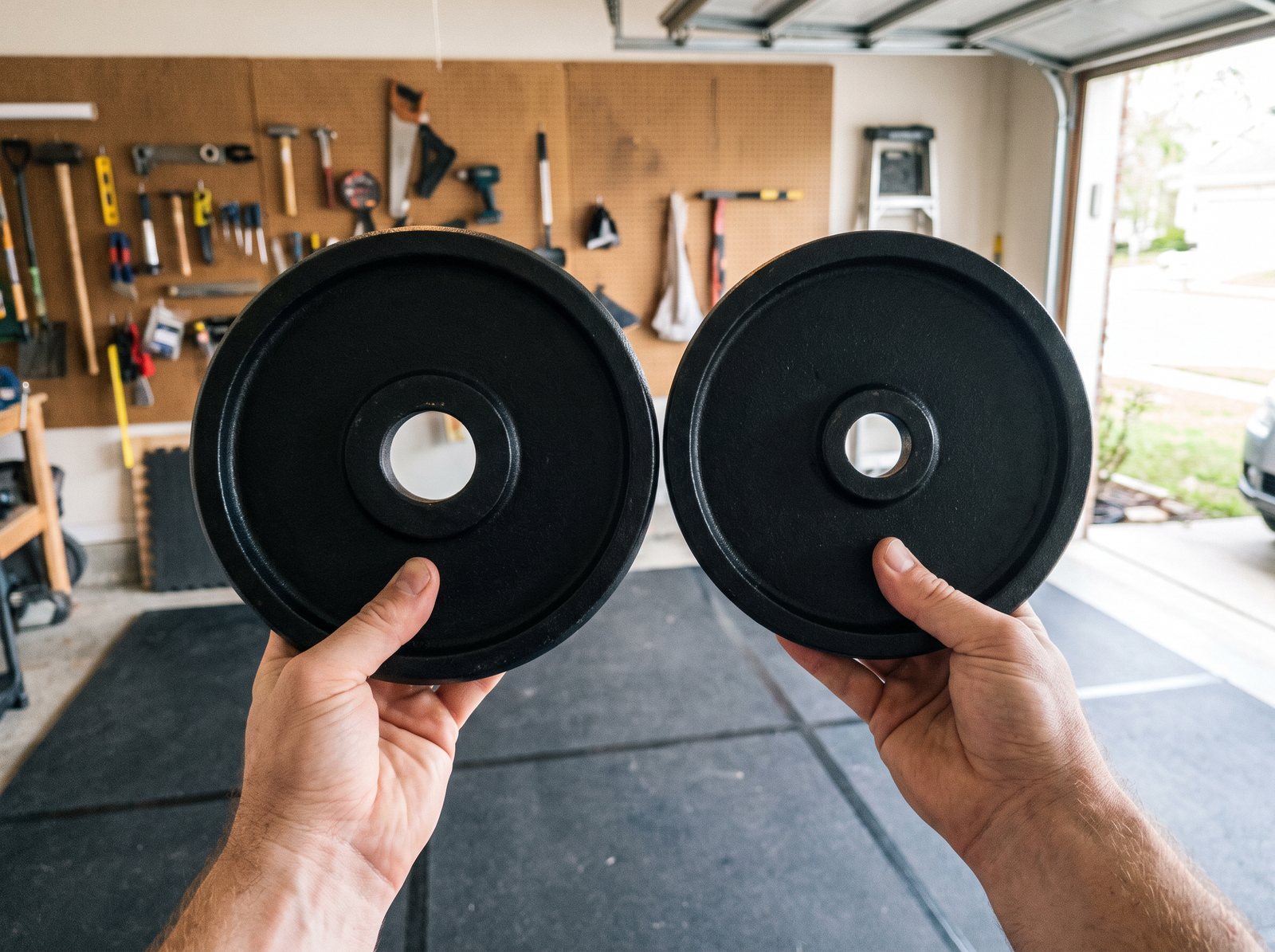
Will it take my plates? Only plates with a two inch hole. One inch standard plates will not go on.
When do you do it? Ten light minutes before the first game. The heavy swings belong on a lifting day.
How heavy should I start? With nothing on it. The bare handle was plenty for my first two weeks.
100 Days Is A Whole Indoor Season
Kensui backs the EZ-CLUB with a 100 day money back guarantee, and it ships within a day. That covers most of a winter of court nights. If game three looks the same at the end of it, send it back.
Ten Minutes For $49
Three patches cost me $189.93 and left game three where it was. A $49 club and ten minutes before the first game trained the part the court kept testing. Golf is winding down again this month, and the court nights start back up. This time the club is already in the bag.
Get the EZ-CLUB