Reviews · 7 min read
Researchers Found Posture Is Hiding An Inch Of Your Height. I Got Mine Back By Training My Neck.
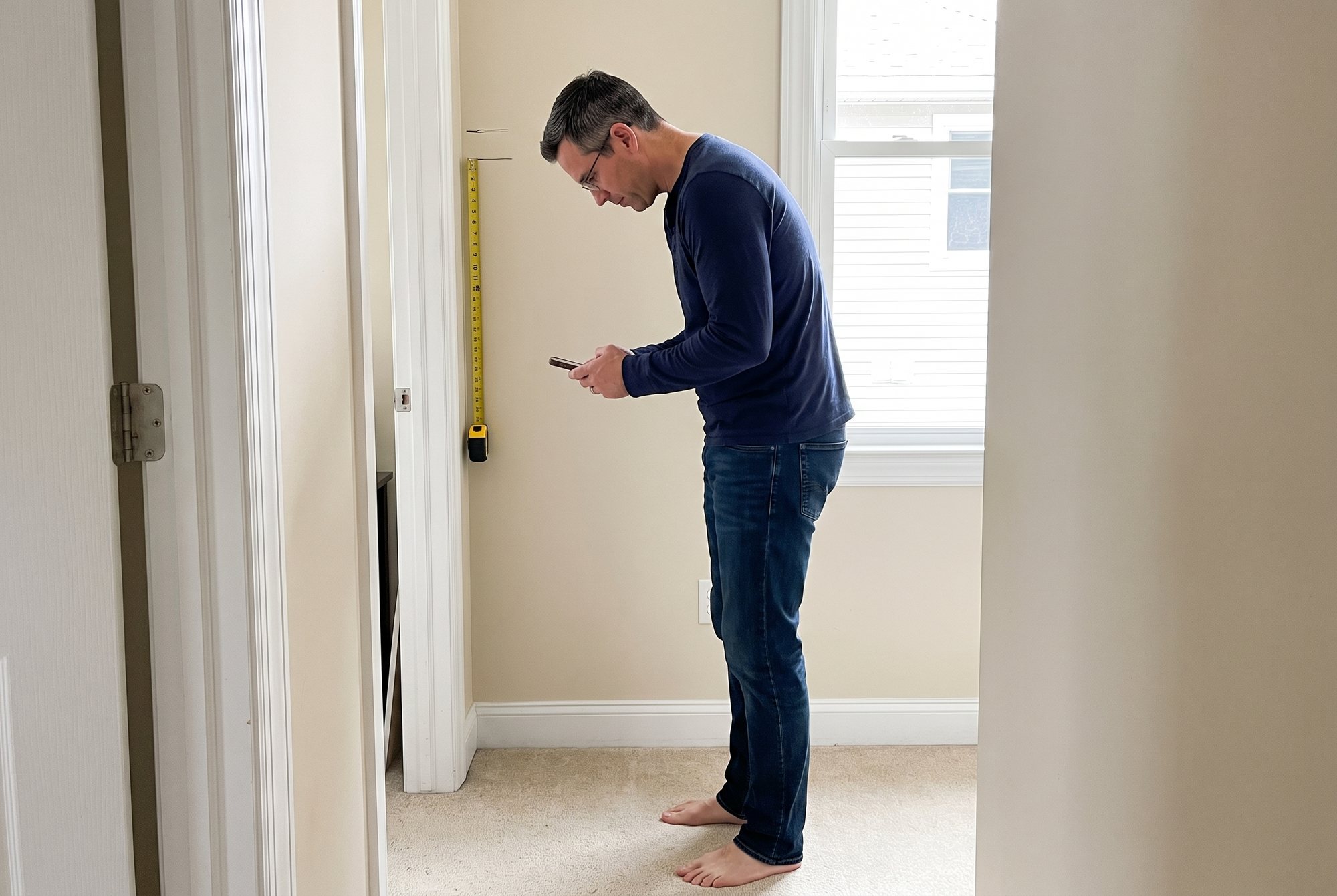
Germany's workplace safety institute scanned 68 adults and found the same person reads shorter the moment the upper body relaxes. A pencil and a door frame put my slump at a full inch. Twelve weeks later the lower mark had climbed back up, and none of the $333 of straps and gadgets in my desk drawer had anything to do with it.

The Door Frame Test
My brother and I are the same height on paper. In every photo from his wedding I am shorter, and not by a little. I put it down to the camera until my wife, looking at the same photos, said the thing nobody wants to hear: "You stand like you're reading your phone even when you're not."
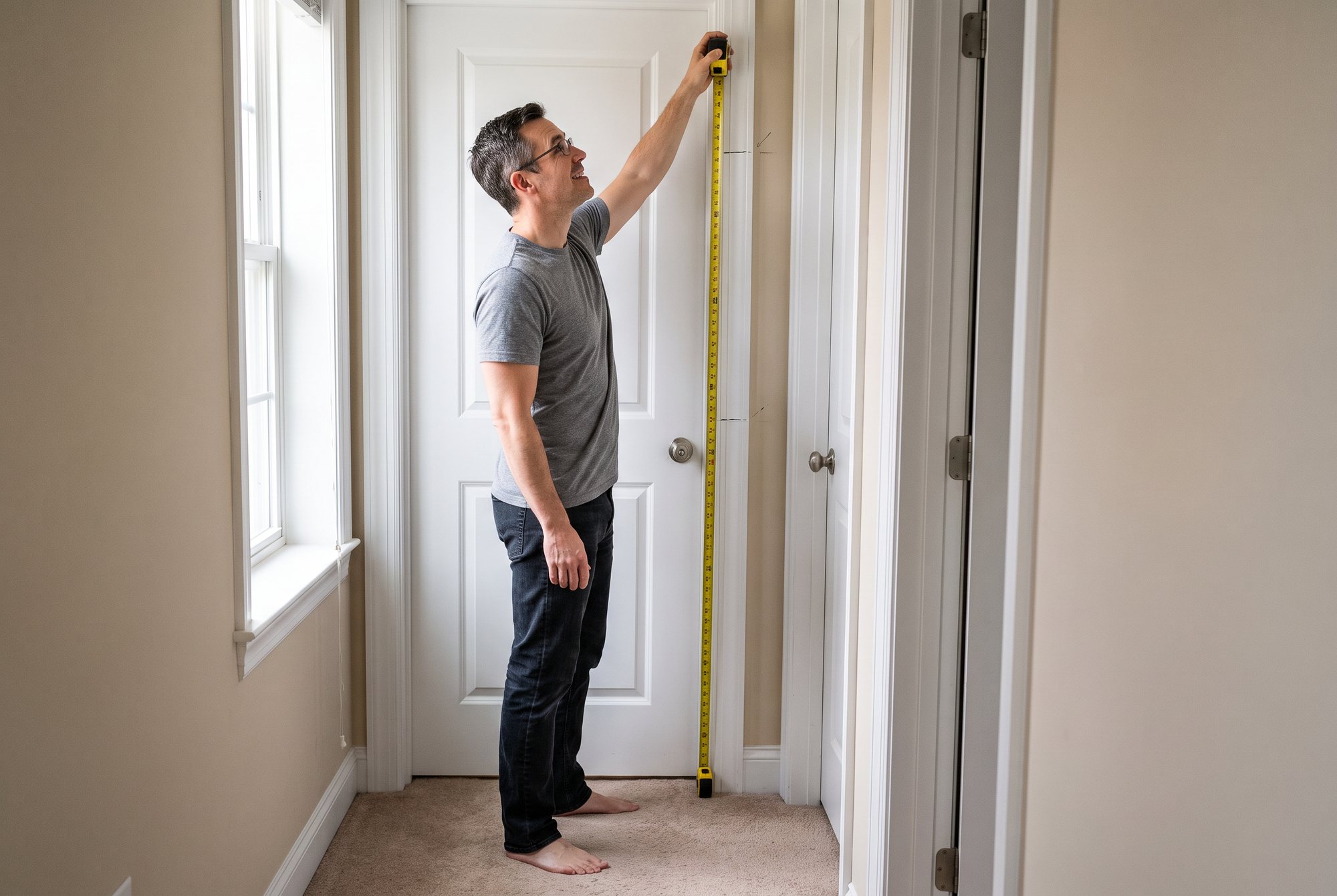
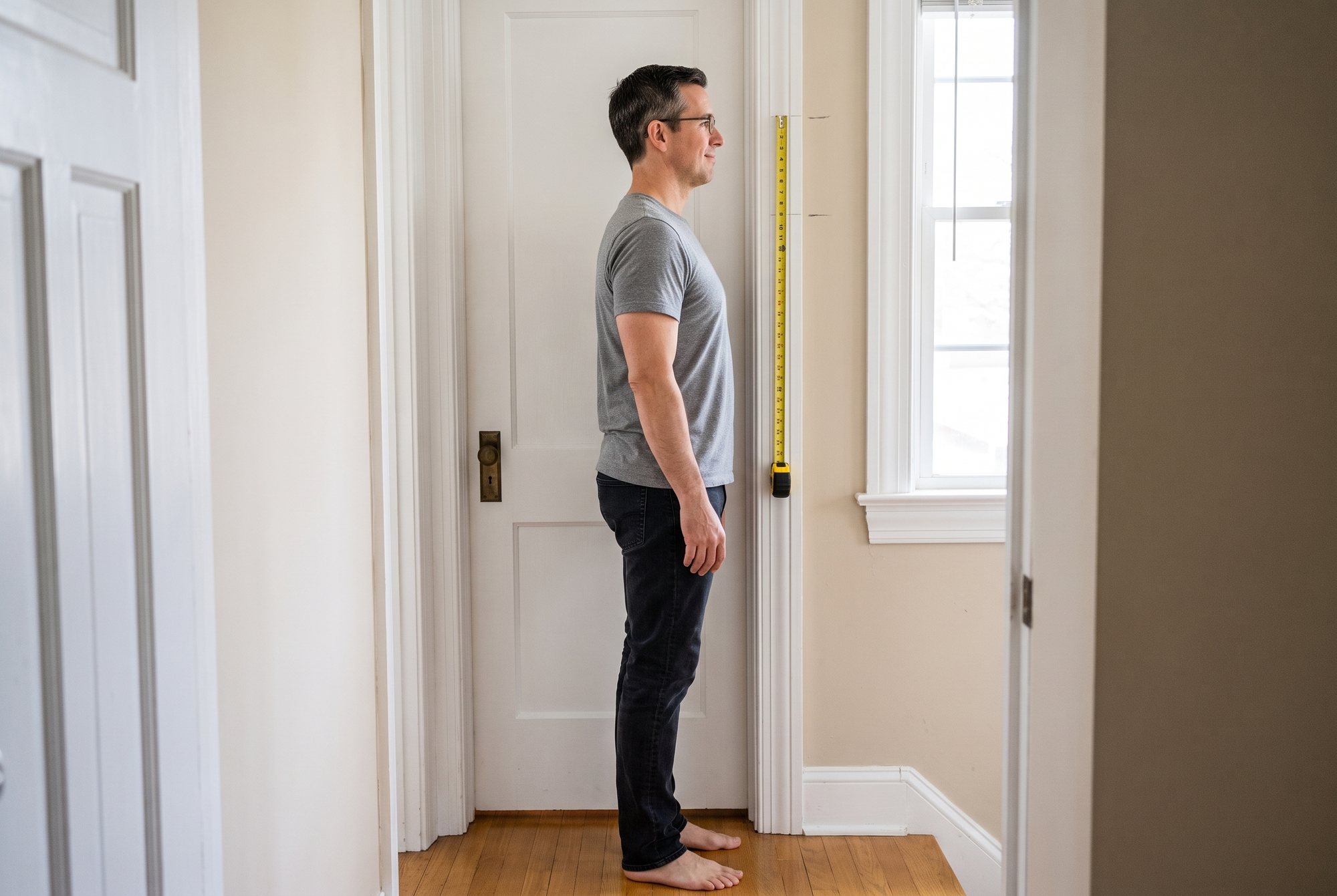
So I did the test. Stand against a door frame the way you actually stand, phone in hand, and have someone mark the top of your head with a pencil. Then stand as tall as you can and mark it again. Mine were an inch apart. I did it three mornings in a row, before coffee. One inch every time.
That is not the spine wearing out. Your spine does get shorter across a day: the discs between the bones squeeze out water while you are upright, and eight young adults measured to the millimetre lost about 19 mm between waking and bed, then got it back overnight. That part is not yours to fix. My inch was there at seven in the morning.
This year two researchers at BAuA, Germany's federal institute for workplace safety, put 68 adults through a 3D body scanner three ways. Standing tall with the feet together, which is the international standard for measuring height. Standing tall with the feet apart. And relaxed. Relaxed read 8.8 mm shorter, about a third of an inch, and almost all of the drop came from the upper body, not the legs. Their "relaxed" was a person in a lab told to stand easy with nothing in their hands. Mine was a man reading his phone. A third of an inch for standing easy. A whole inch for a desk slump, on my frame.
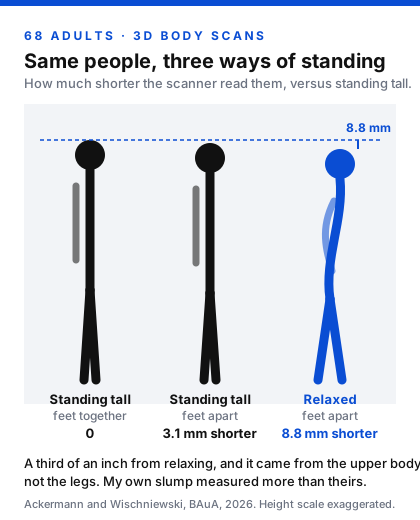
The point is not the exact number. The point is that height is partly a stance, the stance is held by muscle, and the muscle that puts your head where it sits is the one nobody trains.
$333 Of Things That Hold You Up
The first thing everyone buys is a strap. I bought the strap, then the gadget that buzzes, then the inflatable thing, then a chain. In the order I paid for them:
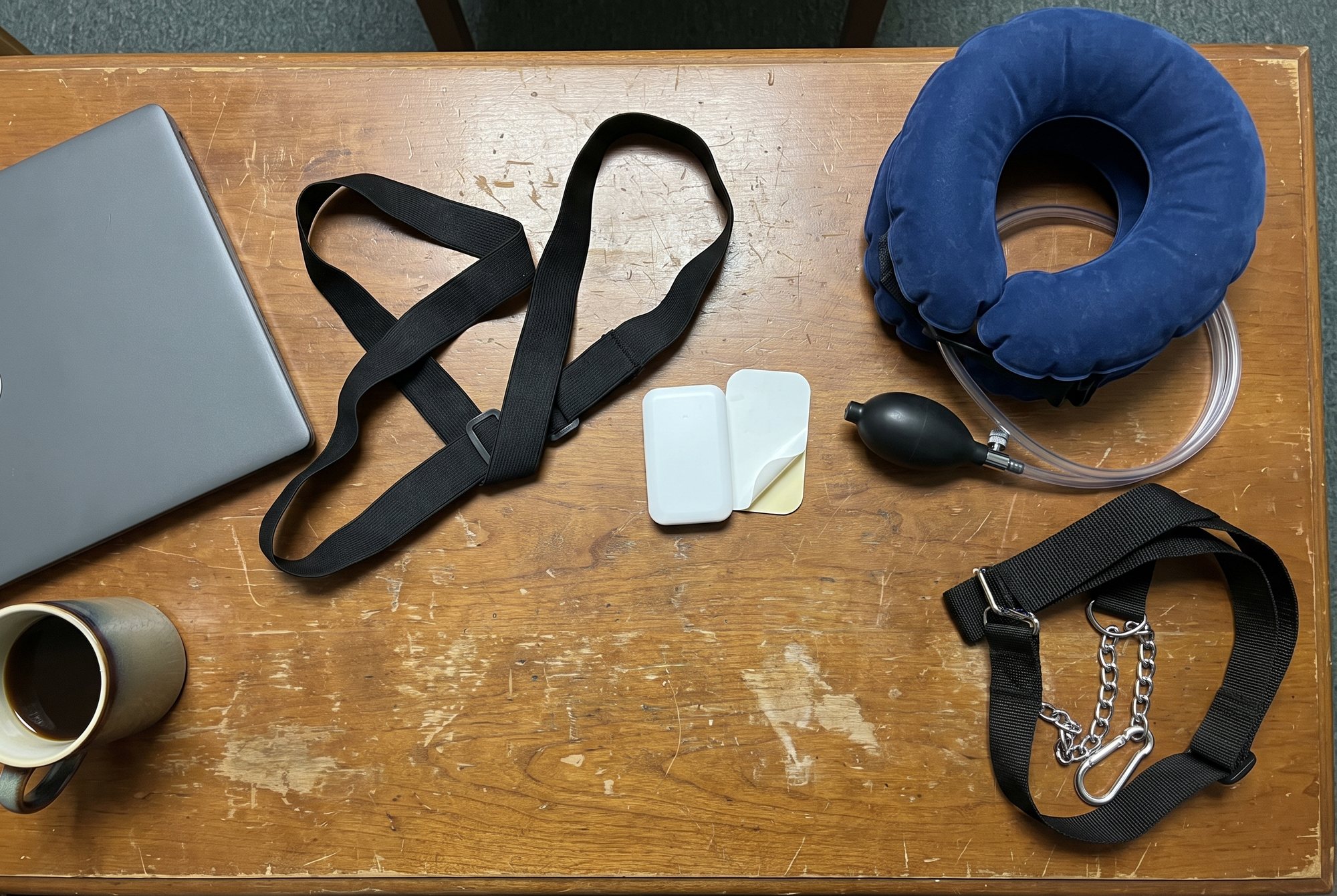
The strap wins for a photo. It pulls the shoulders back for the two hours you can stand wearing it, and the second it comes off the slump is back, because the strap was doing the muscles' job for them. A muscle that is not working is not getting stronger. Two weeks in, mine was in the drawer.
The sensor wins for awareness. It buzzes when your upper back tips past the angle you set. For a fortnight I sat up every time it buzzed. Then I learned to slouch slower than its threshold. It tells you that you slumped. It has no opinion on why.
The neck pump wins for ten minutes. Inflate it under your neck, lie there, and it feels wonderful. It is traction: it stretches the neck while you are lying down. Stand up and nothing about how you stand has changed, because nothing about what holds you up has changed.
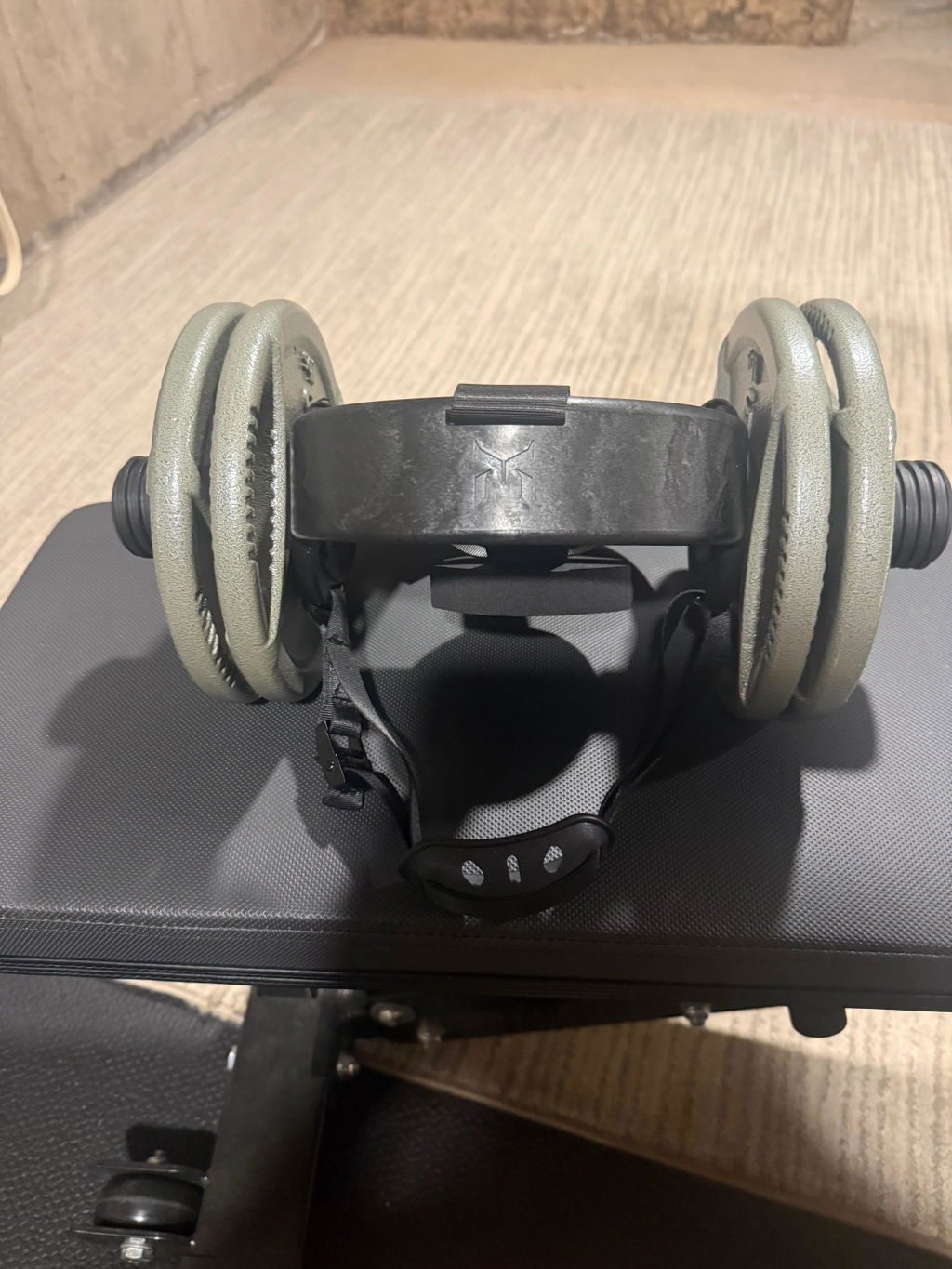
The chain head strap was half the right idea. A strap on the head, plates on a chain, lean forward and lift the head. It loads the back of the neck, which is real training. It cannot load the front, and the front is where a forward head lives. The plates also swing, so the sides are out. It wins on price.
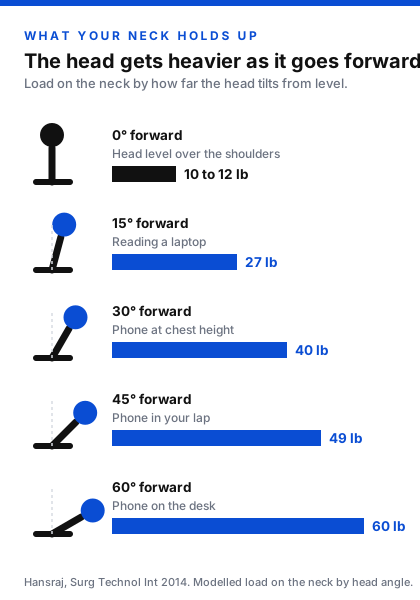
Here is why none of them could work. A head weighs 10 to 12 lb when it sits over the shoulders. A New York spine surgeon modelled what the neck has to hold as the head tilts forward: 27 lb at 15 degrees, 40 lb at 30, 49 lb at 45, and 60 lb at 60 degrees, which is roughly the angle of reading a phone in your lap. The muscles that hold that up for ten hours a day are the ones that decide where your head rests when you are not thinking about it. Nothing on my desk made them stronger.
What Actually Moves A Head Back
In 2018 a team in Tehran and Doha pooled every randomised trial that had tried to fix forward head posture with exercise: seven trials, 627 people. Exercise moved the craniovertebral angle, the standard measure of how far the head sits in front of the shoulders, with an odds ratio of 6.7, which the authors graded as strong evidence. Neck pain improved too. The tilt of the head itself did not. So the head comes back over the shoulders when the muscles around the neck are trained, and it does not when they are stretched, pumped or strapped.
Which muscles, and how? A 1997 study out of Georgia answered the half nobody wants to hear. Twenty-two lifters did twelve weeks of squats, deadlifts, rows and push presses. Their thighs grew 7 percent. Their neck muscle went from 19.6 to 19.7 square centimetres, which is nothing. The eight who added three sets of ten loaded head extensions went from 19.5 to 22.0, about 13 percent, and got a third stronger. The neck only grows when you load the neck. Rows do not count. The scanner checked.

So here is the rubric. Anything I tried next had to clear all four.
- Load the front as well as the back. A forward head is a weak front and an overworked back. The exercise is a chin tuck against resistance, lying on your back, and a chain head strap cannot do it.
- Add weight in small steps for twelve weeks. A fixed band or a strap runs out in a month. The trials that moved the head ran for weeks, with the load going up.
- Train where the head lives. Level to tucked, both sides, not just bridging the neck backwards.
- Ten minutes at home, before coffee. Anything I have to drive to dies in week three.
I priced what could pass. The Iron Neck halo lists at $349, or $599 for the Pro with the friction dial, and it is the best thing here for rotation and rehab, but it loads with a band, so the smallest step up is a big one. The chain head strap I already owned is $35 and does the back only. A four-way neck machine at a gym does all four directions and none of them at 6 a.m. in my kitchen.
Twelve Weeks With Plates Over My Ears
What passed is embarrassingly simple. A two-pound frame you wear like a helmet with no top, a threaded sleeve over each ear, and a small weight plate on each sleeve. It is the Kensui EZ-HELM V2: $199, one size with three pad sizes, in stock.

A nylon fibreglass frame, a chin strap, a front pad and a back pad, and two detachable 3.5 inch sleeves that take any standard 2 inch Olympic plate. Kensui rates it to 100 lb. I started with a 2.5 lb plate a side, lying on my back, tucking my chin and curling my head off the floor. It felt like nothing for six reps and then like a great deal.
The Verdict
Kensui EZ-HELM V2
- The load sits on the head, so the front of the neck trains on your back and the back of it trains face down. Rubric one.
- Real plates at each ear: up 2.5 lb a side at a time, for as long as you want to keep going. Rubric two.
- Curls, extensions and side bends from one frame, on the floor or a bench, in ten minutes. Rubric three and four.

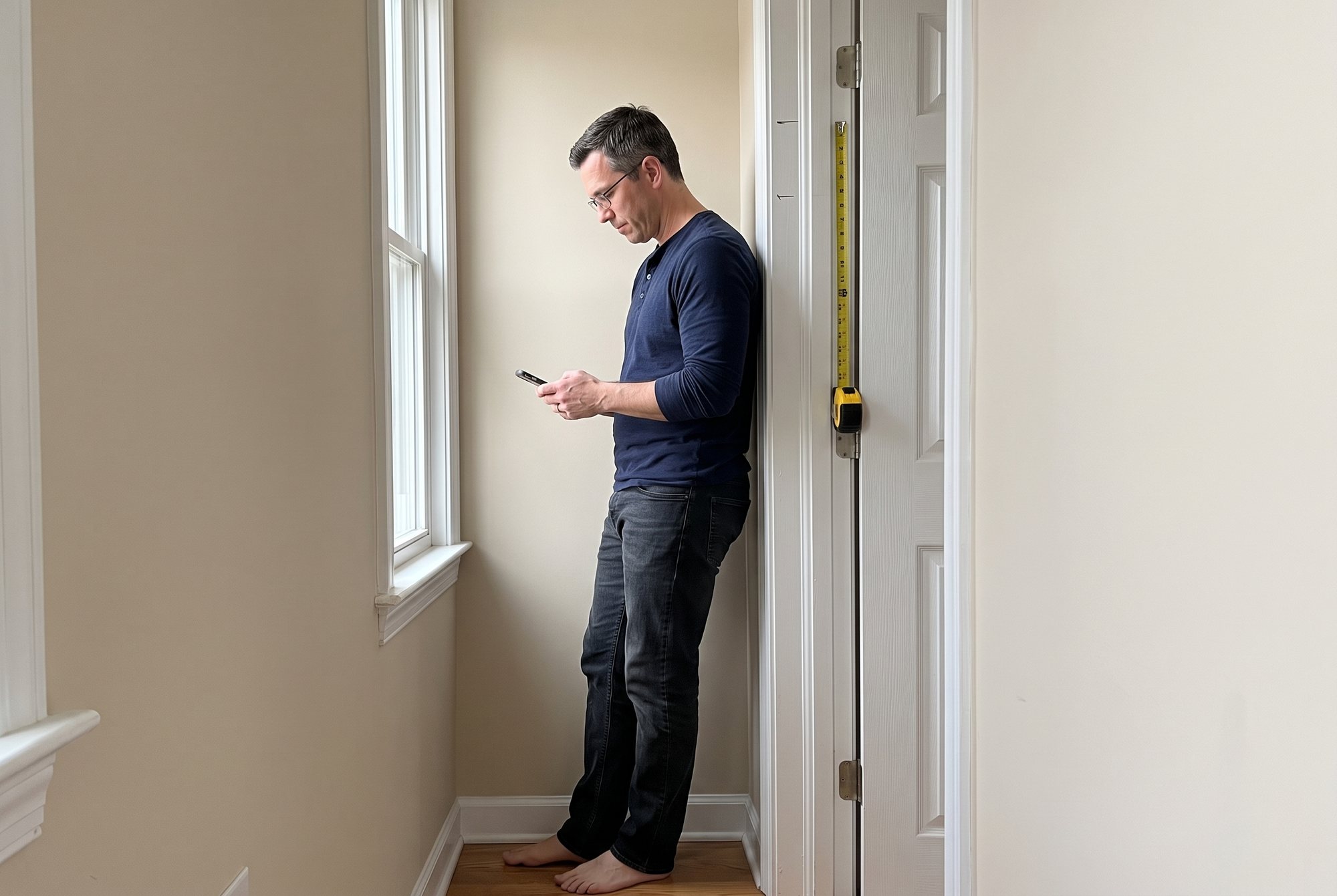
Three mornings a week, at the kitchen table, before anyone else was up. On my back: chin tuck into a curl, three sets of ten. Face down over the table edge: extensions, three sets of ten. On my side: bends, two sets each way. Ten minutes, plates back in the bag. Week one was 2.5 lb a side. Week twelve was 10 lb a side, and I measured the door frame every Sunday.
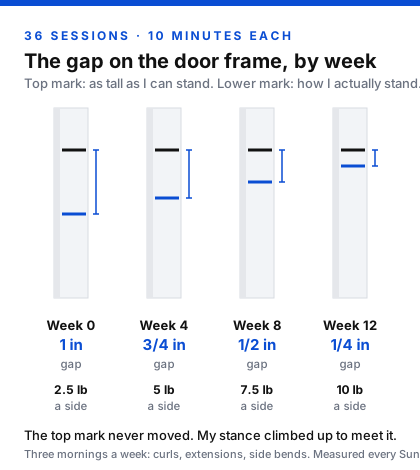
What changed, exactly. The top mark never moved. I did not grow, and no frame was going to make me. What moved was the lower mark, the one for how I actually stand: half an inch by week eight, a quarter by the last Sunday, which is inside how sloppy a pencil on a door frame gets. My head sits over my shoulders now without my thinking about it, because the muscles that put it there are strong enough to do it all day. The photo at the door frame is the last morning.
What 135 Owners Say
4.75 out of 5 from 135 reviews on the product page. Six of them use the word posture, and I read them from the bottom up, because the low ones are worth more than the high ones.
"I've been suffering from neck issues from my job (looking down all day) so I decided to get this to help strengthen my neck muscles. Much better than the 4 way machine at gyms since it offers better freedom of movement."
Lou K., verified buyer"Bought this primarily for neck gains but the posture improvement has been the biggest win. My shoulders naturally pull back now and my head doesn't jut forward anymore."
John D."One thing that would make it perfect is if the strap would fit onto the chin like an NFL football helmet. The default strap gives a choking effect when tucking the chin."
Joshua, verified buyer, four starsThe strap is the real complaint, and it bites on exactly the exercise that matters here. The chin tuck is the front-of-neck move, and a strap cinched for side bends will catch your throat on it. I loosen it one notch for the curls and tighten it back for the bends. Of the six reviews at three stars or under, three say the frame shifts side to side, two say a pad or a velcro tab came loose, and one says it is too expensive for what it is. Mine has not shifted with the strap snug and the bends done slowly, and the pads have stayed put.

Is loading a neck safe? Start lighter than feels sensible, move slowly, add weight only when ten clean reps are easy, and never bounce out of the bottom. Same plan as any other muscle, same plan the studies used. No plates at all on day one is fine: the frame clips to a resistance band.
The price. Two hundred dollars for a nylon frame with two sleeves is not nothing. It is $134 less than my drawer of straps and pumps, and $150 less than the cheapest Iron Neck.
15% off with code SMGPOSTVIP at checkout.
15% reader discount, applied automatically at checkout.
15% off with code SMGPOSTOCT at checkout, through October 17.
$30 off with code SMGPOST30 at checkout.

| Kensui EZ-HELM V2 | Iron Neck 3.0 | DMoose chain head strap | Upright GO 2 sensor | |
|---|---|---|---|---|
| Price | $199 | $349, Pro $599 | $35 | $79 |
| What it does | Loads the neck with plates | Loads the neck with a band | Loads the back of the neck | Buzzes when you slump |
| Front of the neck | Yes, chin tuck on your back | Yes, against the band | No | No |
| Smallest step up | 2.5 lb a side | The next band | 2.5 lb on the chain | None |
| Wins on | Load and progression per dollar | Rotation and rehab | Price | Awareness |
| Learn More |
Before You Buy
Will it make me taller? No. It gives back what your stance hides. The top mark on your door frame is already yours. The training moves the lower one up to meet it.
Do I need plates? Any 2 inch Olympic plate fits. A pair of 2.5s and a pair of 5s covers the first month. For 1 inch plates, Kensui sells a $27 adapter.
The cheaper Kensui one? The EZ-NECK is a handheld plate loader, $49 for the PRO and $129 for the MAX. You hold it against your head instead of wearing it, and it works for curls and extensions. I wanted my hands free and the weight on my head, so the helmet.
How long? Twelve weeks, three sessions a week. Do the door frame on day one, in pencil, or you will not believe it later.

100 days is longer than the twelve weeks. Kensui gives you a 100-day risk-free trial with free returns. Mark the door frame, train the full twelve weeks, mark it again, and if the lower line has not moved, send it back.
The Inch Was Never Gone
The scanner says a relaxed upper body hides height. My door frame said an inch. Straps, sensors and pumps hold you up for as long as you wear them and not a minute longer, because none of them strengthen the muscles that put your head where it sits. Twelve weeks of plates on my head did, ten minutes at a time, and the pencil mark followed.
Get the EZ-HELM15% off with code SMGPOSTVIP at checkout.
15% reader discount, applied automatically at checkout.
15% off with code SMGPOSTOCT at checkout, through October 17.
$30 off with code SMGPOST30 at checkout.
$199 · 100-day risk-free trial · free returns · free shipping

Sources
- Ackermann A, Wischniewski S. Investigating the Influence of Body Posture on Stature Based on Anthropometric Data from Healthy Adults. In: Advances in Digital Human Modeling III, Lecture Notes in Networks and Systems vol 2173, pp 62-71. Springer, 2026. Federal Institute for Occupational Safety and Health (BAuA). 68 adults, 3D whole-body scans; correction factors of 3.1 mm (feet apart) and 8.8 mm (relaxed) relative to the ISO 7250-1 posture.
- Tyrrell AR, Reilly T, Troup JD. Circadian variation in stature and the effects of spinal loading. Spine. 1985;10(2):161-164. PMID 4002039. Mean diurnal loss 19.3 mm in eight young adults.
- Hansraj KK. Assessment of stresses in the cervical spine caused by posture and position of the head. Surgical Technology International. 2014;25:277-279. PMID 25393825.
- Sheikhhoseini R, Shahrbanian S, Sayyadi P, O'Sullivan K. Effectiveness of therapeutic exercise on forward head posture: a systematic review and meta-analysis. Journal of Manipulative and Physiological Therapeutics. 2018;41(6):530-539. PMID 30107937. Seven RCTs, 627 participants, craniovertebral angle OR 6.7 (CI 2.53 to 17.9).
- Conley MS, Stone MH, Nimmons M, Dudley GA. Specificity of resistance training responses in neck muscle size and strength. European Journal of Applied Physiology and Occupational Physiology. 1997;75(5):443-448. PMID 9189733.
- Prices checked September 17, 2026: backembrace.com (Back Posture Corrector), uprightpose.com (Upright GO 2 and GO S), posturepump.com (Cervical Disc Hydrator Model 1100-S), dmoose.com (the chain head strap), iron-neck.com (Iron Neck halo and Pro list prices), kensui.com. Owner quotes, the 4.75 out of 5 and the 135 reviews are from the EZ-HELM product page the same day.
