Reviews · 8 min read
Almost A Year Stuck At The Same Bench Number. A Bar With A 4-Inch Bend Unstuck It In Two Months.
The year and the two months in the headline are not mine. They belong to one of the 27 people who reviewed the bar I ended up buying, and I bought it because of her. My number was 225, and I know the wall she means. Here is where a press actually dies, why $171 of the usual fixes work on the wrong two inches, and what changes when the bar bends.

Two Plates, And Then Nothing
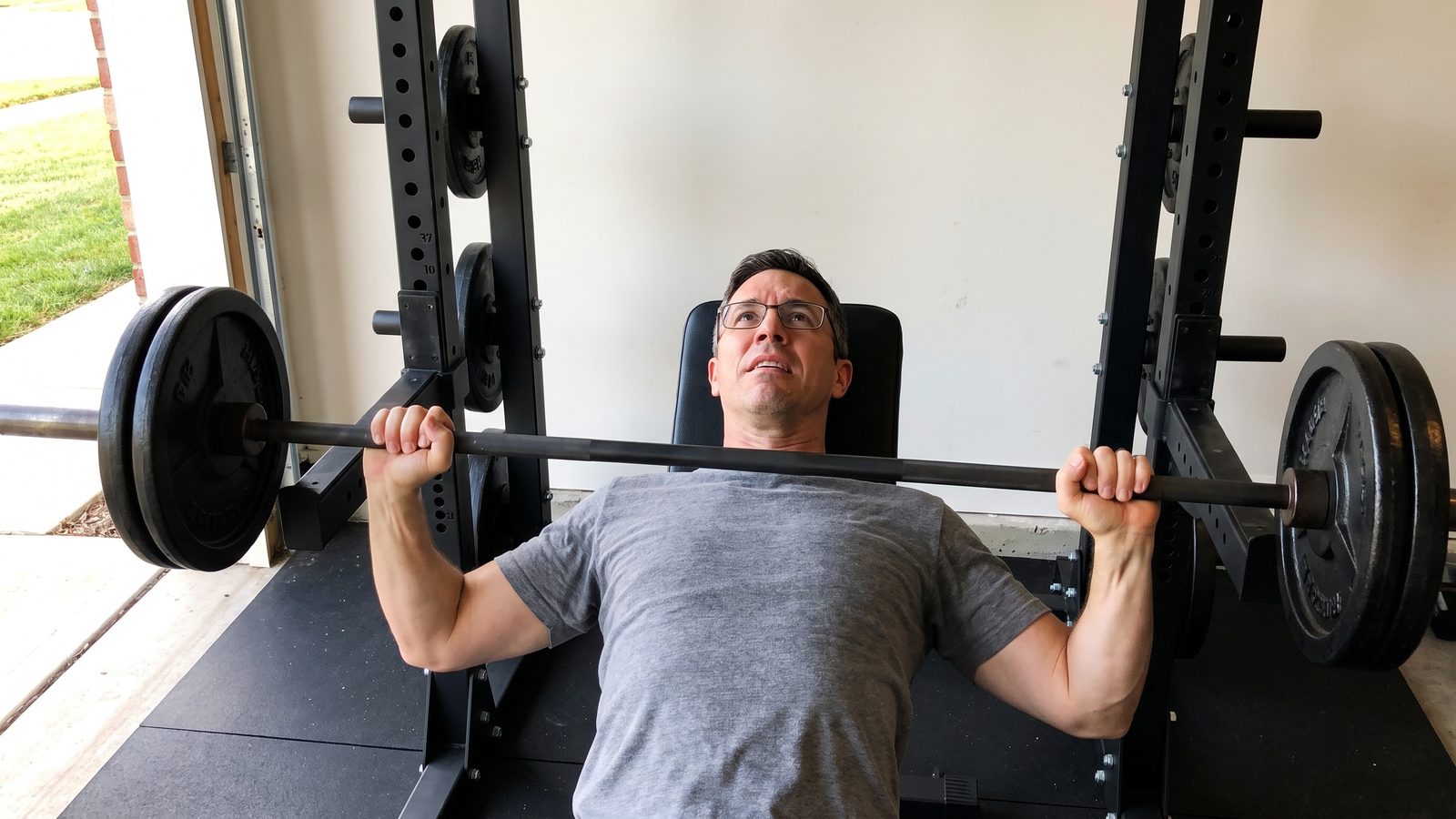
Two 45s a side. It is the number every lifter in a garage knows, because it is the first one that looks like something on the bar. I got there and then I stayed there. The rep always died in the same place: an inch or two off my chest, elbows out, bar drifting toward my face, and the set was over.
I stopped writing dates next to the number in my log. That is how you know a stall has become a fact about you rather than a phase.
So I did what everyone does, in the order everyone does it. The receipts:
Three Fixes For The Wrong Two Inches
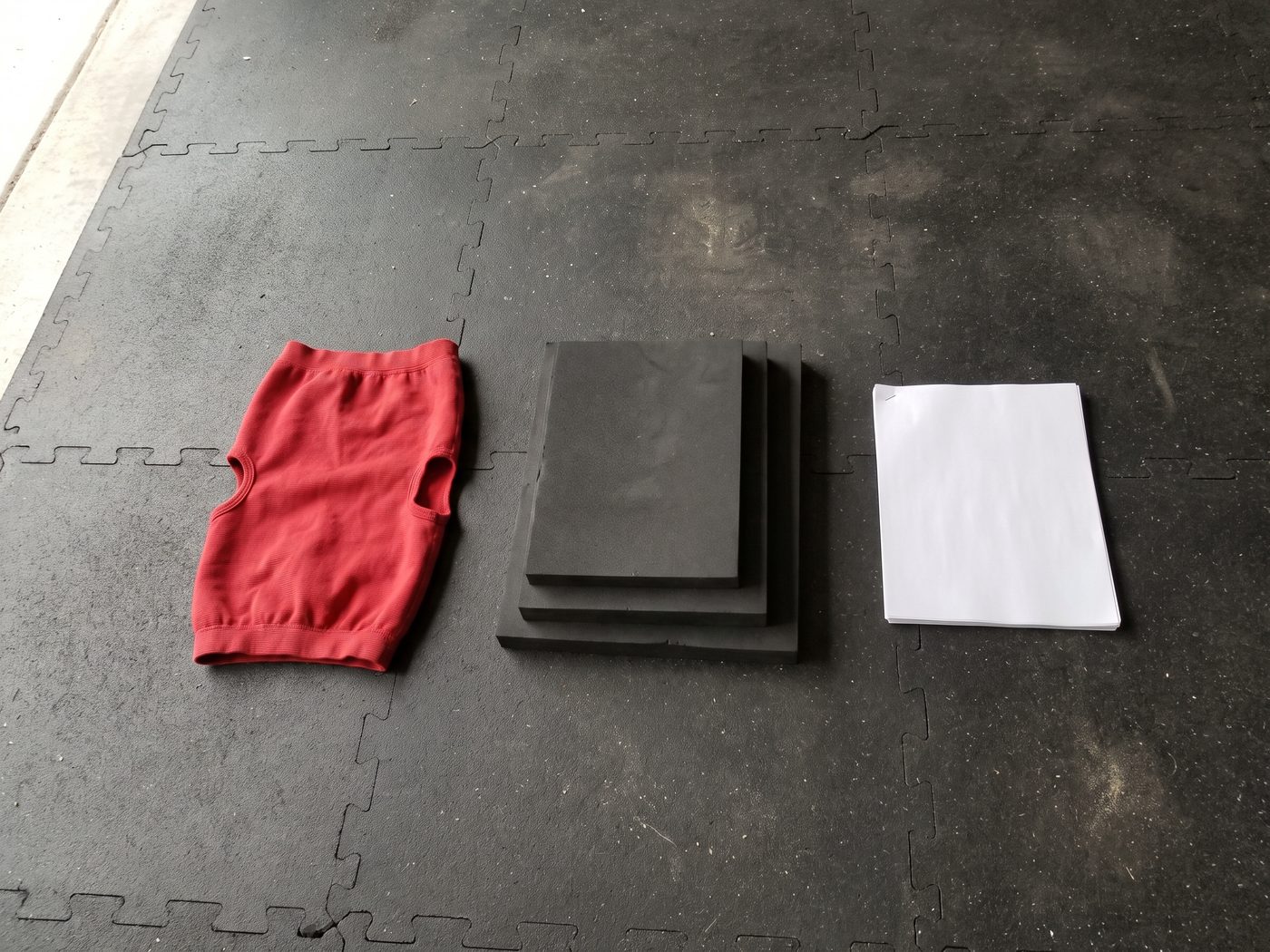
The sleeve is $56 of thick elastic that loops over both elbows. It stores energy as the bar comes down and gives it back at the bottom, which is why you can press more with it on. That is also the problem. It helps most exactly where I was weakest, so the weak part never had to work. With it on, my bench went up. Take it off and nothing had changed. It wins one thing outright: heavy days on cranky shoulders, because it takes the sting out of the bottom.
The boards go on your chest and stop the bar two, three, four or five inches early. For $39.95 they are the cheapest way to overload a lockout, and for a lifter who fails at the top they are the right tool. I fail at the bottom, and the boards cut the bottom out of the lift entirely. A ten-week trial on 50 trained men found the group that pressed only the top third of the range gained the least of anyone, with effect sizes that did not clear zero on some measures.
The program was the most sensible $75 of the three. It was organised, it was patient, and it could not know where my rep died, because no printed program can. Same exercise, same sticking point, new numbers on a page.
Something else was going on, and it took me a while to admit it. A year is a long time to do the same movement the same way and expect the body to keep answering.
Where A Press Actually Dies
Researchers have filmed this. In 2010, van den Tillaar and Ettema put twelve trained lifters under a true one-rep max with motion capture and electrodes on the pressing muscles. Every lifter's bar slowed in the same place: a sticking period that started about 0.2 seconds after the bar left the chest and lasted about 0.9 seconds. That is the bottom of the press, the first few inches, the part the sleeve helps with and the boards cut off.
Twenty years earlier, Elliott, Wilson and Kerr had filmed ten elite powerlifters and found the chest, front delt and triceps were already at full activation from the moment the bar started up. The muscles were not holding back in the slow patch. They were giving everything they had, and everything they had ran out at a certain bar height.
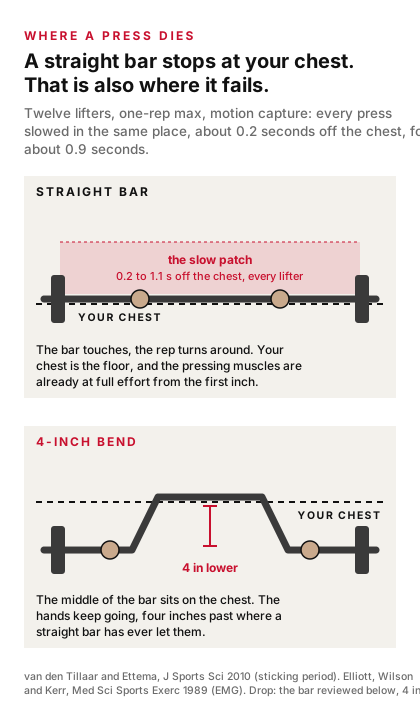
One honest footnote. The same lab compared successful and failed attempts a year earlier and only about half of the failures happened inside the sticking period. Some lifters die higher. Mine did not. The bar drifted and stopped a hand's width off my chest every single time, and a phone propped on the dumbbell rack said so.
So the question is not how to make the bottom easier. It is how to make the bottom stronger. And on that, the muscle research of the last five years is unusually clear.
In 2022, Pedrosa and colleagues split 45 untrained women into groups doing knee extensions through the full range, only the stretched bottom half, only the top half, or a mix. The bottom-half group grew the thigh more than full range did at the site nearest the hip, and the top-half group was no better than the people who did not train at all. Maeo's lab ran leg curls for twelve weeks seated, which holds the hamstring at a longer length, against lying, which does not. Same load, same reps: 14 percent growth against 9. A 2023 review of eleven such trials found the same pattern every time it looked: full range and the stretched half win, the shortened half loses. And in the one bench press trial of the bunch, full range beat both partial groups.
Train The Stretched End
Where a muscle grows most is where the bar stops shortest.
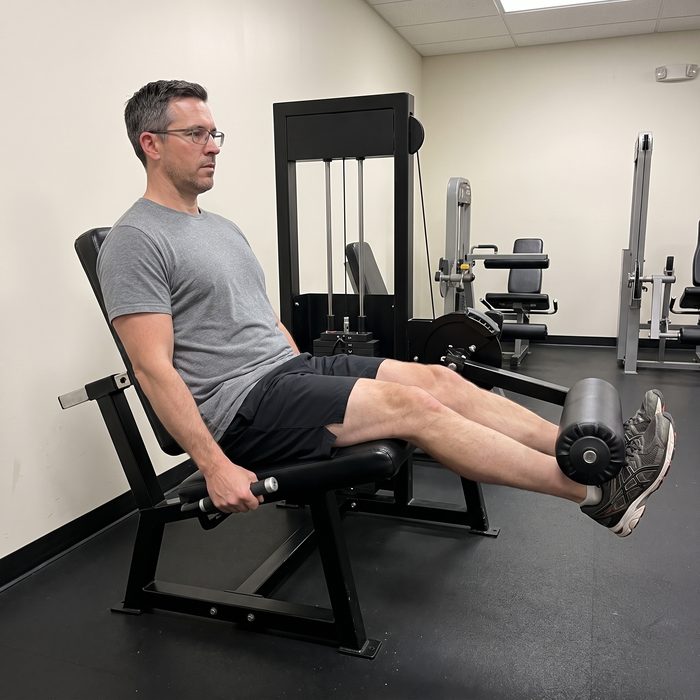
Knee extension, 45 women
Stretched half won
Training only the bottom of the range grew the thigh more than full range. Training only the top was no better than not training at all.
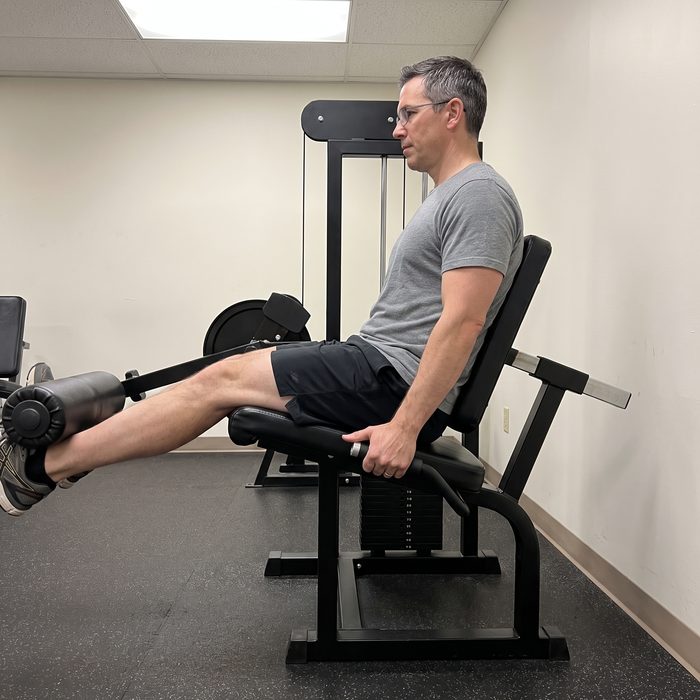
Leg curl, 12 weeks
+14% vs +9%
Seated curls hold the hamstring longer. They grew it 14 percent. Lying curls, same load and reps, 9 percent.
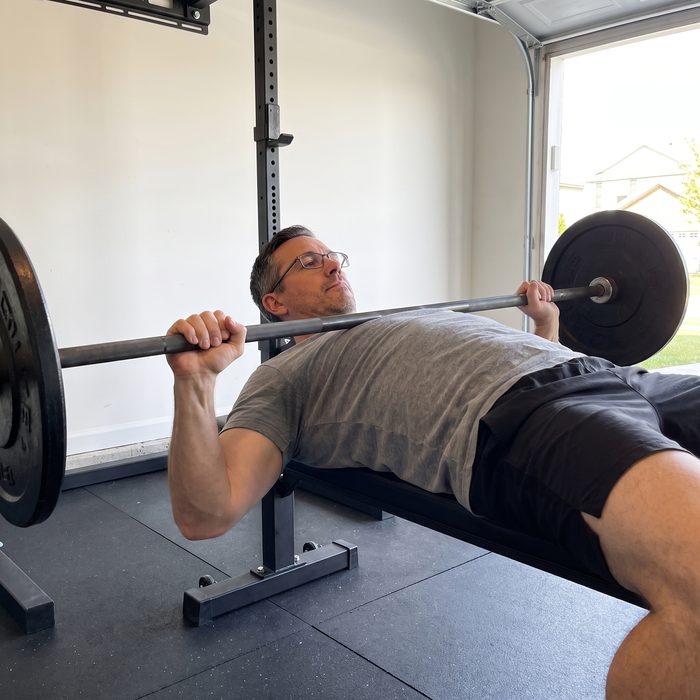
Bench press, 50 men, 10 weeks
Full range won
The lifters who pressed the full range gained more than the groups that stopped a third or two thirds of the way down.
Not yet tested: a cambered bar against a straight bar for eight weeks. Nobody has run that trial.
Pedrosa et al. 2022, Eur J Sport Sci. Maeo et al. 2021, Med Sci Sports Exerc. Martinez-Cava et al. 2022, J Strength Cond Res. Review: Kassiano et al. 2023.
There is a second study I wish I had read a year earlier. Fonseca and colleagues trained 49 people for twelve weeks and crossed two things: keep the load scheme or vary it, keep the exercise or vary it. The group that kept the loading constant and changed the exercise gained the most squat strength of anyone, by a wide margin. Changing the movement beat changing the numbers. A year of the same press with new percentages on a page was the one combination least likely to work.
Put those together and the fix has a shape. Anything I tried next had to clear four things.
- Load the bottom, and go past it. The stretched position is where the growth is and where my rep died, a hand's width up. A straight bar cannot go lower than my chest. The fix had to.
- Be a different exercise, not a different spreadsheet. Fonseca's result. Same bar, same groove, same stall.
- Take my plates and climb 2.5 pounds at a time for months. A band has three settings. Iron has hundreds.
- Rack in my power rack and press from a flat bench. Anything that needs a machine or a commercial gym dies in week three.
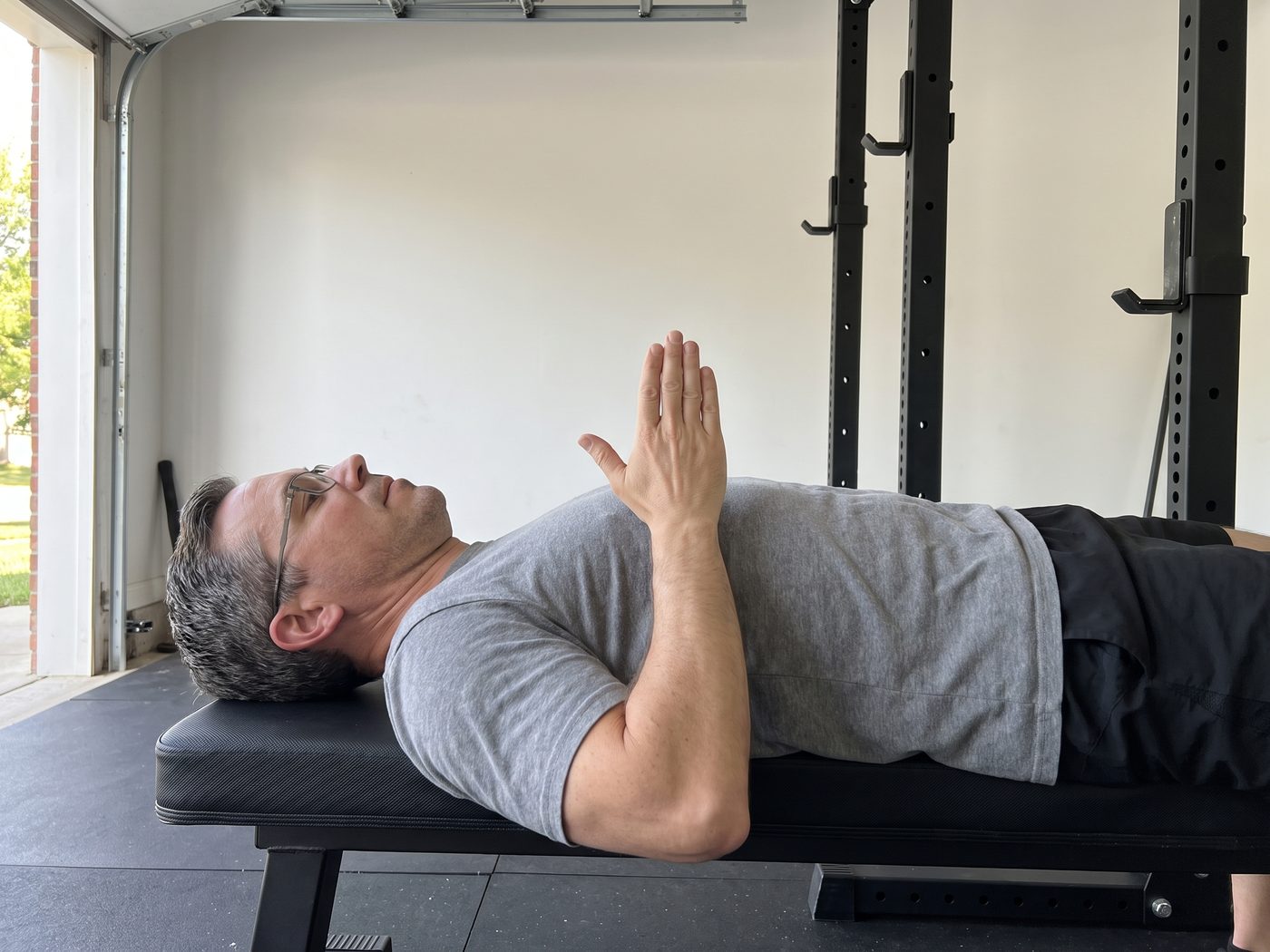
Only one category of thing passes all four: a bench bar with a bend in it, so the grip sits below the middle of the bar and your hands travel past your chest. I priced what could pass. A basic chrome one is $144 at elitefts with a 3.5 inch camber and no listed weight or capacity, and it is the cheapest way into this, full stop. Titan's is $219.97 on sale from $259.99, a 3 inch drop, 45 pounds, 600 pound capacity. It weighs what a standard bar weighs, so your numbers transfer one to one, and that is a real win. The elitefts Black 4 inch is $289, A3 steel, needle bearings, rated to 1,000 pounds. If you plan to bench 500 on it, that is the one.
A Bar With A Four-Inch Bend In It
What I bought is the Kensui Kobe Cambered Bar: $199, in stock, free shipping, and it turned up in six days. Chrome, 30 mm shaft, a 4 inch drop, rated to 600 pounds, 9 inch rotating sleeves that take any Olympic plate, and a strip of centre knurl so it doubles for good mornings. The whole bar weighs 30 pounds, which matters more than it sounds.

The first set is strange. Plates hang four inches below your hands, so the bar wants to swing like a pendulum, and every stabiliser you own wakes up to stop it. The second strange thing is the bottom. Where a straight bar stops at your chest, this one's middle touches down and your hands keep going. A stretch across the front of the shoulders and the chest that a straight bar has never let you feel under load, because your ribcage was always in the way.

That is the whole trick. The straight bar's floor is your chest. A cambered bar's floor is four inches lower, so the two inches where my rep used to die are now the middle of the movement, not the start of it, and the part of the range the research says grows the most is finally on the menu.
The Verdict
Kensui Kobe Cambered Bar
- A 4 inch drop, matched only by a bar that costs ninety dollars more. Rubric one.
- A different exercise on the same bench, same rack, same plates, 2.5 pounds at a time. Rubric two, three and four.
- Thirty pounds empty, 15 less than the Titan or the elitefts Black, so the stretched position starts lighter and the bar goes back on the hooks without a fight.


How I use it. One session a week is the cambered bar, three sets of six to eight, starting 20 percent under my straight-bar working weight and pausing a beat at the bottom. The other session is the straight bar, unchanged. What moved first was the bottom two inches: the drift stopped, and the bar started leaving my chest instead of dying on it. My straight-bar single that had been a grinder now moves, and I am adding to it. The numbered version of that story belongs to the reviewer in the headline, because hers came with dates and mine is still being written.
What 27 Owners Say
Five out of five from 27 reviews on the product page. I read all of them, sorted them by what each one is actually about, and counted.
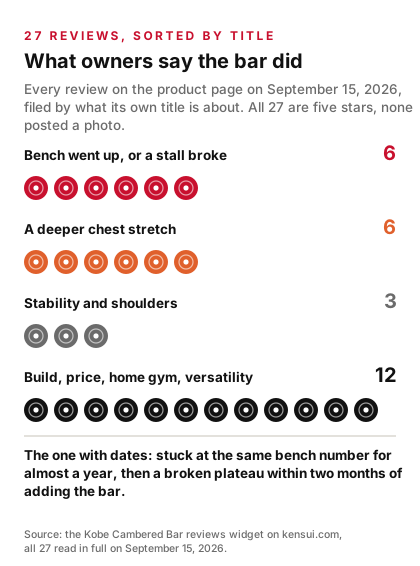
"Stuck at the same bench number for almost a year. Added the Kobe Cambered Bar for extended ROM work and within two months I smashed my plateau. The deeper stretch builds strength right where I was weak."
Jennifer L.Those are the two numbers in the headline, hers and not mine. She does not say what her number was, and I have not guessed for her.
"Training with the Kobe Cambered Bar for the deeper range has directly improved my straight bar bench. Building strength through the extended ROM made my regular press feel easy."
Nathan R."The Kobe isn't cheap but specialty bars rarely are ... it's built to last and the cambered design delivers benefits I couldn't get otherwise. No regrets."
Michelle C.That last one is as close to a complaint as the 27 get, and it is a fair one. Two things I would add that nobody wrote. The 9 inch sleeves are short: five or six iron 45s a side, but only two bumpers, so a bumper-plate gym runs out of sleeve around 260 pounds long before it runs out of bar. And none of the 27 posted a photo, so every picture of the bar on this page is Kensui's own. I would have preferred a stranger's garage.
$199 · in stock · free shipping · 100-day risk-free trial

The bend earns its keep off the bench too. On a bent-over row the middle of the bar clears your shins and the grip sits lower, so the elbows travel further at the top. On a seal row, face down on an incline bench, the hands start below the pad. Same idea in reverse: a longer range at the stretched end, on a lift that usually gets cut short by the equipment.
Side by side, the four bars that could have passed the rubric, with today's prices:
| Bar | Kensui Kobe Cambered Bar | elitefts Black 4" | Titan Cambered Bench Bar | elitefts Olympic Cambered |
|---|---|---|---|---|
| Price | $199 | $289 | $219.97 | $144 |
| Drop | 4 in | 4 in | 3 in | 3.5 in |
| Bar weight | 30 lb | 44 lb | 45 lb | not listed |
| Capacity | 600 lb | 1,000 lb | 600 lb | not listed |
| Sleeves | 9 in, rotating, chrome | 16.3 in, bearings, black | 15.25 in, chrome | 2 in Olympic, chrome |
| Wins on | Drop per dollar, lightest bar | Capacity and spin | Same weight as your straight bar | Price |
| Learn More |
Before You Buy
Is it a one-trick bar? No. The strip of centre knurl is there for good mornings and squats, the bend suits rows, and a seal row gains the same extra range at the bottom that the bench does. It is a second bar, not a single exercise.

Do I need a rack? You need somewhere to unrack it at arm's length, the same as any bench bar. Mine sits in the J-hooks of an ordinary power rack. It is 30 pounds, so getting it in and out of the hooks is easier than a standard bar, not harder.
Will the deeper stretch bother my shoulders? Start 20 percent lighter than your straight-bar sets, pause at the bottom instead of bouncing, and add weight only when eight clean reps are easy. That is the same rule as any new exercise. One of the 27 bought it because years of straight-bar pressing had left his shoulders cranky and the bent bar's path suited them better. Your shoulders are yours. Listen to them.
How do I program it? One cambered session and one straight-bar session a week. Fonseca's trial is the argument for changing the exercise rather than the numbers, and the long-range studies are the argument for which exercise. Keep the straight bar in the week so the skill of the lift you are actually testing stays sharp.
The price. $199 is more than the $170.95 I spent fixing the wrong end of the lift, and $90 less than the only other bar on the list with a 4 inch drop.
100 days is longer than her two months. Kensui gives you a 100-day risk-free trial with free returns. Run one cambered session a week for eight weeks, test your straight-bar single on the ninth, and if the number has not moved, send the bar back.
The Floor Was The Problem
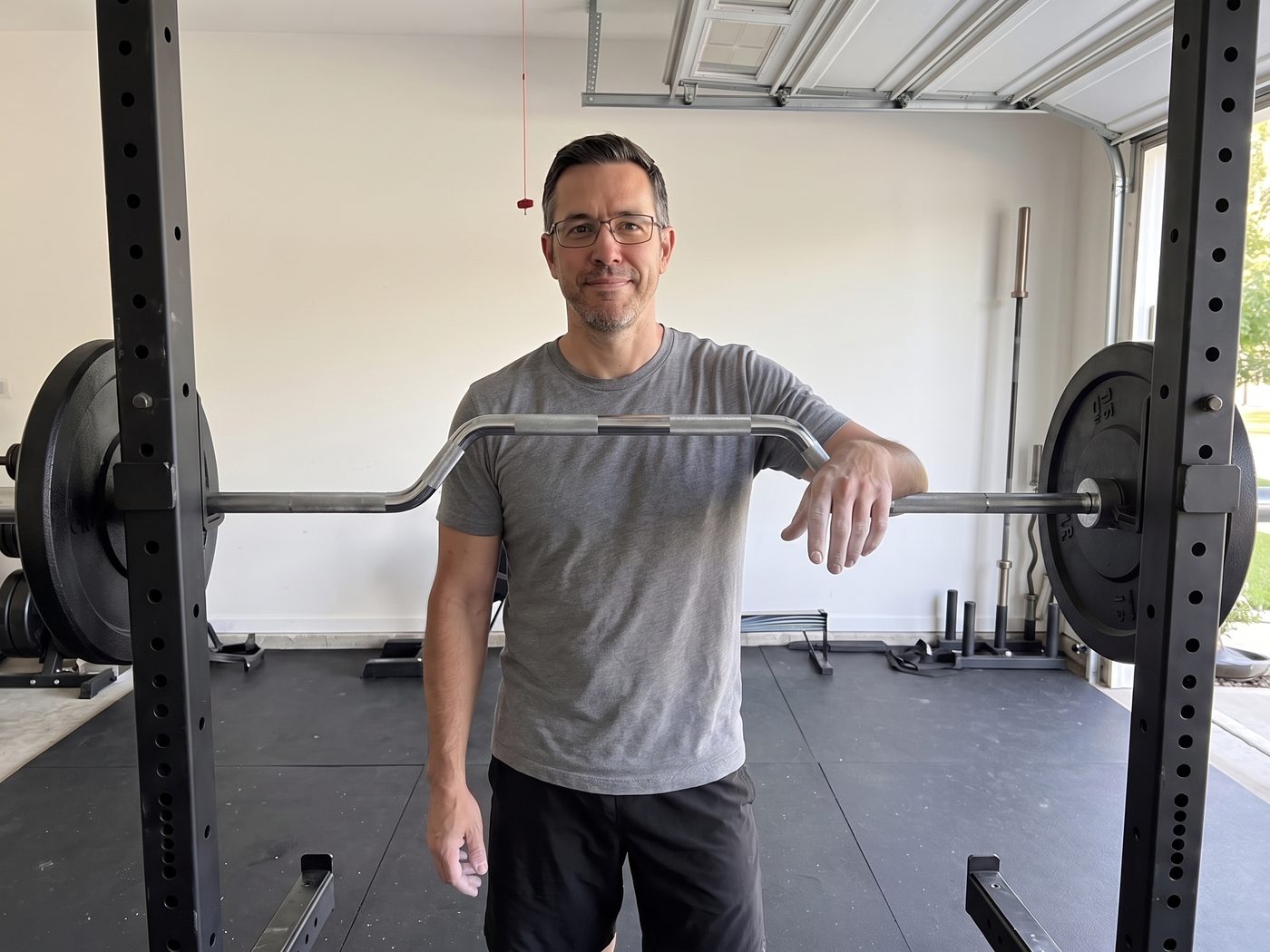
My bench stalled where every bench stalls, in the first two inches off the chest, and I spent $171 making that part easier instead of stronger. A bar with a 4 inch bend moves the floor. The stretched position becomes trainable, the sticking point becomes the middle of the rep, and the same bench, rack and plates do the rest.
Get the Kobe Cambered Bar$199 · 100-day risk-free trial · free returns · free shipping
