Training Science · 9 min read
Researchers Found Out Why Home Workouts Aren't Effective (Unless You Do THIS)
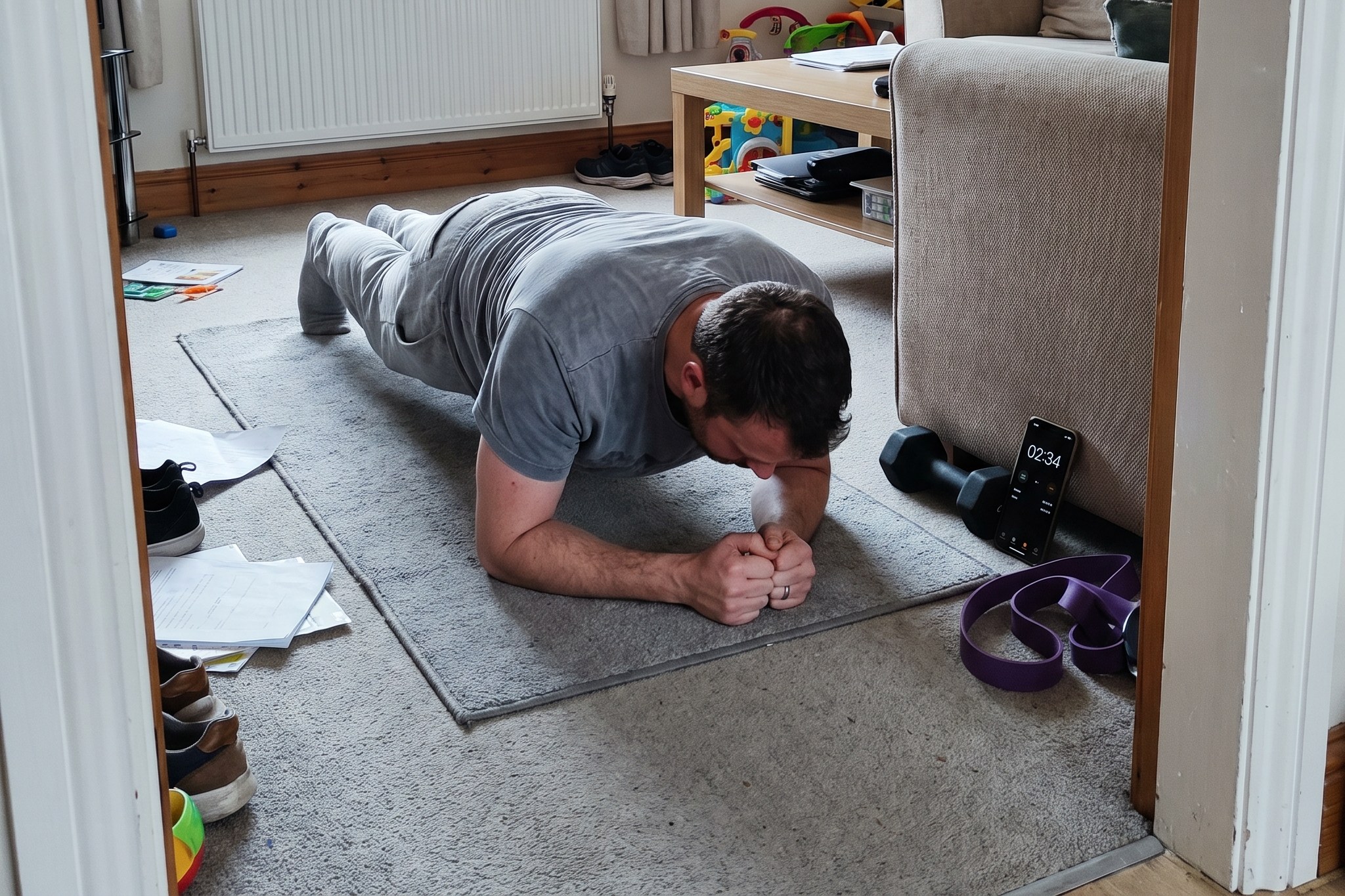
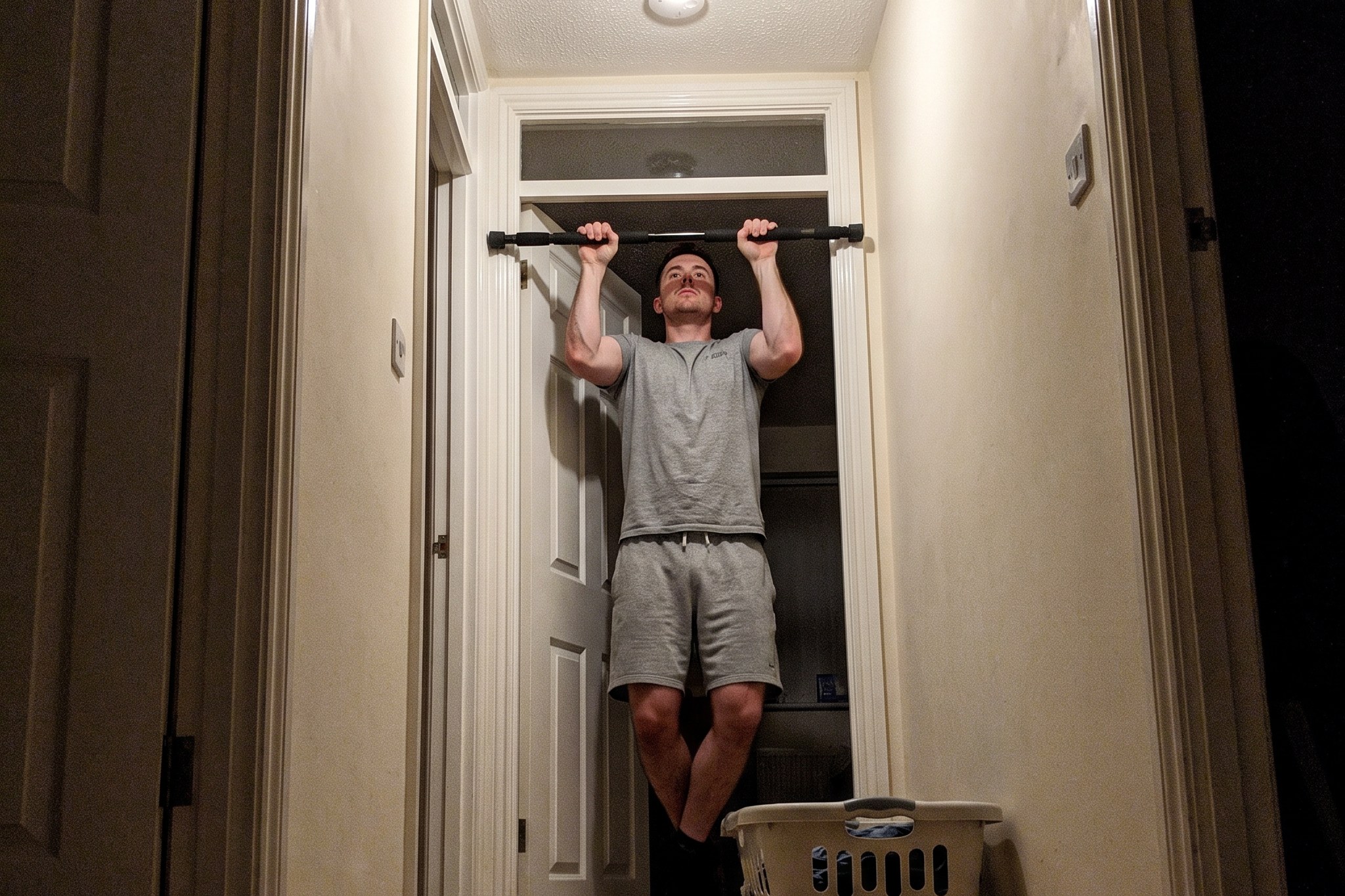
Two years of push-ups on the same rug, and the last six months looked exactly like the first six. Nothing was wrong with the program. Six studies say the stall arrives on a schedule, and one of them puts a number on how much weight it takes to end one.

Two Years of Push-Ups and the Same Set of Numbers
I started at 22 push-ups. Four months later I was doing 40. Then I did 40 for another twenty months.
Same rug, same three sets, same five mornings a week. My pull-ups went from four to nine and stopped at nine. Squats climbed until I was doing 60 in a set and the only thing that changed after that was how bored I got counting them.
Nothing broke. No injury, no missed weeks, no crisis of motivation. The obvious explanation is that I got lazy. I know what that feels like and this was not it. The other explanation, the one I did not want, is that a routine which never changes stops being training. It turns into a habit with a heart rate.
What surprised me is how specific the research is about it. This is not a lecture about progressive overload. There are actual numbers attached: how many weeks it takes for a body to stop treating a fixed load as a challenge, and roughly how much weight has to go on before it starts growing again.
The Four Things I Bought to Get Past It
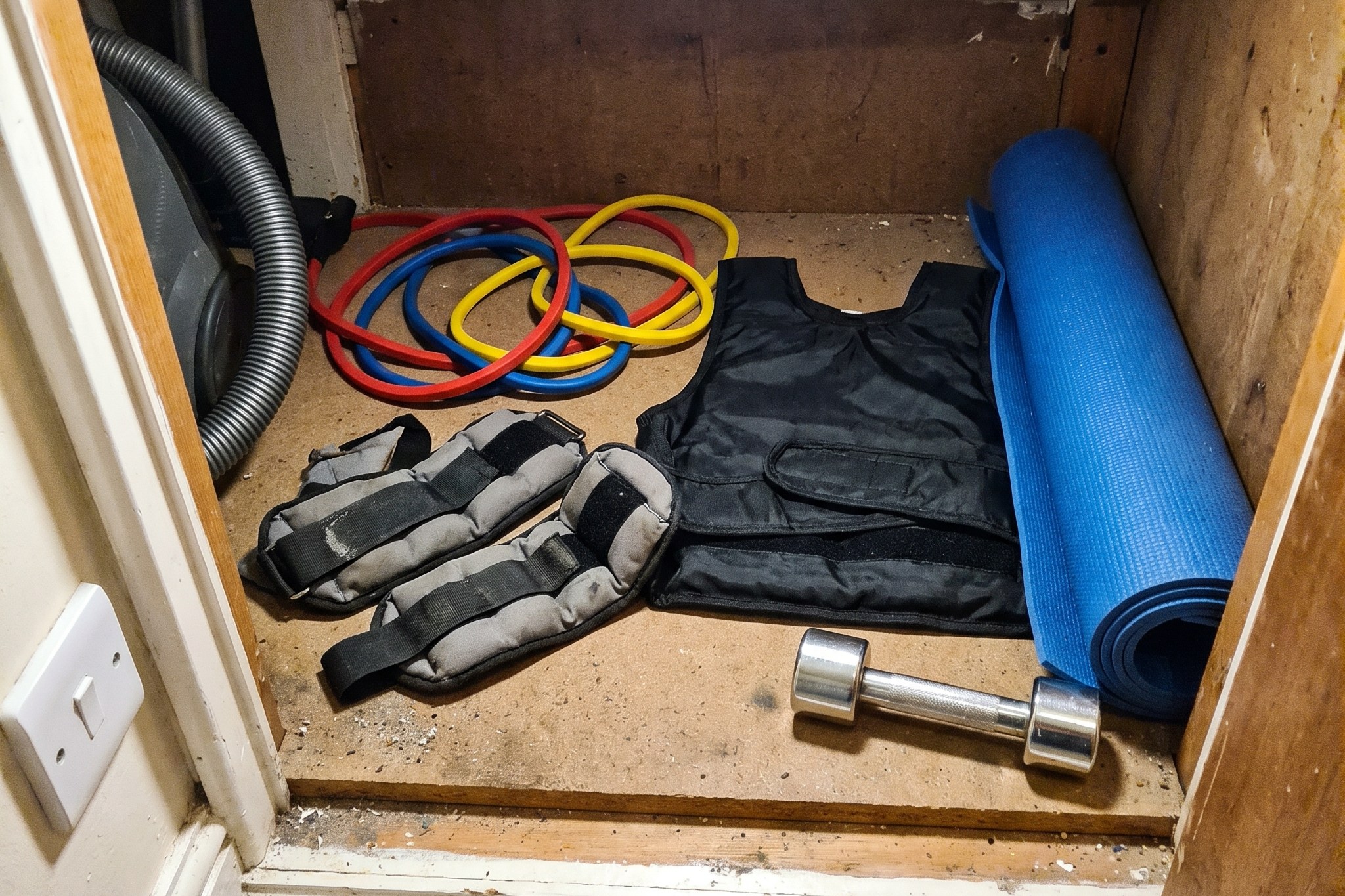
Before I read a single study I did what everyone does. I bought things. All four are real products, all four are still for sale, and every one of them beats the others at something.
A 20 pound fixed-weight vest, $89.97. Titan's Elite Series is the cheapest load per pound in this whole article and the padding is genuinely fine. The weight is sewn in. Titan also sells the 30 pound at $104.97, the 40 at $109.97, the 50 at $129.97 and the 60 at $149.97, which tells you the plan before you buy: when 20 pounds stops working, you buy another vest. Six weeks in, 20 pounds stopped working.
The Hyperwear Hyper Vest PRO, $239.95. The most comfortable thing I have ever trained in, and nothing else here is close. The steel weights are a quarter of an inch thick and it sits flat enough to run in. That $239.95 buys 10 pounds. The 15 pound version is $289.95. If you want a vest for walking and running, buy this one and stop reading. As an answer to a plateau, 10 pounds is the entire stimulus and it arrives with a lid on it.
The Rep Strata vest, $87.99, plus plates. Best entry price of the modular options and the build is honest. The catch is that it eats Rep's own Strata plates: $49.99 for the 5 pound pair, $84.99 for the 10 pound pair, $115.99 for the 20 pound pair. Every pound you add is a pound you buy from one supplier, in one shape, forever.
Bowflex Results Series 552 dumbbells, $479 and currently $379. The best purchase of the four and I still own them. Each handle runs 5 to 52.5 pounds in 2.5 pound steps, which is finer control than anything else on this page. They also do exactly nothing for a push-up, a pull-up, a dip or a step-up, which was the entire problem I was trying to solve.
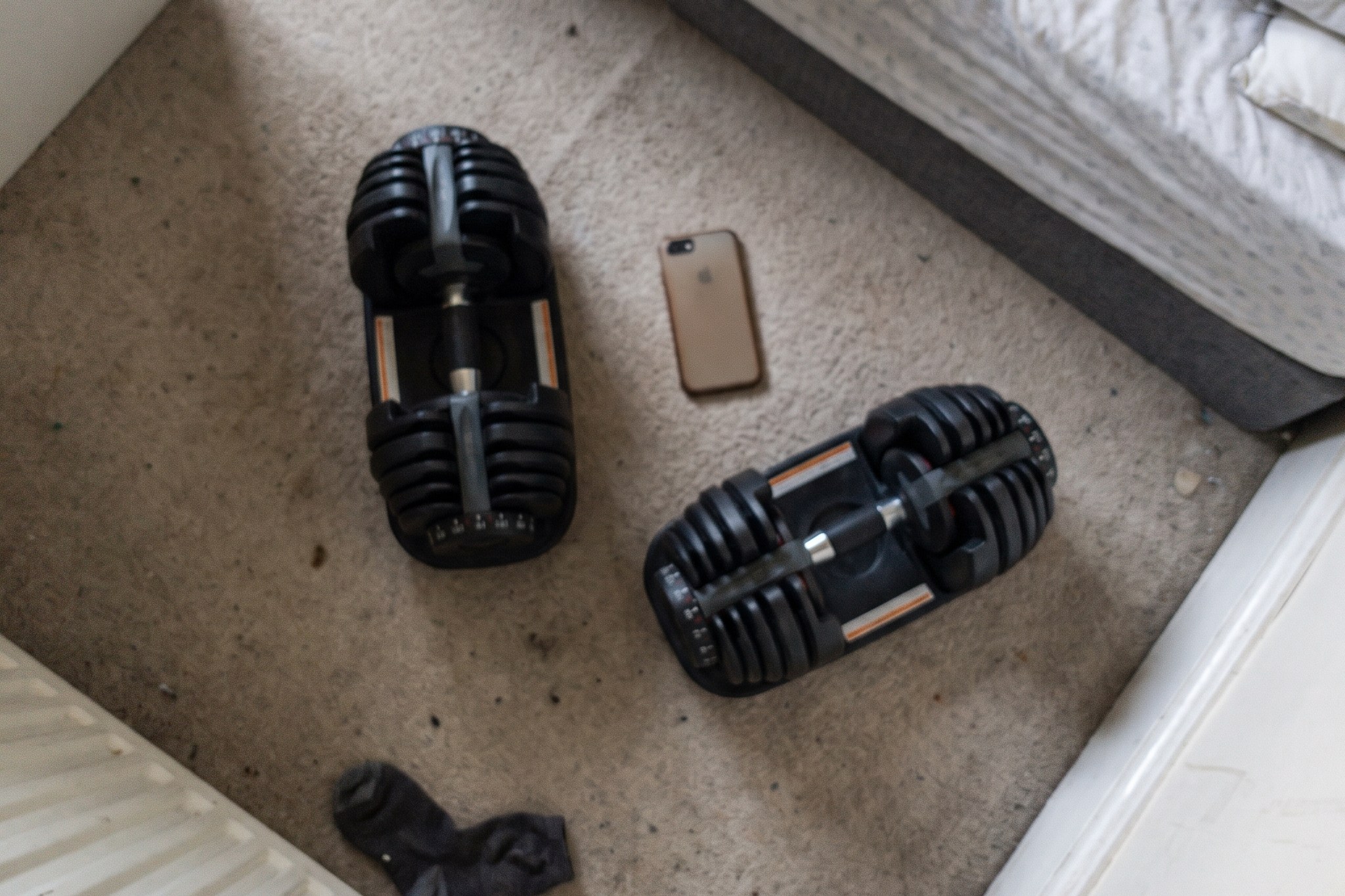
That is $796.91, and at the end of it I was still doing 40 push-ups.
What the Researchers Actually Found
The most useful paper on the shelf is 47 years old. In 1979, Moritani and deVries put 15 people through eight weeks of arm training and separated how much of their strength gain came from the muscle getting bigger and how much came from the nervous system getting better at firing it. Almost all of the early gain was neural. Muscle size only became the dominant factor after the first three to five weeks.1
In other words, the part of a new routine that feels like it is working fastest is largely you learning the movement.
A 2016 study in The Journal of Physiology took biopsies from ten men at week one, week three and week ten of a training program. The protein synthesis spike after the very first session was the largest of the whole study, and it correlated with growth not at all. Muscle damage was highest in week one, lower by week three, minimal by week ten. Only from week three onward did the protein response track actual hypertrophy, and fibre size did not measurably increase until week ten.2
Read those two together and the picture is unkind. The first weeks of anything new are mostly repair and coordination. Then the body gets good at the exact thing you keep asking it to do, and asking harder is the only lever left.
The speed of that defence is its own field of study. A single bout of unfamiliar exercise protects the muscle against damage from the next bout, an effect so reliable it has a name and a review literature.3 One session. That is the shelf life of novelty.
So what does asking harder mean, in pounds? Two papers answer it.
A 2003 meta-analysis pooled 140 studies and 1,433 effect sizes. Untrained people made their best strength gains training at about 60% of their one-rep max. Trained people needed about 80%.4 The percentage that works climbs as you get better at it. A push-up does not climb. It is the same number of pounds in month 24 that it was in month one, while the max it is measured against has moved.

The second paper is the one that gives the floor a number.
Thigh muscle growth over 12 weeks, by how heavy the load was
30 men, every set taken to failure, total work matched across conditions
Lasevicius et al., European Journal of Sport Science, 2018. Arm results ran the same way: 11.4% at 20% of max against 25.3%, 25.1% and 25.0% at the three heavier loads.
Each man trained one leg and one arm at 20% of his max and the other side heavier, with the total amount of work made equal and every set carried to failure. Training at 20% of max still grew the muscle. It grew it less than half as much.5
Here is the part a lot of articles leave out, because it cuts the other way. A meta-analysis of 21 studies found that across the normal training range, light and heavy loads build a similar amount of muscle as long as sets go to failure. Only maximal strength clearly favours heavy.6 So this is not an argument that light weight fails.
It is an argument that there is a floor, and that a movement you can repeat 40 times has slipped under it.
The Four Things Any Fix Has to Do
That gave me a test to apply before buying anything else, which is more than I had the first time.
- Add pounds, not reps. Past a point, more repetitions is a cardio decision. The load is what moved in every study above.
- Keep adding them. Any fixed number has an expiry date measured in weeks, not years. Whatever I bought had to still be useful after I got stronger, or I would be back here.
- Work on the movements I already do. Push-up, pull-up, dip, squat, lunge, step-up, carry. Anything that only loads a dumbbell curl was solving a problem I did not have.
- Cost less over three years than buying the next thing. The $796.91 was not one bad decision. It was four reasonable ones with no ceiling planned into any of them.
The Only One I Found That Passed All Four

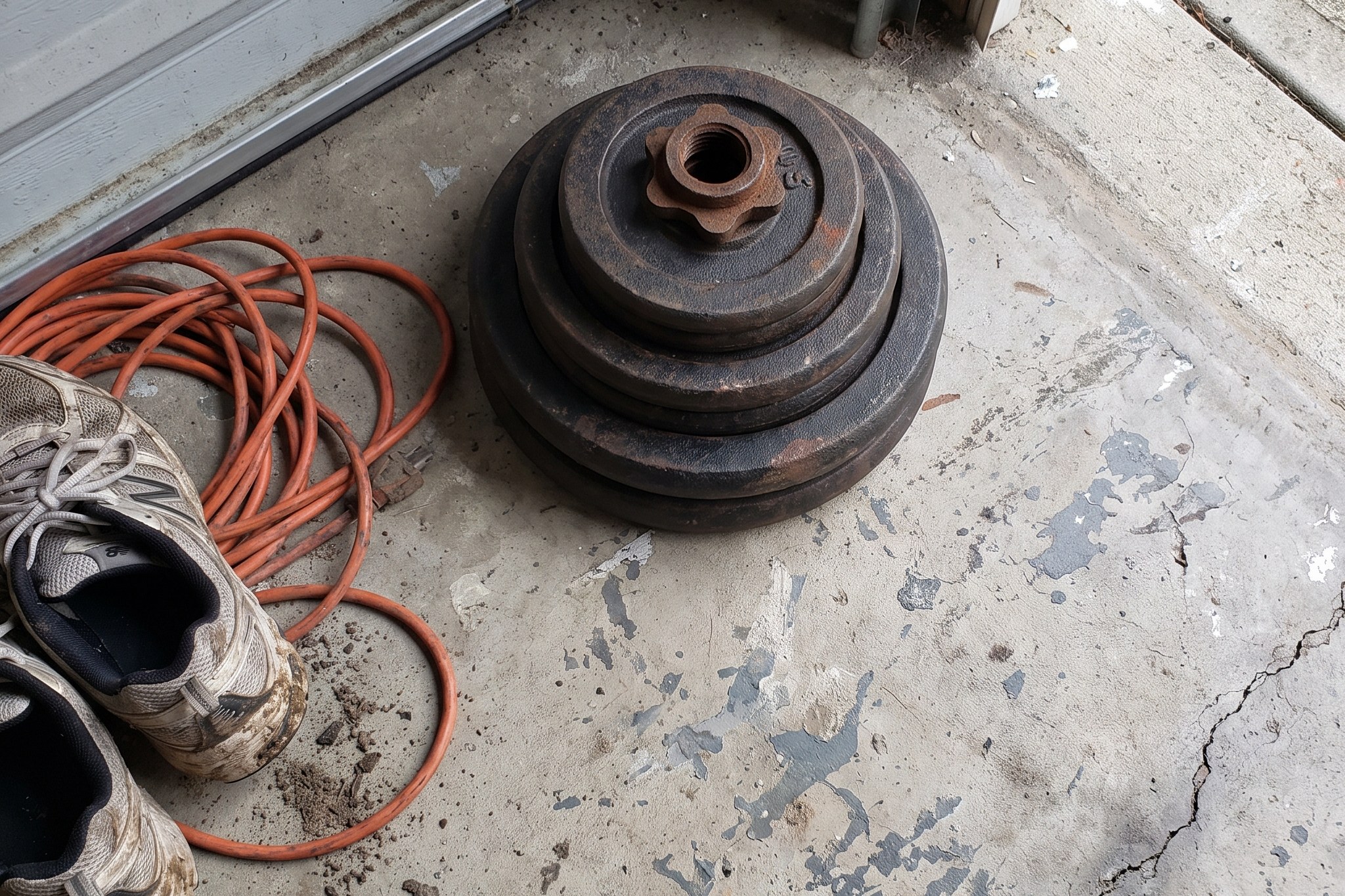
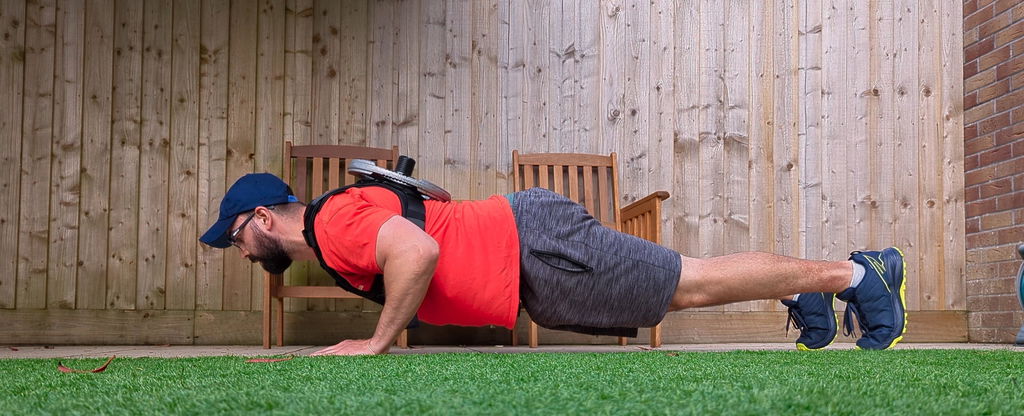
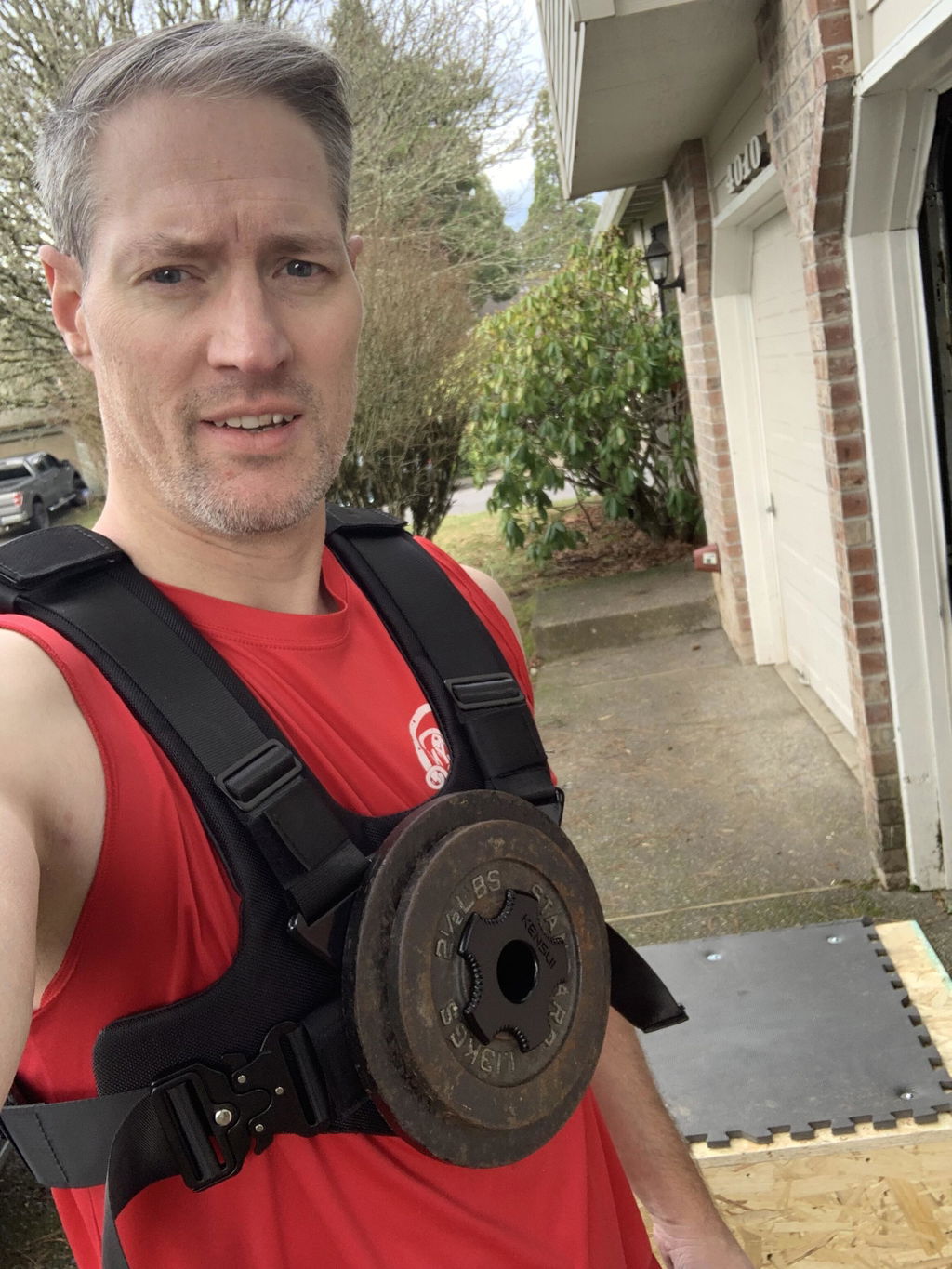
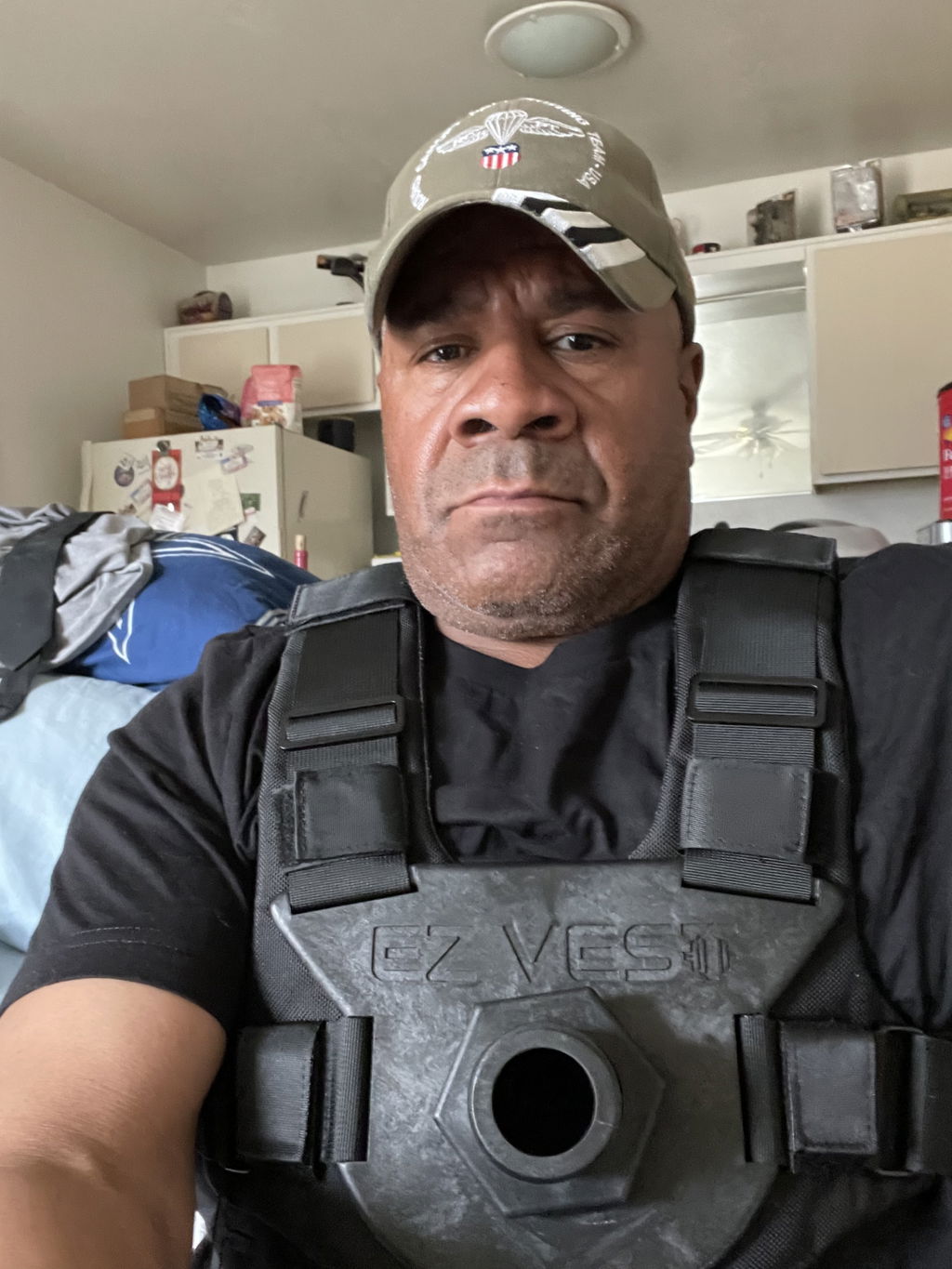
The Kensui EZ-VEST V2 is a padded chest rig with a threaded steel post at the front and another at the upper back. You slide standard weight plates onto the posts and thread a collar down to hold them. Kensui's own line for it is that it does not require custom weights, and that is the whole idea: the load is whatever plates exist in the world, not whatever plates one company will sell you.
Which means the ceiling is not built into the purchase. It is the first thing in this article that fails the second criterion in a good way.
The Verdict
Kensui EZ-VEST V2, Pro
- Loads standard plates front and back, so adding weight costs whatever a plate costs rather than whatever a proprietary insert costs.
- Works on the movements a home routine is actually made of: push-ups, pull-ups, dips, squats, lunges, step-ups and loaded walks.
- Three sizes on one design, so the ceiling is a choice: Lite holds 80 lb at $99, Pro holds 150 lb at $179, Max holds 300 lb at $299.
The arithmetic against the thing I actually bought is not close. Titan's route from 20 pounds to 60 costs $149.97 for the 60 pound vest, and 60 pounds is where it ends forever. The Pro costs $179 once and ends at 150. If you own no plates at all, Kensui sells those separately, and any other brand's standard plates fit just as well.
What Owners Say, and the Three Things That Nearly Stopped Me

I read the reviews the way I read reviews, which is bottom-up.
"For over a month I have been regularly using the vest following a 5x5 strength program utilising the basic calisthenics movements on top of a weighted walking and running routine."
John W., verified buyer"Wish the plate holders were longer to accommodate 2 regular plates. It has already had a huge impact on my explosiveness on pull-ups and chin-ups. 50lbs so far and looking forward to getting more."
Jason B., verified buyer"Great vest, love using it, works as described. Only downside is the additional sleeves you're offered to order in addition to the vest do not fit any of my plates above 2.5kg so I basically have no use for them, and I just wasted $27."
Bogdan K., verified buyer, four starsThe post length is a real complaint and it is worth knowing before you order. Two separate owners raise the same thing: on thin standard 1 inch plates you can fit fewer than you expect on the post that ships in the box. If your plates are 1 inch rather than Olympic, check the stack you plan to run before you buy, because this is the one criticism that comes up independently more than once.
The second thing that nearly stopped me was the number 150. It sounds absurd next to a plateau at 40 push-ups. It is not the target, it is the runway. I have added 35 pounds in five months and the difference between owning a ceiling I will hit and one I will not is $80.
The third was whether the weight sits somewhere sensible. On a push-up it loads the chest post and the upper back post at once, which is why the owner photo above looks level rather than like a rucksack sliding forward. The reviews that mention this at length are the ones from people doing pull-ups and dips, where a badly balanced vest is immediately obvious.
| Kensui EZ-VEST V2 Pro | Titan Elite Series 20 lb | Hyperwear Hyper Vest PRO | |
|---|---|---|---|
| Price | $179 | $89.97 | $239.95 |
| Weight it holds | 150 lb | 20 lb, sewn in | 10 lb |
| How you add weight | Any standard plate | Buy the next vest | Brand's own micro-weights |
| Where it stops | 150 lb | 60 lb, across five vests | 40 lb |
| Built for | Push-ups, pull-ups, dips, squats | General loaded work | Running and walking |
| Learn More |
Prices checked on each brand's own store on 10 September 2026. The Hyper Vest PRO is the better product for anyone whose training is mostly running, and I would buy it again for that.

Kensui runs a 100 day money back guarantee, which for a purchase whose entire argument is "this will still be useful in year three" is the correct length of rope to be given.
Studies cited
- Moritani T, deVries HA. Neural factors versus hypertrophy in the time course of muscle strength gain. Am J Phys Med. 1979;58(3):115-30. PMID 453338.
- Damas F, Phillips SM, Libardi CA, et al. Resistance training-induced changes in integrated myofibrillar protein synthesis are related to hypertrophy only after attenuation of muscle damage. J Physiol. 2016;594(18):5209-22. PMID 27219125.
- McHugh MP. Recent advances in the understanding of the repeated bout effect. Scand J Med Sci Sports. 2003;13(2):88-97. PMID 12641640.
- Rhea MR, Alvar BA, Burkett LN, Ball SD. A meta-analysis to determine the dose response for strength development. Med Sci Sports Exerc. 2003;35(3):456-64. PMID 12618576.
- Lasevicius T, Ugrinowitsch C, Schoenfeld BJ, et al. Effects of different intensities of resistance training with equated volume load on muscle strength and hypertrophy. Eur J Sport Sci. 2018;18(6):772-80. PMID 29564973.
- Schoenfeld BJ, Grgic J, Ogborn D, Krieger JW. Strength and hypertrophy adaptations between low- vs. high-load resistance training: a systematic review and meta-analysis. J Strength Cond Res. 2017;31(12):3508-23. PMID 28834797.
The Stall Was On Schedule. Ending It Is a Load Problem.
Forty push-ups is not a failure of discipline. It is a fixed load meeting a body that adapted to it inside a month, exactly the way six separate research groups say it will. The only variable that moved in any of those studies was weight.
Get the EZ-VEST