Hormones & Muscle · 7 Min Read
How To Look Like You're On Steroids (Without Actually Using Them)
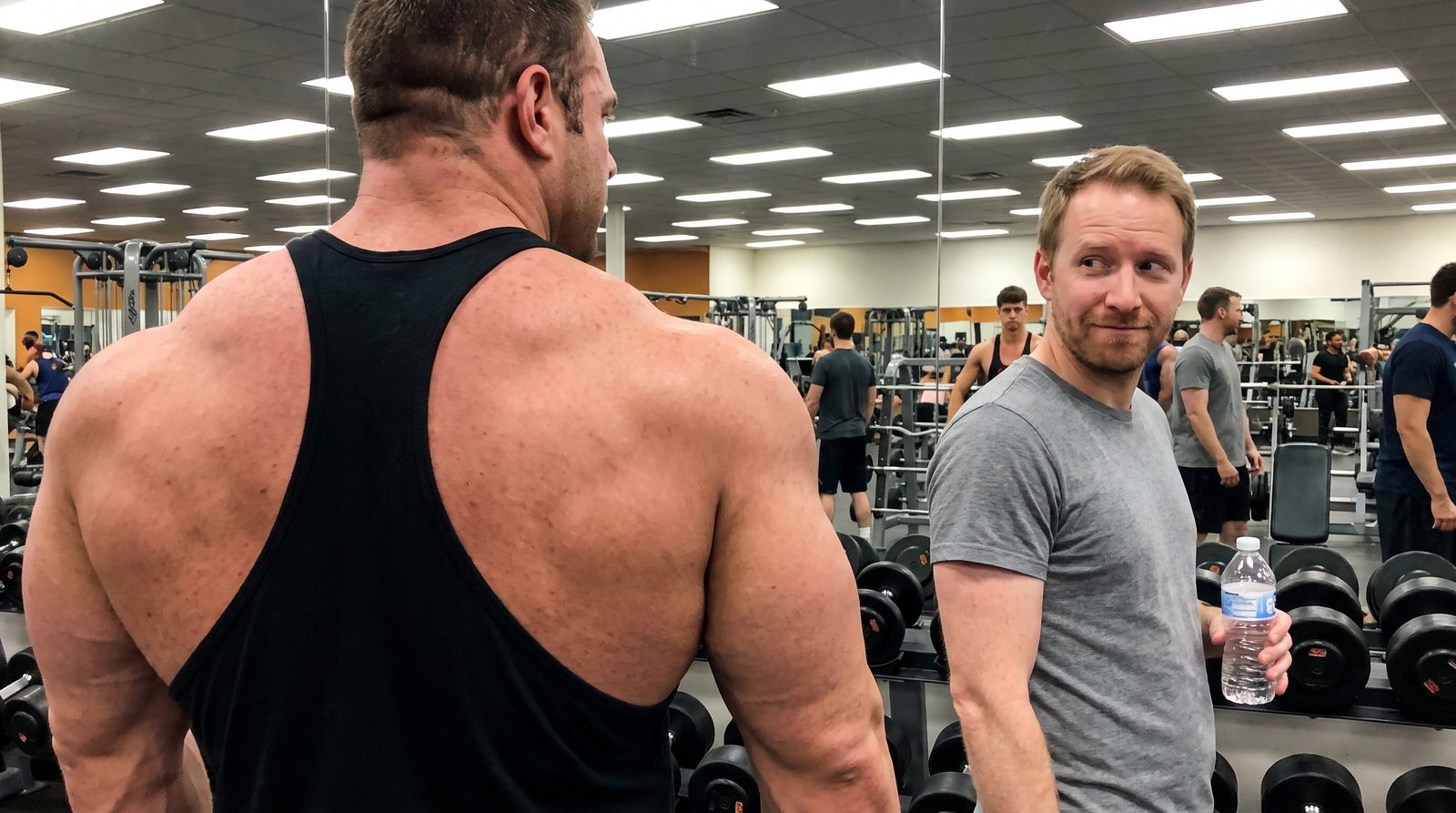
Steroids don't just make people bigger. They change where the size shows: the traps, the neck and the shoulders. The traps carry far more testosterone receptors than the thighs, and the muscles behind the look still respond to hard training. Here's the science, and how to build that look without the drugs.

Steroids Don't Just Make You Bigger
You've seen the look. Traps that climb toward the ears. A neck as wide as the jaw. Round, capped shoulders and a thick shelf of upper chest. People spot it from across the gym floor and decide on the spot that the guy isn't natural.
The usual guess is that steroids make every muscle bigger by the same amount. The science is more interesting than that. Your muscles don't all respond to testosterone in the same way. Your traps, the muscles that run from your neck out to your shoulders, carry more of the machinery testosterone works through than your thighs do.
Size alone gives a rough clue. In 1995, researchers at McLean Hospital near Boston measured 157 male athletes, 83 of them steroid users. They used a score called fat-free mass index, or FFMI. It's your lean body mass adjusted for your height. The men who had never used steroids topped out at 25.0. Twenty Mr. America winners from 1939 to 1959, the years before steroids, averaged 25.4. Many of the steroid users went past 25, and some went past 30.[1]
But a score can't tell you where the muscle sits. That part comes down to something inside the muscle itself.
Your Muscles Have Docking Stations
Testosterone can't build muscle just by floating around in your blood. To work, it has to latch onto an androgen receptor inside a muscle cell. Think of these receptors as docking stations. A muscle with more of them gives the hormone more places to land.
In 2000, a team at Umeå University in Sweden counted the docking stations in two muscles. They took small samples from the traps and the outer thigh of 23 men. Six didn't train. Eight were elite powerlifters who had never used steroids. Nine were elite powerlifters who had.[2]
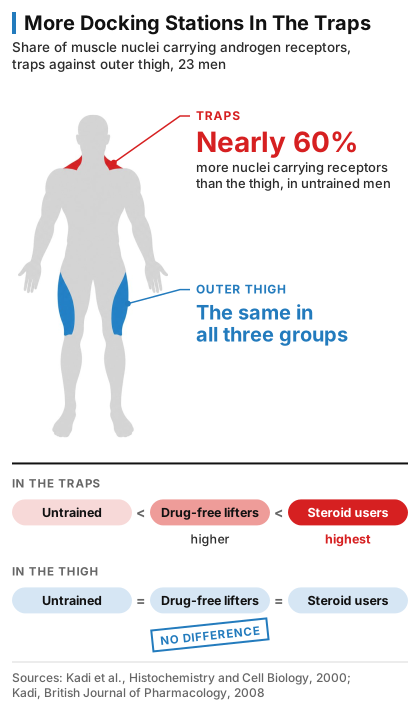
Each muscle cell holds many nuclei, the control centers that run it. The team counted what share of those nuclei carried receptors. The traps came out well ahead of the thigh. In the untrained men, the share in the traps was nearly 60% higher.[3]
Then the groups split apart. In the traps, the drug-free lifters had a higher share than the untrained men, and the steroid users had the highest share of all. In the thigh, all three groups looked the same.[2] Years of heavy training went with more docking stations in the traps. Steroids went with even more. The thigh showed no difference either way.
More Docking Stations, More Growth
Docking stations only matter if they change how much a muscle grows. A 2018 study from McMaster University in Canada suggests they do.[4]
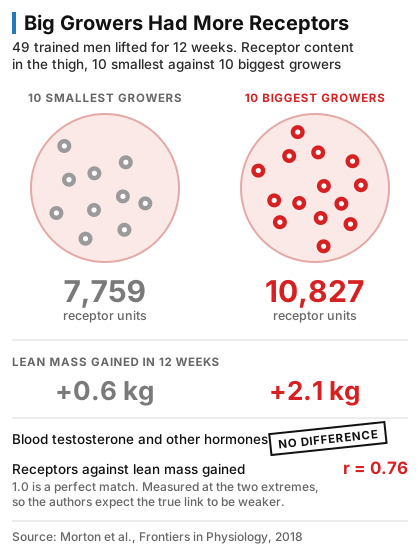
Forty-nine young men who already lifted trained for 12 weeks. Then the researchers took a closer look at the 10 who grew the most and the 10 who grew the least. The top group gained 2.1 kg of lean mass. The bottom group gained 0.6 kg.
Blood testosterone didn't separate the two groups. Neither did any other hormone the team measured. Receptor content in the thigh muscle did. The biggest growers started with about 40% more of it. Receptor content also tracked lean mass gained with a correlation of 0.76, where 1.0 would be a perfect match. The authors point out that this likely overstates the link, because they only measured the men at the two extremes.
An earlier McMaster study found the same pattern. Twenty-three untrained men lifted 4 times a week for 16 weeks. Their muscle fibers grew 20% on average, and the men whose receptor levels rose the most tended to grow the most.[5]
What The Steroid Studies Show
Now add the drugs. The Swedish team also compared the traps of two groups of elite powerlifters at the same level. One group had used high doses of steroids for several years. The other had never used them.[6] In the steroid users, the slow-twitch fibers in the traps were 58% larger and the fast-twitch fibers were 33% larger.[3] Their fibers also held more nuclei, which a fiber needs to grow and stay big. Do those extra nuclei stay after the drugs stop? We dug into that in our piece on muscle memory.
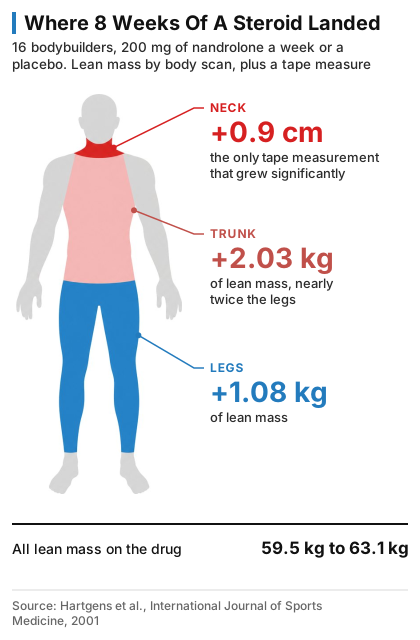
A Dutch trial added something those studies couldn't: a placebo. Sixteen bodybuilders got a weekly shot for 8 weeks. It was either 200 mg of nandrolone, a common steroid, or a placebo, and neither the men nor the researchers knew which. On the drug, lean mass rose from 59.5 to 63.1 kg.[7]
A body scan showed where it went. The trunk gained 2.03 kg of lean mass, nearly twice the 1.08 kg the legs gained. The tape measure agreed. Every circumference crept up a little, but only one change was big enough to count: the neck, which grew 0.9 cm.[7]
How To Build The Look Naturally
You won't match a steroid user's size naturally. But you can build the same muscles that make the look, and the Swedish data hold some good news. The drug-free lifters had more docking stations in their traps than the untrained men.[2] Training on its own went with more. The muscles behind the "enhanced" look still answer to hard work.
The key is direct work. In a 1997 study at the University of Georgia, students did squats, deadlifts, push presses, rows and pulls 3 days a week for 12 weeks. Their thigh muscles grew 7%. Their neck muscles didn't grow at all: 19.6 square centimeters before, 19.7 after. A second group did the same program plus 3 sets of 10 head extensions. Their neck muscles grew from 19.5 to 22.0 square centimeters, about 13%.[8] It's the same idea behind spot-building muscle: a muscle grows where an exercise makes it work.
Shoulders respond the same way. In a 2025 study, 24 trained lifters did 5 hard sets of lateral raises twice a week. After 8 weeks, their side delts were 3.3% to 4.6% thicker.[9] Volume adds up, too. Across 15 studies, each extra weekly set for a muscle added about 0.37% more growth.[10] For how many sets a muscle needs, see our guide to weekly training volume.
So give the muscles behind the look their own work every week. The studies above used 3 sets of neck work 3 days a week and 5 sets of lateral raises twice a week. That's a good place to start.
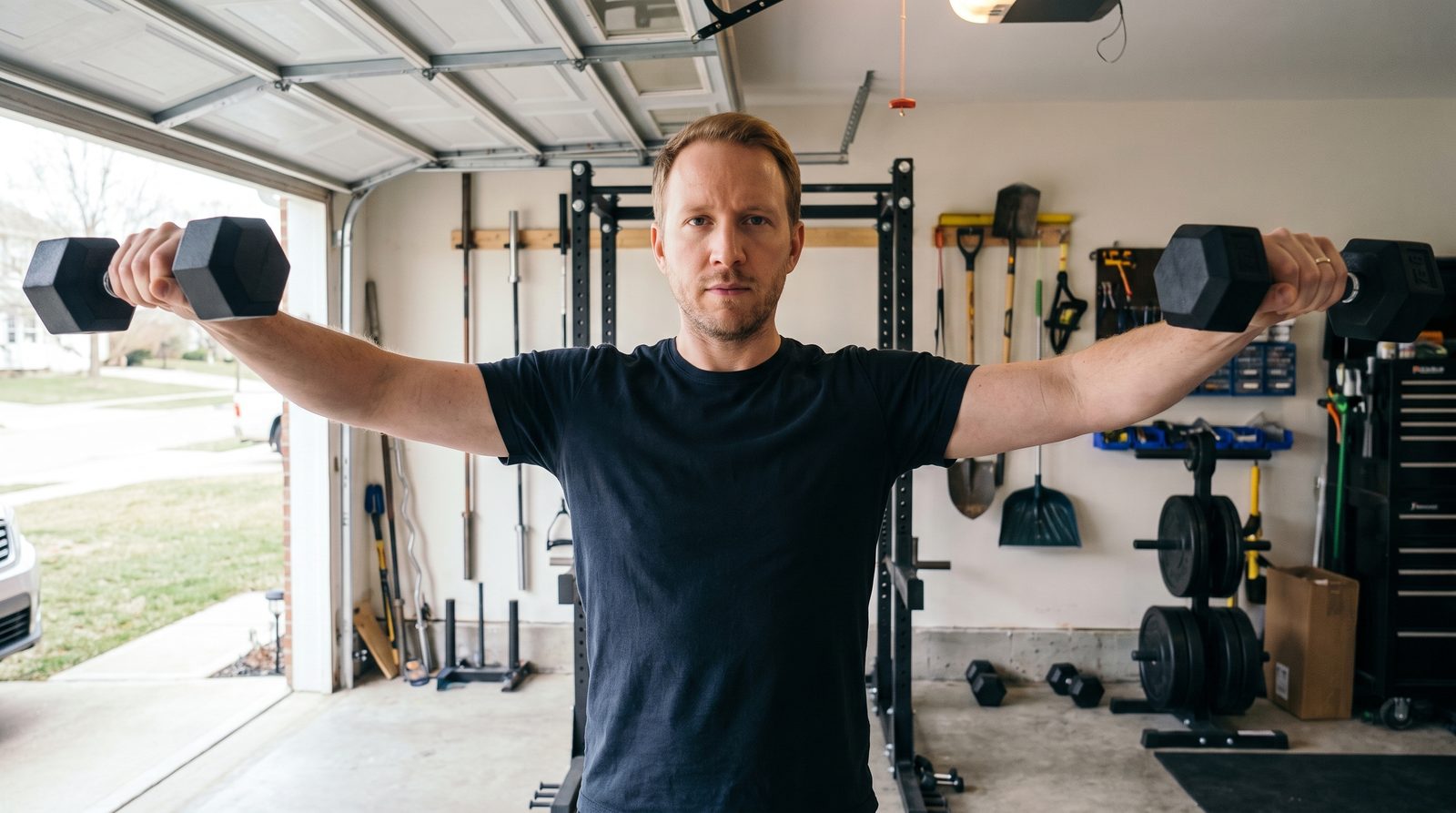
Side delts: lateral raises. These build the round, capped shoulder you see from the front. Lift the dumbbells to shoulder height and lower them slowly.
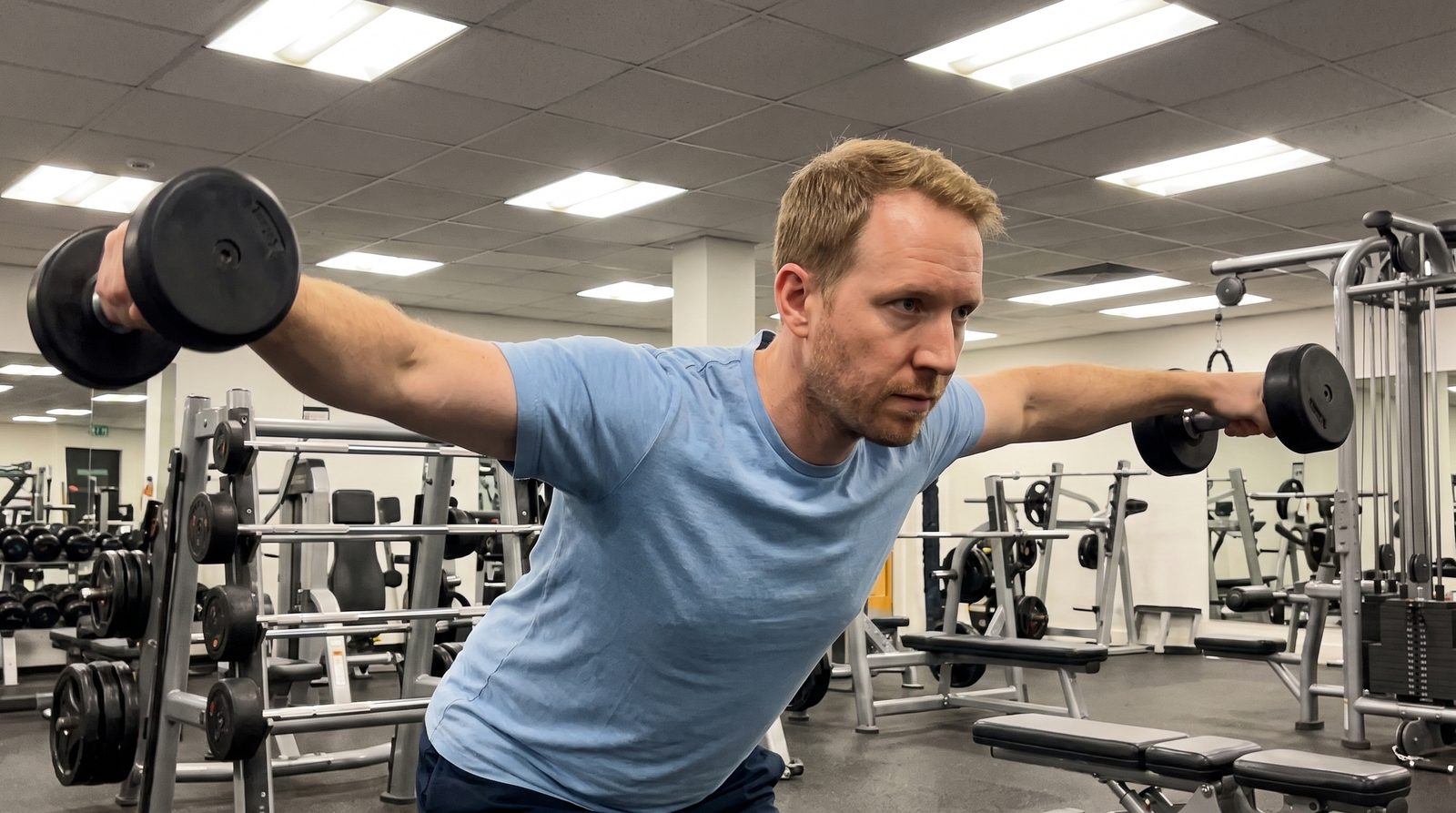
Rear delts: rear-delt raises. Hinge forward at the hips and lift the dumbbells out wide. They round out the shoulder from the side and back.
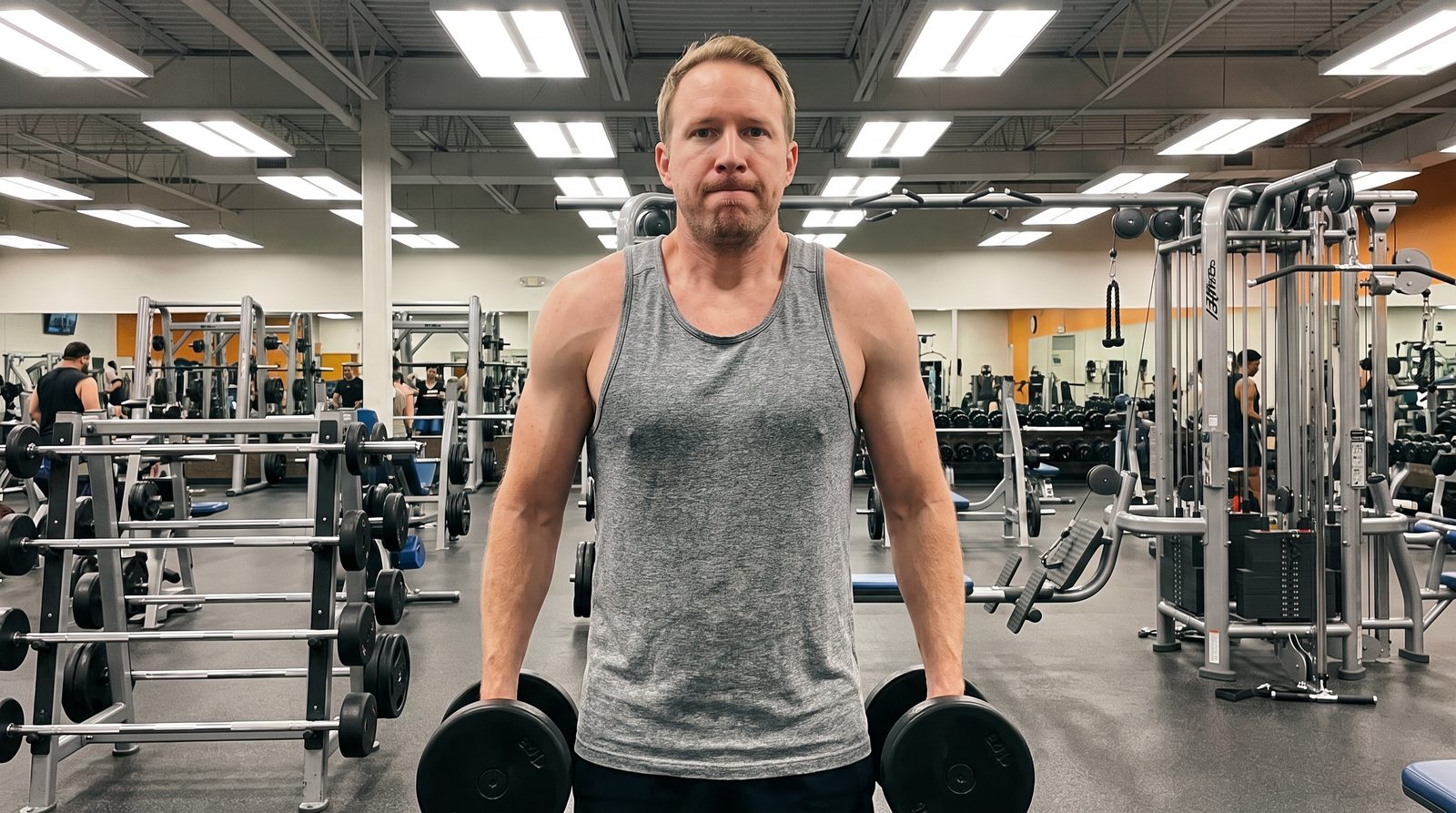
Traps: shrugs. Hold heavy dumbbells at your sides. Lift your shoulders straight up toward your ears and pause for a second at the top.
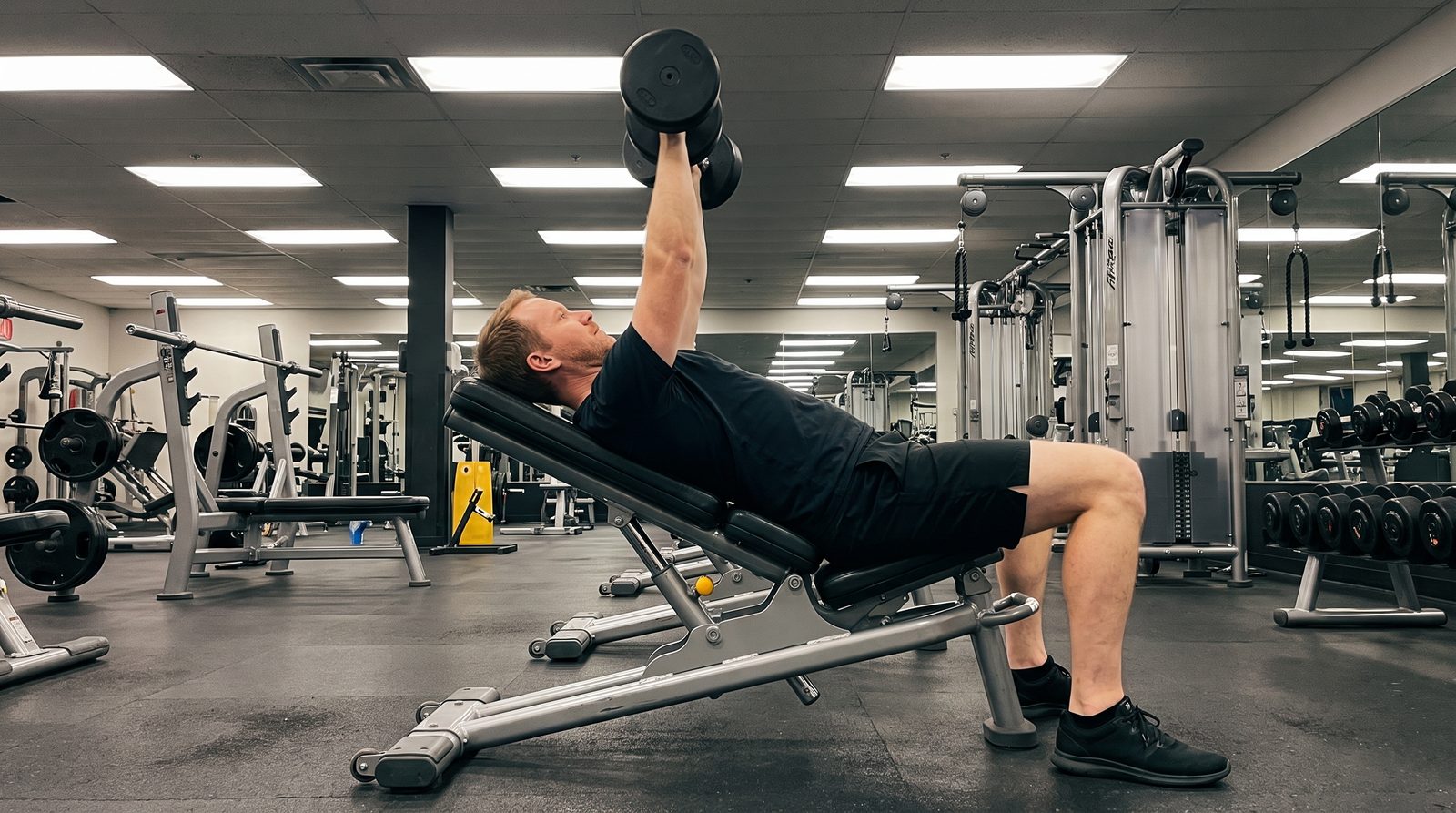
Upper chest: incline presses. Set the bench to a low incline and press the dumbbells up over your upper chest.
Neck: neck curls and extensions. This is the one the big lifts skip. Start light, move slowly and use your own hand for resistance before you add any weight.
You can't copy the drugs. You can copy the map: traps, neck, side delts, rear delts and upper chest, trained directly every week.